Power to the Pelvis
Many people have some sort of issue with pooping, peeing, or sexual intimacy. But do you actually know of anyone personally who is struggling? Probably not. We don’t talk about these vital, daily activities.
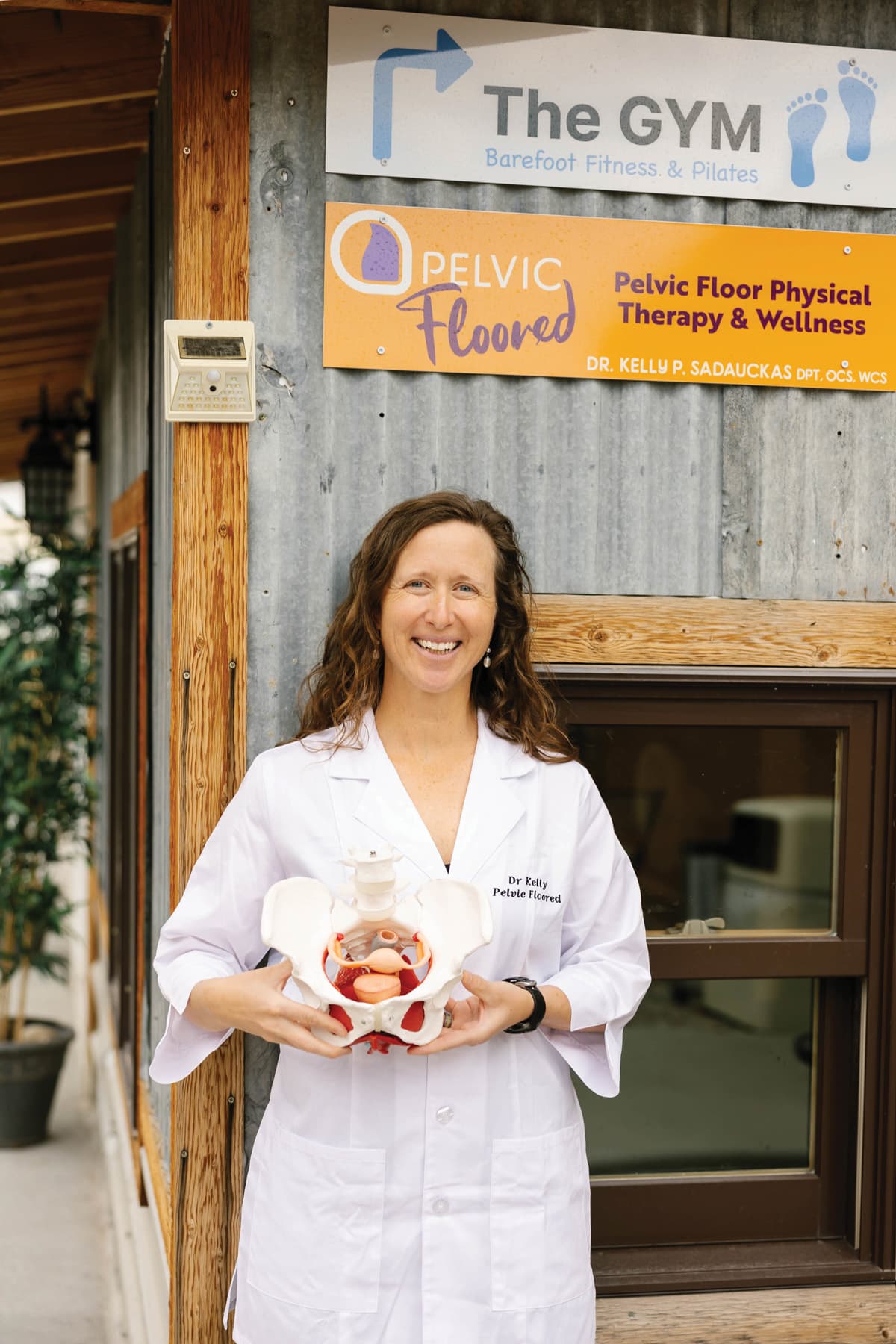
Dr. Kelly Sadauckas is trying to change this, as she says, “one pelvis at a time.”
“We don’t talk about peeing and pooping because we have some level of shame,” she says. “Maybe it’s our Puritan heritage. Perhaps it’s because we think that part of our body is gross. But it shouldn’t be. Our pelvic floor is amazing. It keeps us alive.
“When we view something as shameful, our brain’s reaction is to ignore it,” Kelly says. “In this attempt to protect us, the brain ends up ignoring important nerves that control pelvic floor muscle sensation and function. As a result, we end up with pelvic floor muscles that are constantly tight, causing various issues with urination, defecation, and intimacy. We often don’t realize that tight muscles, not ‘weak’ and ‘sloppy’ ones, are to blame.”
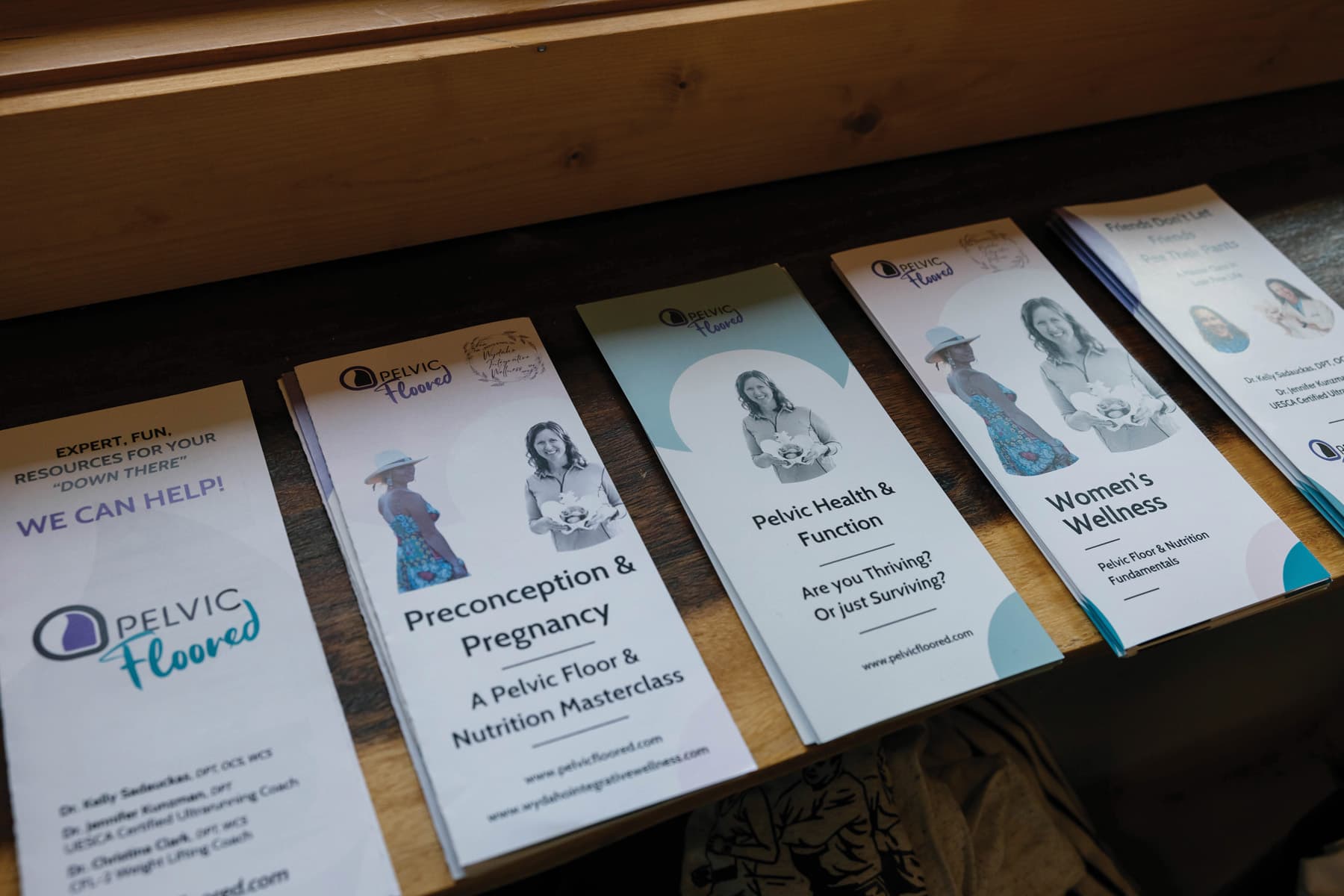
Dr. Kelly, as her clients call her, has been a doctor of physical therapy and a board-certified specialist in orthopedics and pelvic health for more than twenty years. Her business, Pelvic Floored, is a pelvic floor physical therapy and wellness practice in Driggs that offers in-person care as well as online coaching and courses. Pelvic specialists like Kelly are rare. There are only one hundred or so physical therapists in the world who are similarly certified in both orthopedics and women’s health. She has trained other physical therapists in the Pelvic Floored method and runs clinics and workshops worldwide.
In an average month on Instagram, Kelly reaches more than 100,000 people. Some months more than a million people see her posts. She attributes her reach to being herself.
“I try to make people comfortable talking about topics that are perceived as uncomfortable,” Kelly says. “Literally everyone poops. Everyone has had the feeling, ‘Oh my gosh, am I going to poop my pants?’ So, I try to capture that feeling, then offer tips like, ‘Here’s how not to poop your pants.’”
The pelvic floor consists of the muscles that stabilize the body’s core and assist with essential bodily functions. Like all muscles, they can be strained, tight, weakened, or injured. Physical therapy can help restore normal function and lessen pain. It seems simple, but Kelly says people are embarrassed and hesitant to seek help. In fact, the name of the nerve that runs through our pelvic floors and external genitalia—“pudendal”—is derived from the Latin “to be ashamed of.” This reflects our cultural bias.
“We all talk about our bad backs, but no one talks about peeing in their pants,” Kelly says. “But peeing our pants is common. Common does not mean normal, however. People say incontinence never killed anyone, but it can really destroy someone’s quality of life.”
Kelly first be-came aware of the prevalence of incontinence in athletes while she was working on her doctorate in physical therapy at Marquette University in Wisconsin. A number of women on the school’s track team confided in her that they peed in their pants when running, and that sexual intercourse and using tampons hurt.
“I didn’t know how to help them at the time,” Kelly says. “We barely talked about pelvic floor muscles in traditional physical therapy training.”
Kelly ended up pursuing special training. During her first pelvic floor workshop, the instructor asked Kelly to be her model while she performed a vaginal exam on her in front of the class. Kelly remembers thinking that her discomfort would help her be more empathetic with future patients, so she marched to the front of the room, lay down on the exam table, and became the icon for her peers’ initiation into everything pelvic. Now Kelly is on a mission to educate the world about the benefits of pelvic floor physical therapy, which she says helps give people back their lives.
“I am passionate about this because it works,” Kelly says. “There’s tremendous ground to be made up. You would never have knee surgery or shoulder surgery and expect to ‘just rest six weeks and be good to go.’ And yet that is still the general expectation for a woman after she has a baby. To this day, despite it being the recommended standard practice, most women are not referred to pelvic PT after having a baby.”
It’s also not just postpartum women. Kelly says cancer survivors, both men and women, have a higher rate of pelvic pain, incontinence, and constipation than average, and yet they are rarely told that improving pelvic floor health can help with these conditions. A 2008 study following cancer patients before and after prostate removal showed that a single pre-op session of pelvic physical therapy brought the men back to continence faster.
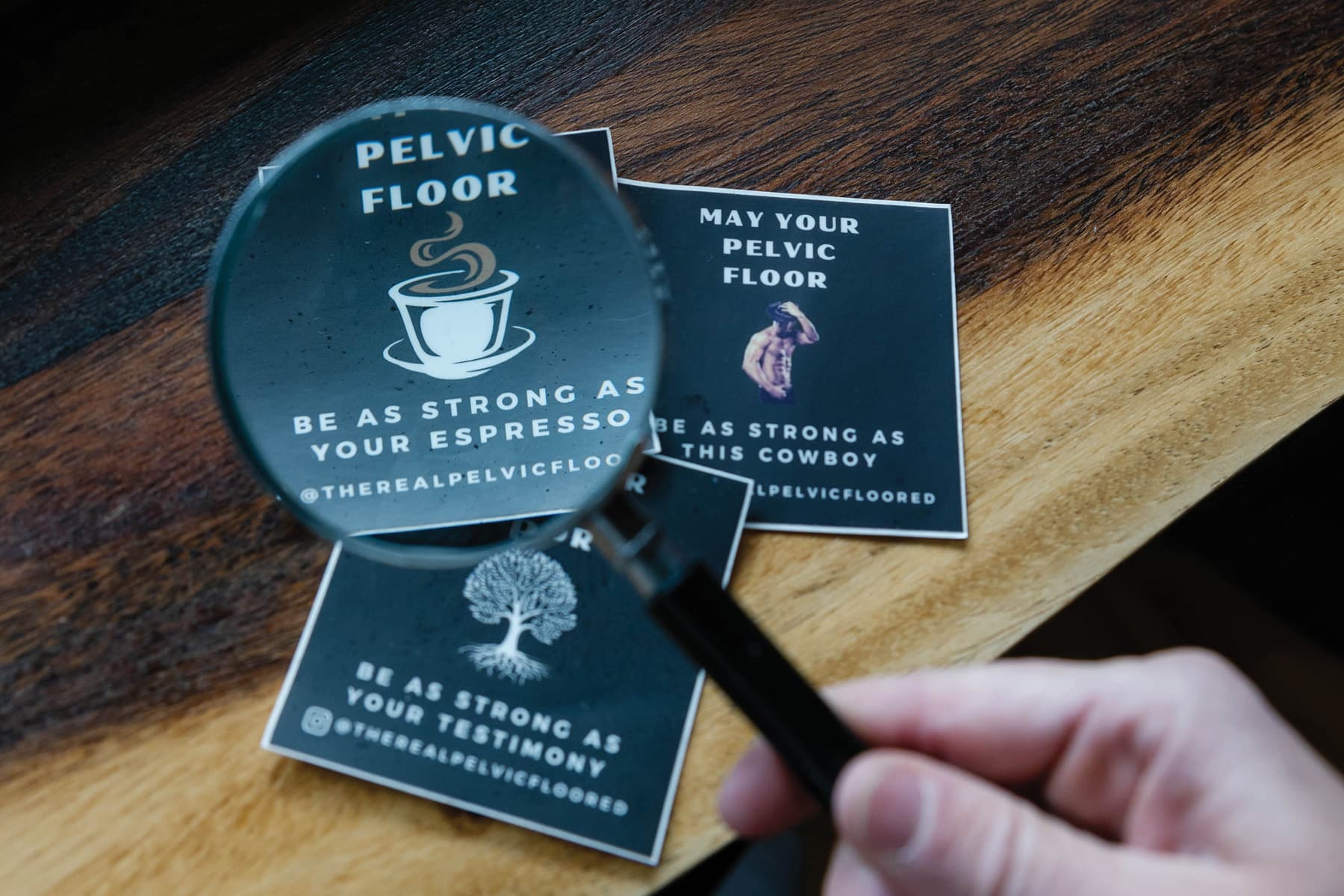
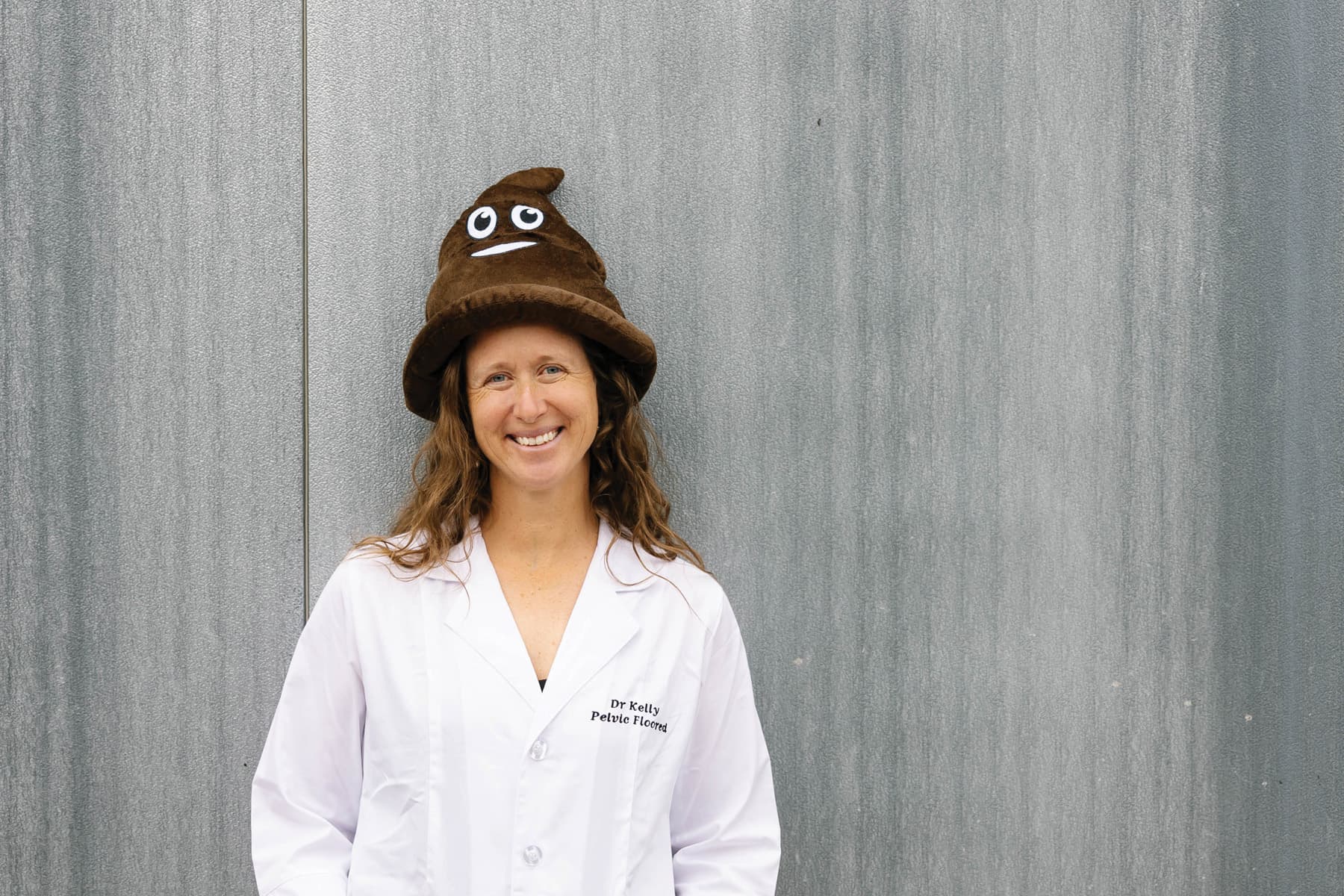
Kelly’s goal is not to conjure up more patients. She has plenty. Instead she wants to end the silence and shame associated with basic, vital bodily functions, and she’s found humor is her best weapon in that mission. Her print ads are especially irreverent. One example readers likely spotted in past issues of this magazine declares: “Let NASA explain Mars, I’ve got your anus.” Another reads: “Poop happens every day, but if it doesn’t, I have a course for that.”
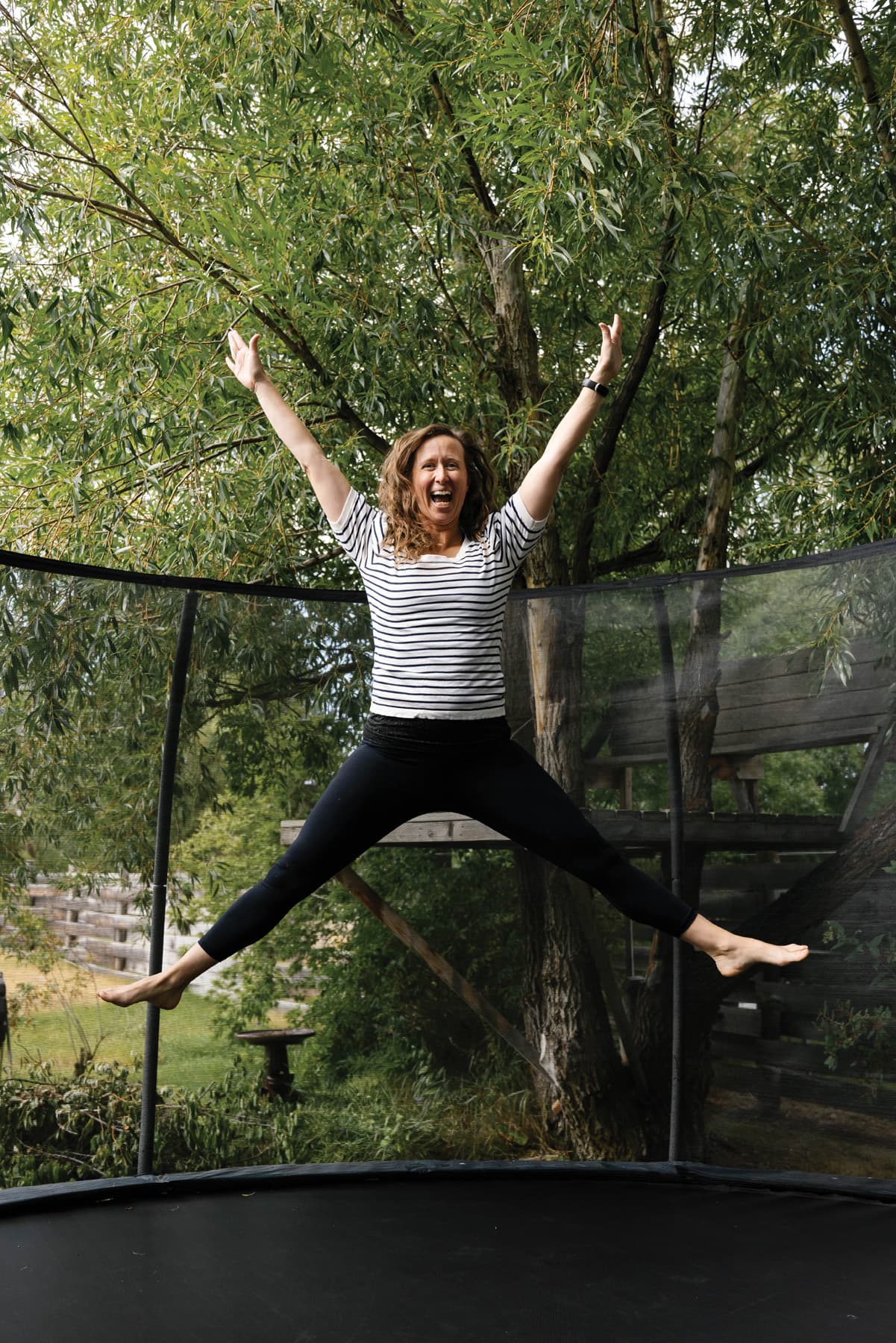
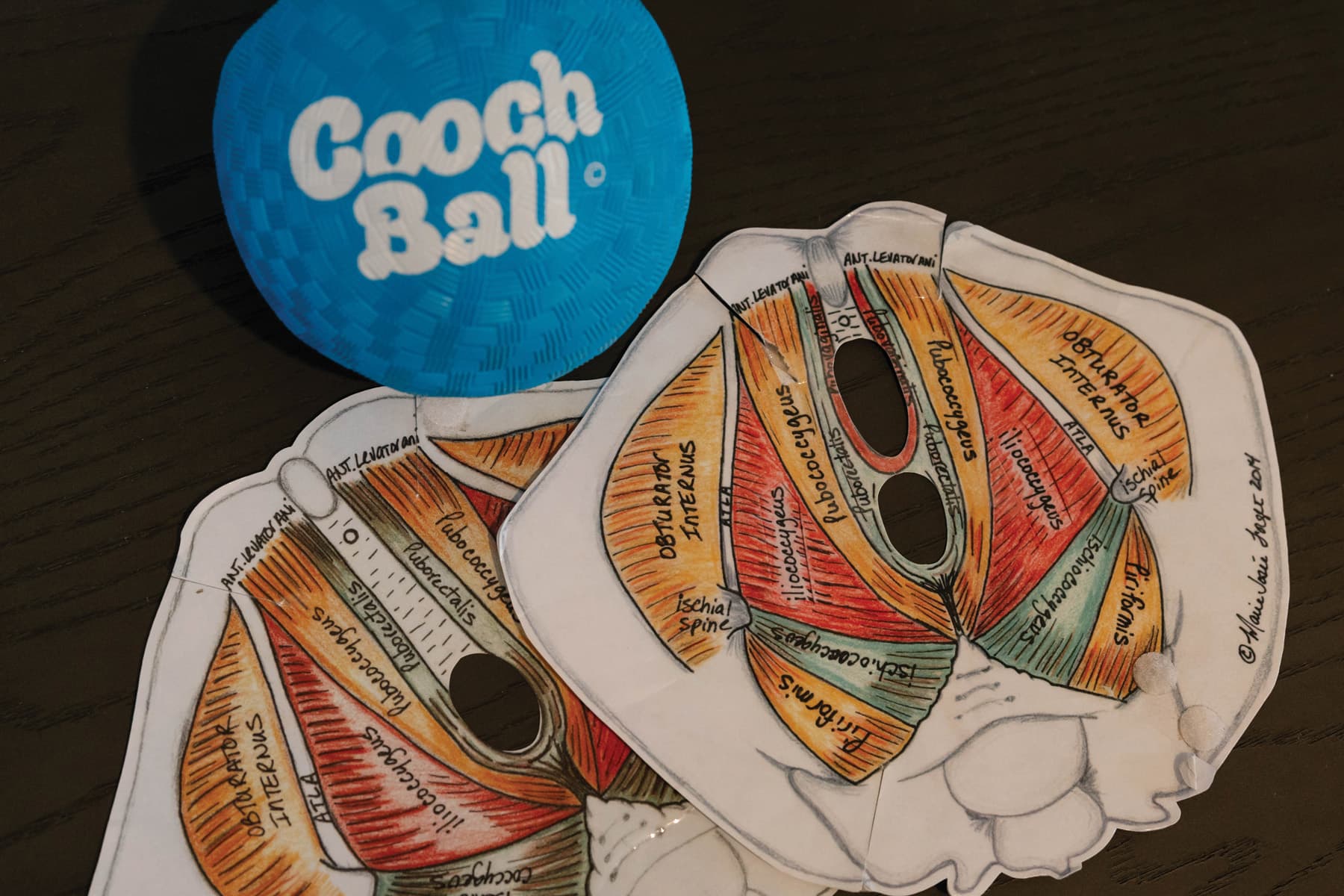
On Instagram, Kelly dances around in a vivid pink, custom-made vulva costume. She talks about farting and incontinence, and promotes sitting on a “Cooch Ball” to help people relax their pelvic floor muscles. She has blog posts on everything from how to handle bowel movement urgency, to weight training after pregnancy, to hormone replacement therapy. She’s open, funny, cheeky, and extremely informative.
“Humor is my natural disposition, but I also think it is necessary to get people to talk about their pee, poop, and intimacy,” Kelly says. “If I sit down and say in a very clinical, serious tone, ‘Let’s talk about urinary frequency,’ or ‘Tell me about your poop type,’ people shut down. Humor allows people to open up.”
What excites Kelly most about her work is that her clients see results fast. She claims a 94 percent success rate, often within as few as three or four visits. That, she points out, is a lot quicker than orthopedic physical therapy. She’s so fervent about her mission that she’s begun offering a $9.99 monthly subscription for a bundle of online courses, a price point she’s found to be viable for most people. She’s sold twice as many courses since she began offering what she calls “Dr. Kelly’s Treasure Chest.”
Kelly also has a scholarship fund to allow people with limited resources access to her work. Most of Pelvic Floored’s clients are women, but that may be because women tend to be more willing to seek care. There’s enough information out in the world about urinary issues related to pregnancy that women are more likely to acknowledge issues with incontinence or pain. But most of them still think pregnancy is the main culprit. That, Kelly says, is not the case.
Many issues can be traced to a tight pelvic floor that puts pressure on the bladder and anus, disrupting normal function. According to Kelly, the fix can really be quite simple: you just have to learn how to relax your pelvic floor muscles.
Men also experience issues related to their pelvic floor, including pain, incontinence, urinary urgency or frequency, and sexual dysfunction, but they tend to be a bit more reticent about seeking care.
“You’ll hear men say peeing frequently is just a part of aging,” Kelly says. “But it’s not. Just like with women, many of the symptoms men experience are due to a tight pelvic floor.”
Typical Teton Valley immigrants, Kelly and her husband Jim came here from Wisconsin for the skiing. They were on vacation looking for their “forever home,” she says, and ended up at Targhee. Conditions that day weren’t great, but for Kelly and Jim it was the best day they’d ever had.
Skiing continues to be a draw, but Kelly says Teton Valley’s community and biking opportunities have equal appeal for her family these days. Plus, there’s her business, which has taken off. The only downside to that success? Kelly is currently unable to accept new patients. But you can still get plenty of information on her website, from a course, or by visiting her Instagram feed.