The Science of Yellowstone
With its vast diversity of flora and fauna both mini and mega—from wild white geraniums to whitebark pines; hummingbirds to bison herds—along with more than ten thousand hydrothermal features, Yellowstone National Park is an incredible and unique place to visit. More than 4.7 million visitors came to explore in 2024 alone. It is also an invaluable resource and living laboratory for scientific study.
Scientists research an array of topics in Yellowstone, including wildlife evolution and adaptation, seismic activity and volcanism, and the microorganisms thriving in the park’s hydrothermal
features. Work here has led to scientific predictions and breakthroughs, and even a Nobel Prize in Chemistry.
Each year, more than a hundred research permits are issued to scientists, who work under the supervision of National Park Service staff to conduct studies in biology, microbiology, ecology, geology, physical sciences, and more. Many additional scholars utilize the resources housed in the Yellowstone Heritage and Research Center in Gardiner, Montana. Among other features, the center includes a strictly monitored herbarium that boasts more than 17,000 current and historic specimens of fungi, lichens, and plants. These are available to loan to accredited institutions.
Keeping people safe in the park is a key objective of much of the research that takes place in Yellowstone, from learning the best practices for managing wildlife, to monitoring geologic activity, to planning infrastructure in light of potential climate-related environmental changes.
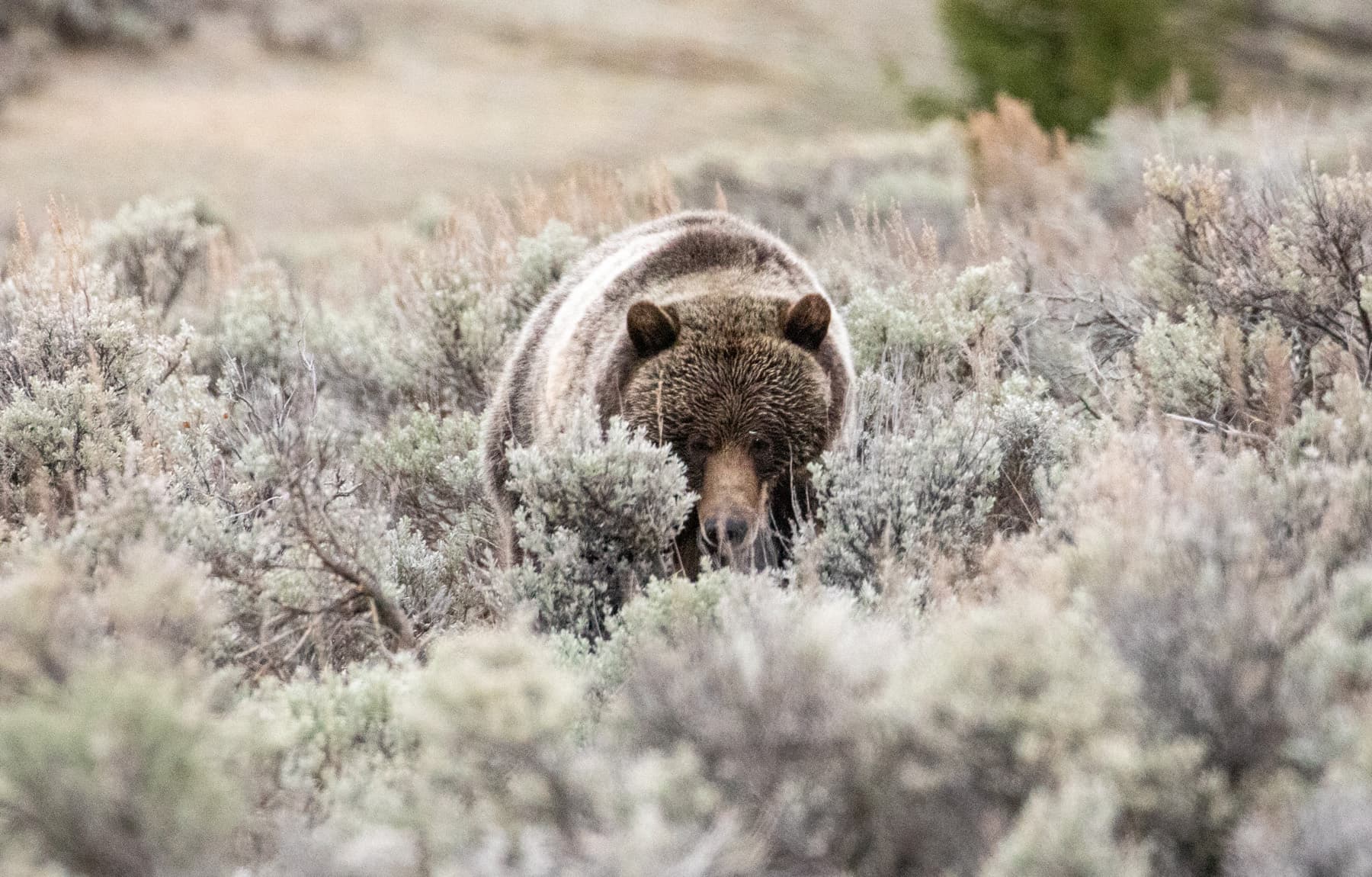
Grizzly bear at Soda Butte Creek
NPS / Jacob W. Frank
NPS / Jacob W. Frank
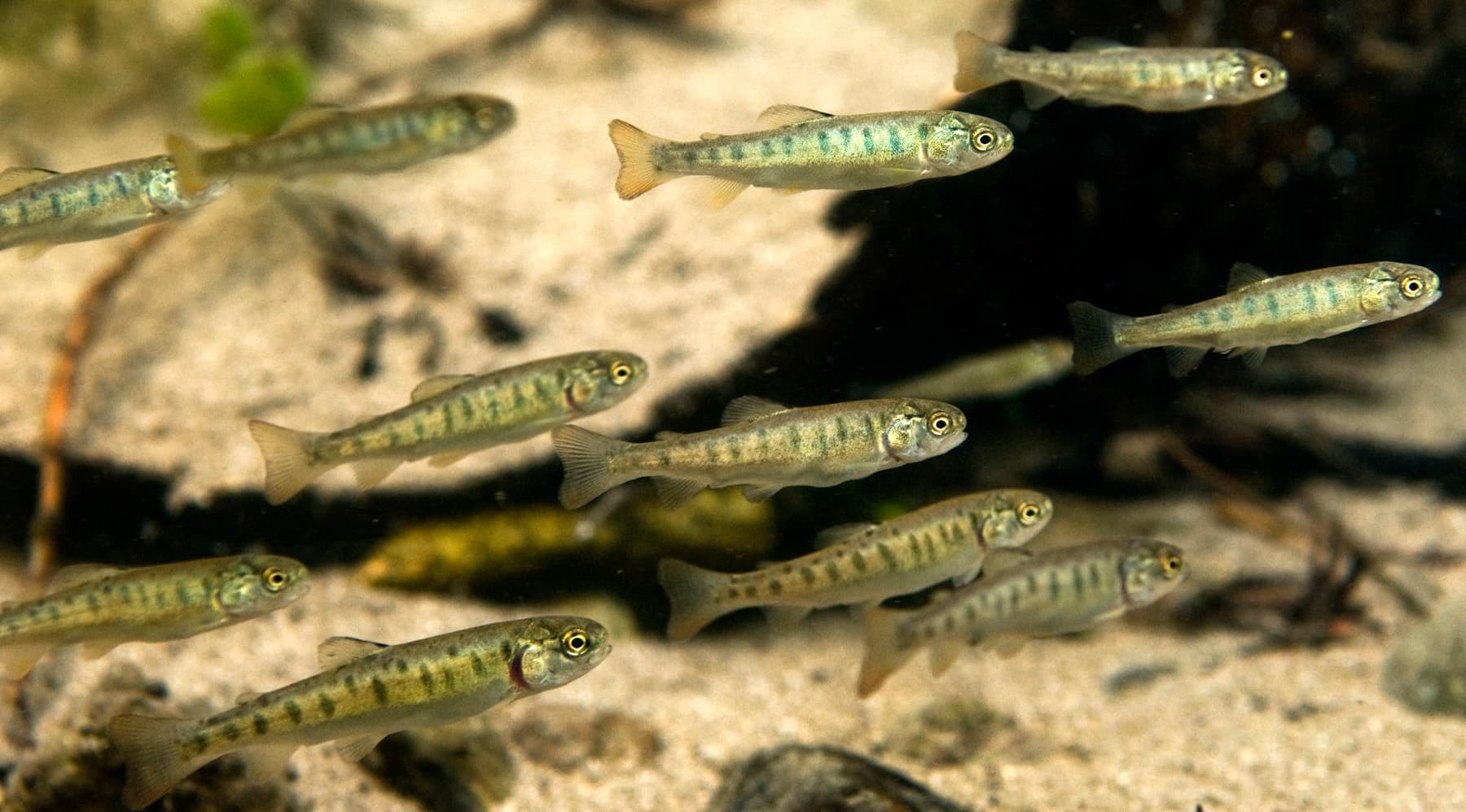
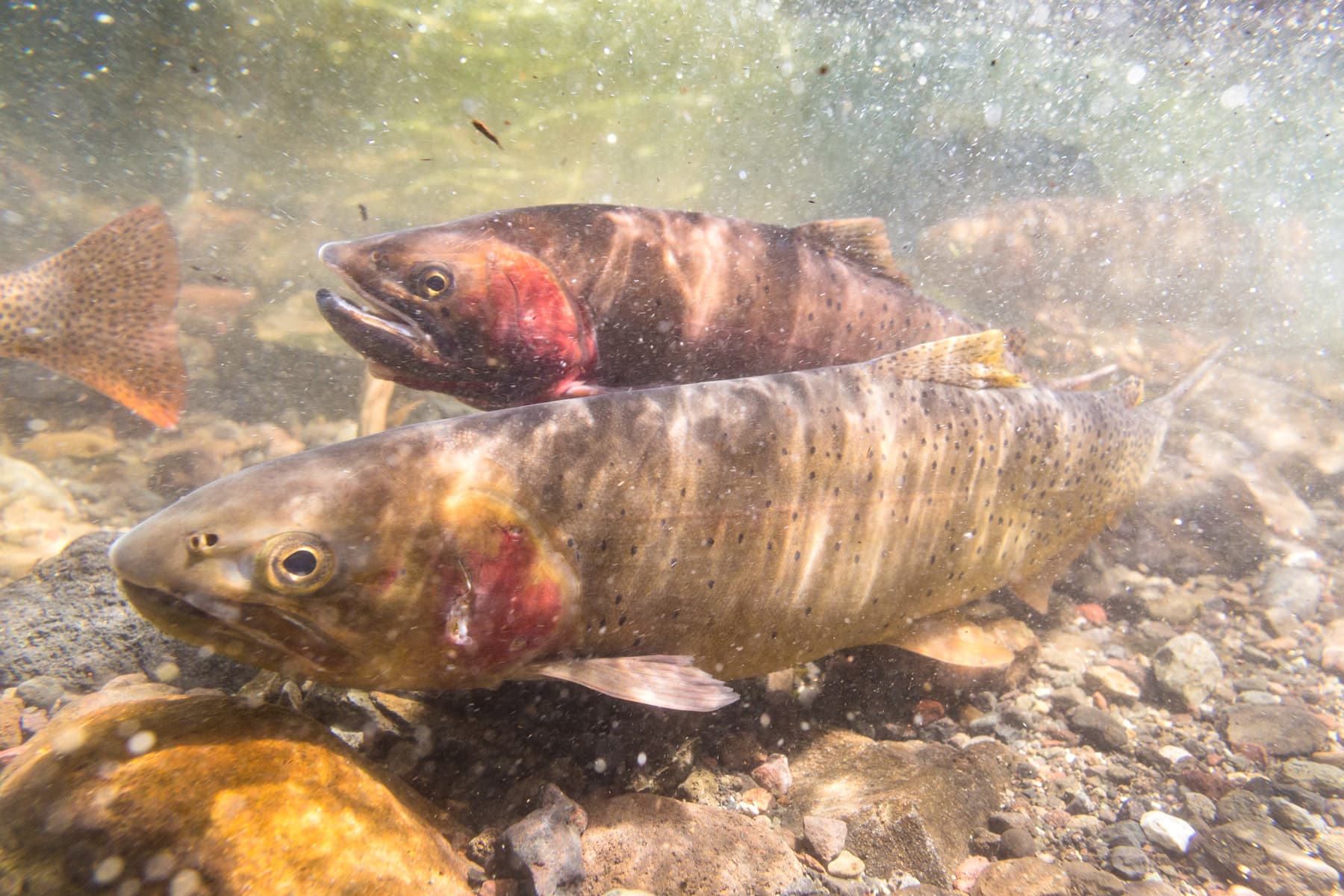
Young of the year cutthroat trout;
Jay Fleming;
August 2012;
Catalog #19605d
NPS / A. Falgoust
Sanctuary for Wildlife
With herds of free-roaming wild bison and elk, the rare wolverine, bald eagles, and bears—both black and grizzly—Yellowstone is a renowned haven for wildlife, making it one of the best places in the world to research certain species and how they interact with their ecosystem.
“We have the whole suite of wildlife that was here even before the park was established,” says Kerry Gunther, bear management biologist for the park. “Wolves and grizzly bears and cougars have been eliminated from a lot of places in the country. We still have all those carnivores as well as the ungulates that they prey on.”
Kerry, who began working in park bear management in 1983, points to Yellowstone’s massive size. The park encompasses more than 2.2 million acres, less than one percent of which has been impacted by roads and other human development. “Even with over four million visits a year now, almost all of that visitation is just roadside and [at] developments, so the backcountry is still pretty wild and pristine,” he says. “The park is a great lab for looking at how systems work without much human influence.”
Bear management is, of course, a big piece of the puzzle. In Yellowstone, overseeing the big beasts often comes down to people management instead. Kerry notes that the roughly seven months per year when bears are active, and gorging on a full year’s worth of nutrition, are the same months of peak human visitation. This creates a situation ripe for conflict.
Bear management has changed considerably over the years. Once, bears scavenged in the park dump and were fed by staff and visitors alike. Not surprisingly, that situation led to injuries, deaths, and property damage, so in 1970 a new plan was implemented. Today’s bear management focuses on reducing interspecies conflict by educating visitors and preventing bears from accessing human food or garbage.
Kerry’s team works on a number of projects related to how bears and humans interact. They are also working on estimating the density of grizzly and black bear populations using a system of trail cameras and mathematical modeling. They conduct observation flights aimed at counting females and cubs to estimate populations, and by research trapping and radio-collaring individual bears. They monitor important food sources, like the seeds of whitebark pine and spawning cutthroat trout, and examine bear reproduction and how it may change in different climate scenarios.
During summer, their busy field season, the team collects data and hazes bears out of developed areas like campgrounds when necessary. “We do a lot of preventive management to prevent human-bear conflicts,” Kerry says. This can involve posting warnings or temporary closures when recent bear activity has been reported near a trail or campsite. “If an ungulate, such as [an] elk, deer, or moose, dies in a visitor-use area, we’ll move the carcass so it doesn’t draw bears into developments or roadsides or campgrounds or trails. We actually spend a fair amount of time moving carcasses.”
After a busy summer, Kerry’s team spends the winter analyzing the data they’ve amassed and learning more about the bears in the park—and in the Greater Yellowstone Ecosystem, a surrounding collection of watersheds comprising more than 34,000 acres in Wyoming, Montana, and Idaho. It’s a massive region roughly ten times the size of the national park at the center of it all.
NPS / Jacob W. Frank
NPS / Ashton Hooker
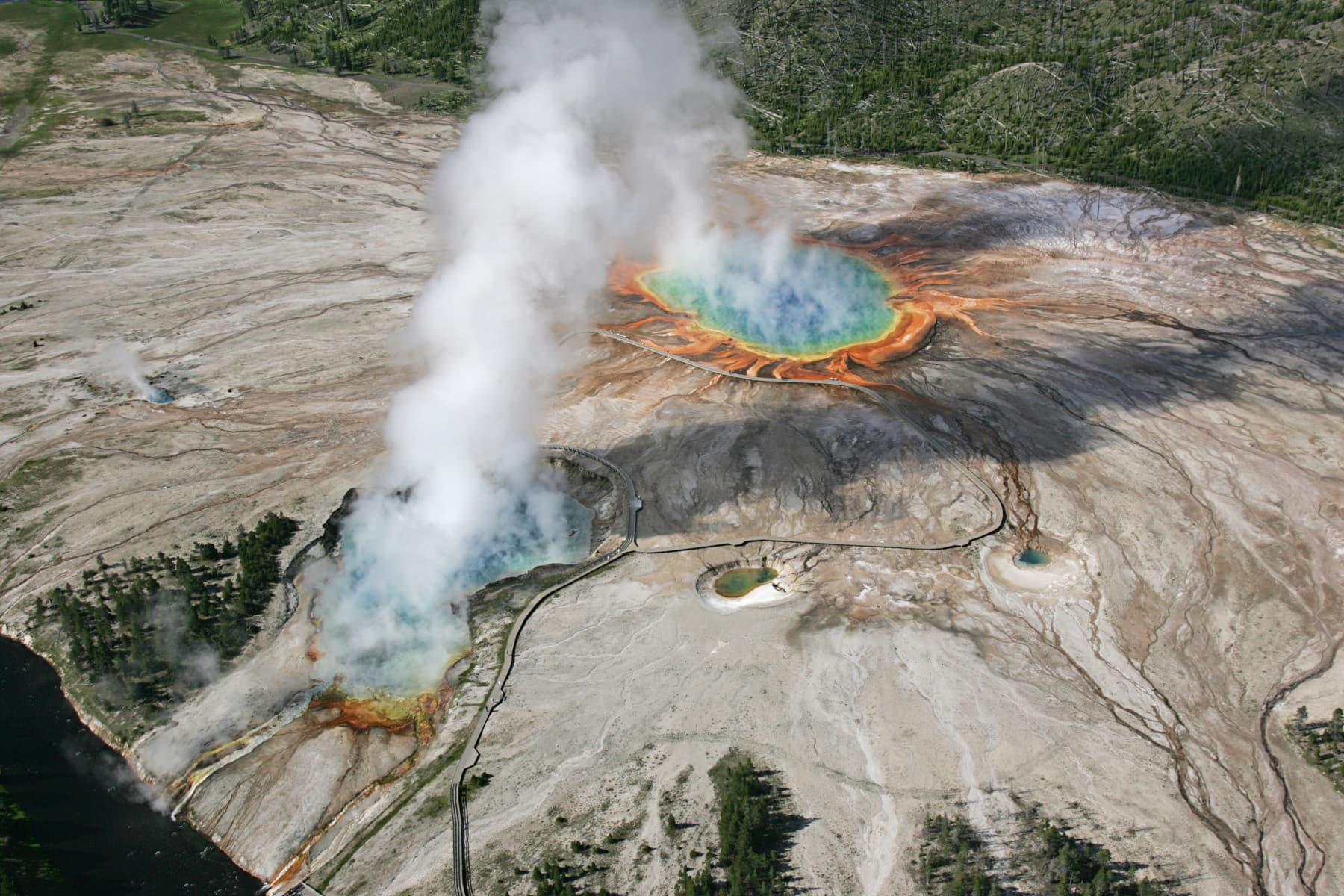
Aerial view of Excelsior Geyser and Grand Prismatic Spring in Midway Geyser Basin;
Jim Peaco;
June 22, 2006;
Catalog #20386d;
Original #IT8M4075
NPS / Jacob W. Frank
NPS / Jacob W. Frank
NPS / Jacob W. Frank
NPS / Neal Herbert
Geologic Wonders
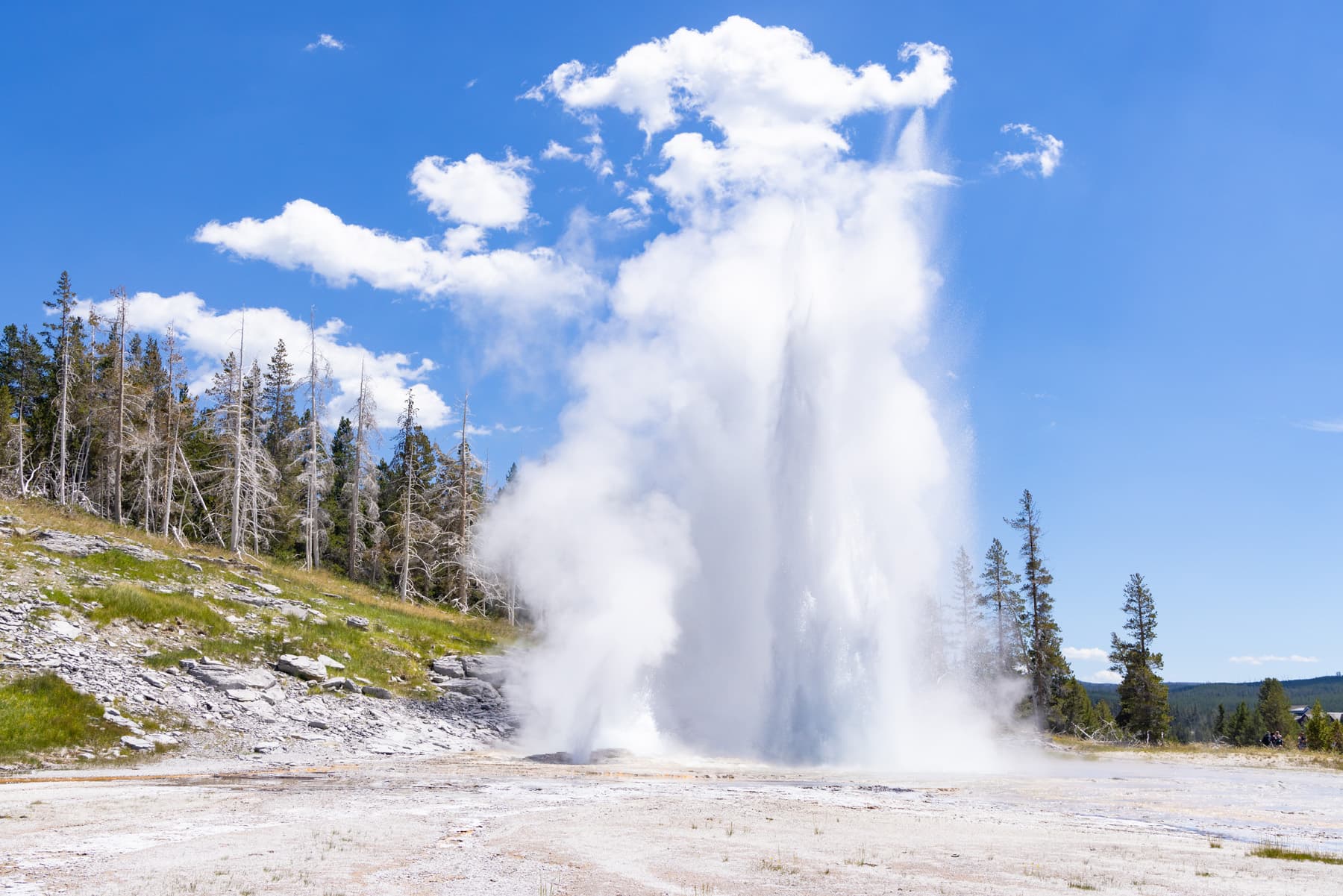
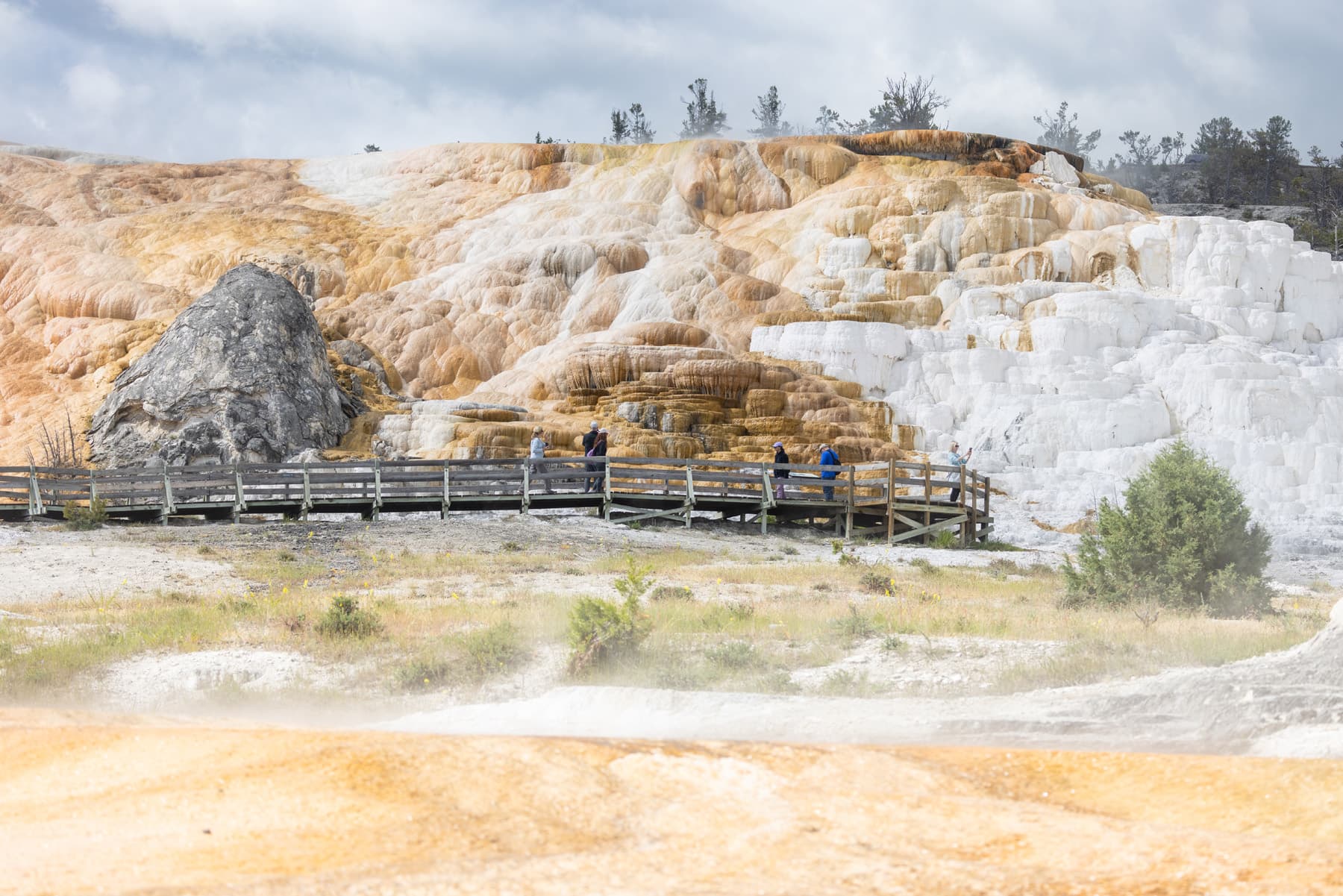
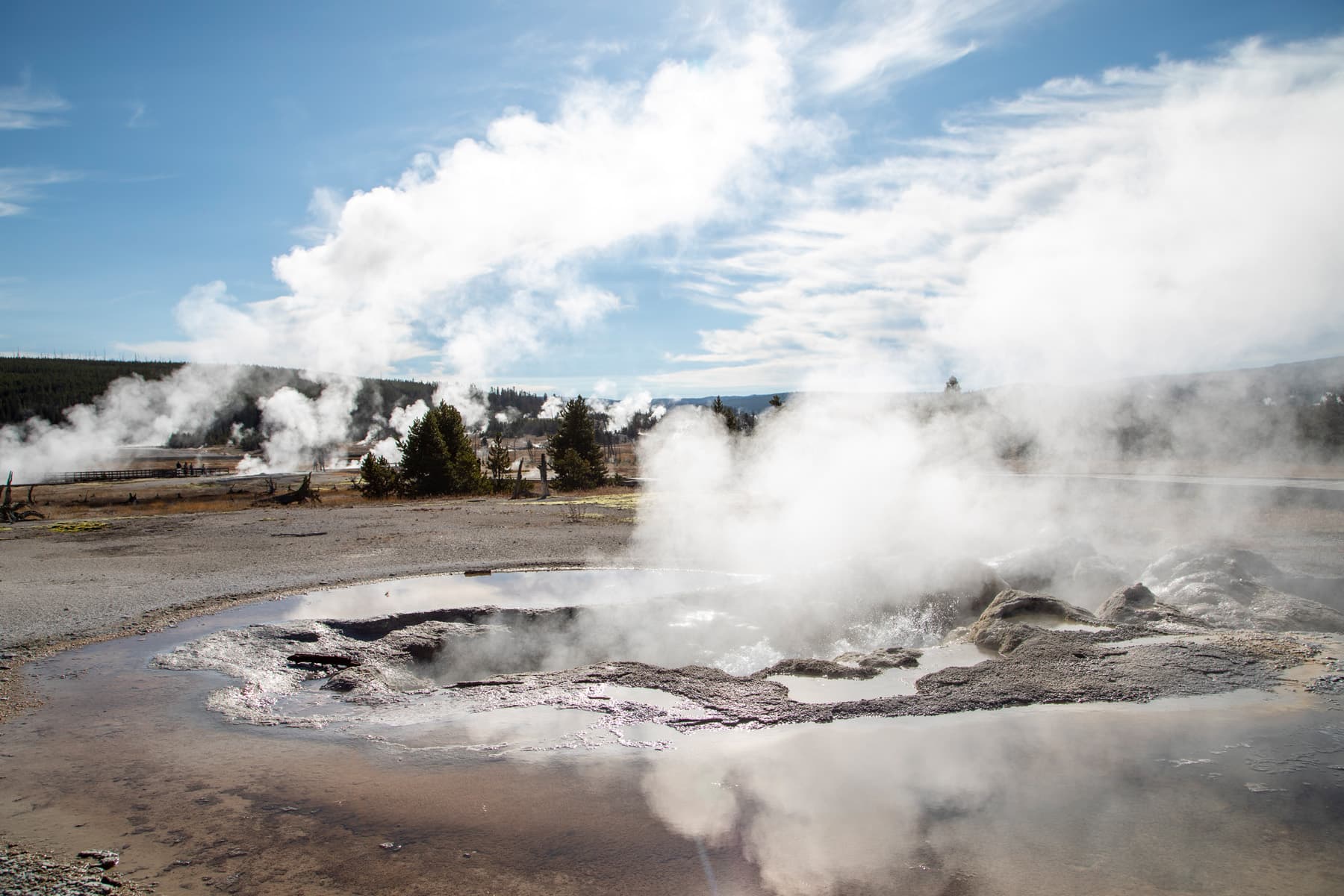
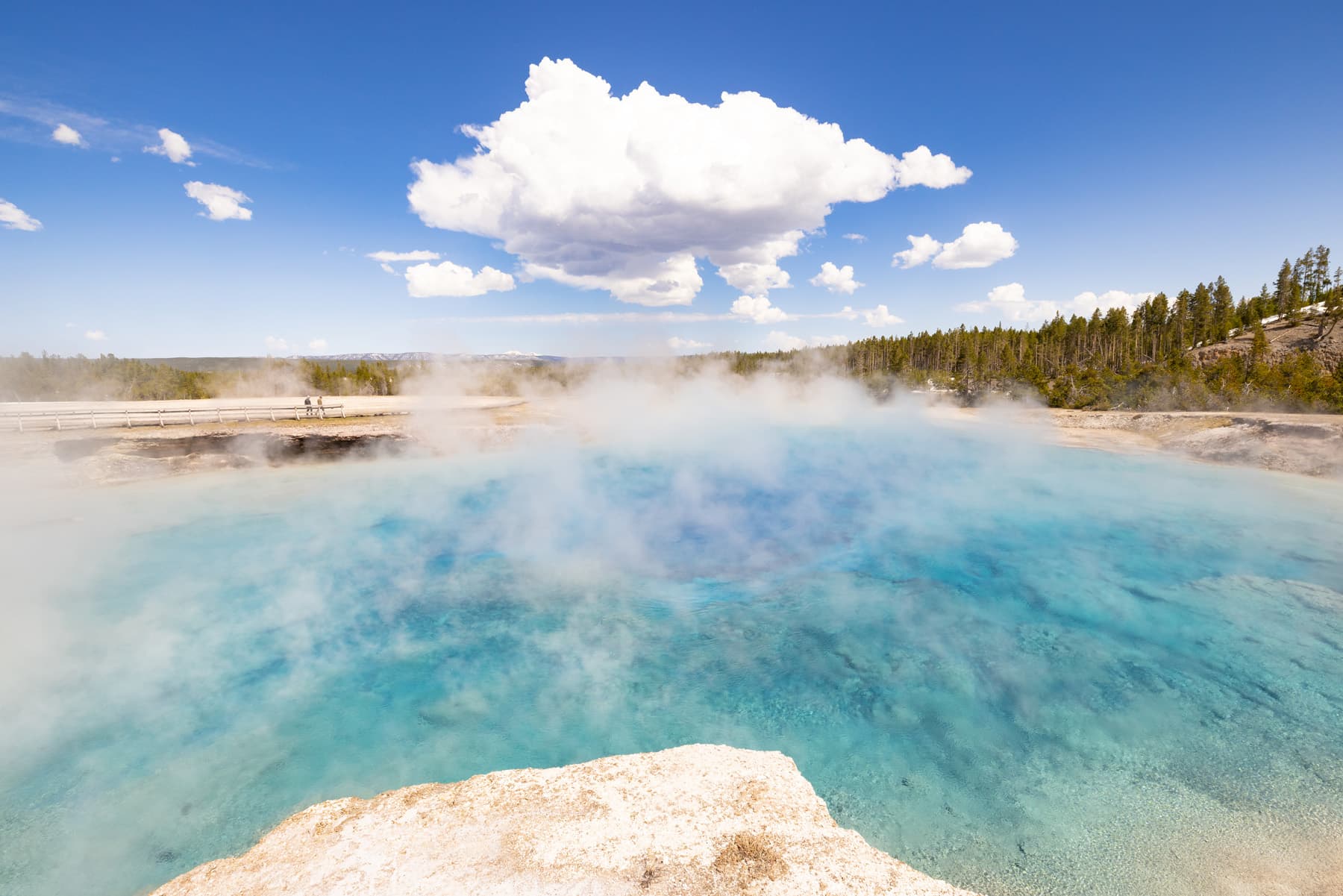
With more than ten thousand hydrothermal features, from geysers and hot springs to mudpots, travertine terraces, and fumaroles, Yellowstone is literally a hotspot for researchers. Here scientists can study the constant volcanic unrest responsible for so much of the park’s intrigue. This includes seismic activity—including two different types of earthquakes—as well as hydrothermal features and the fascinating “extremophilic” microorganisms that thrive in their conditions.
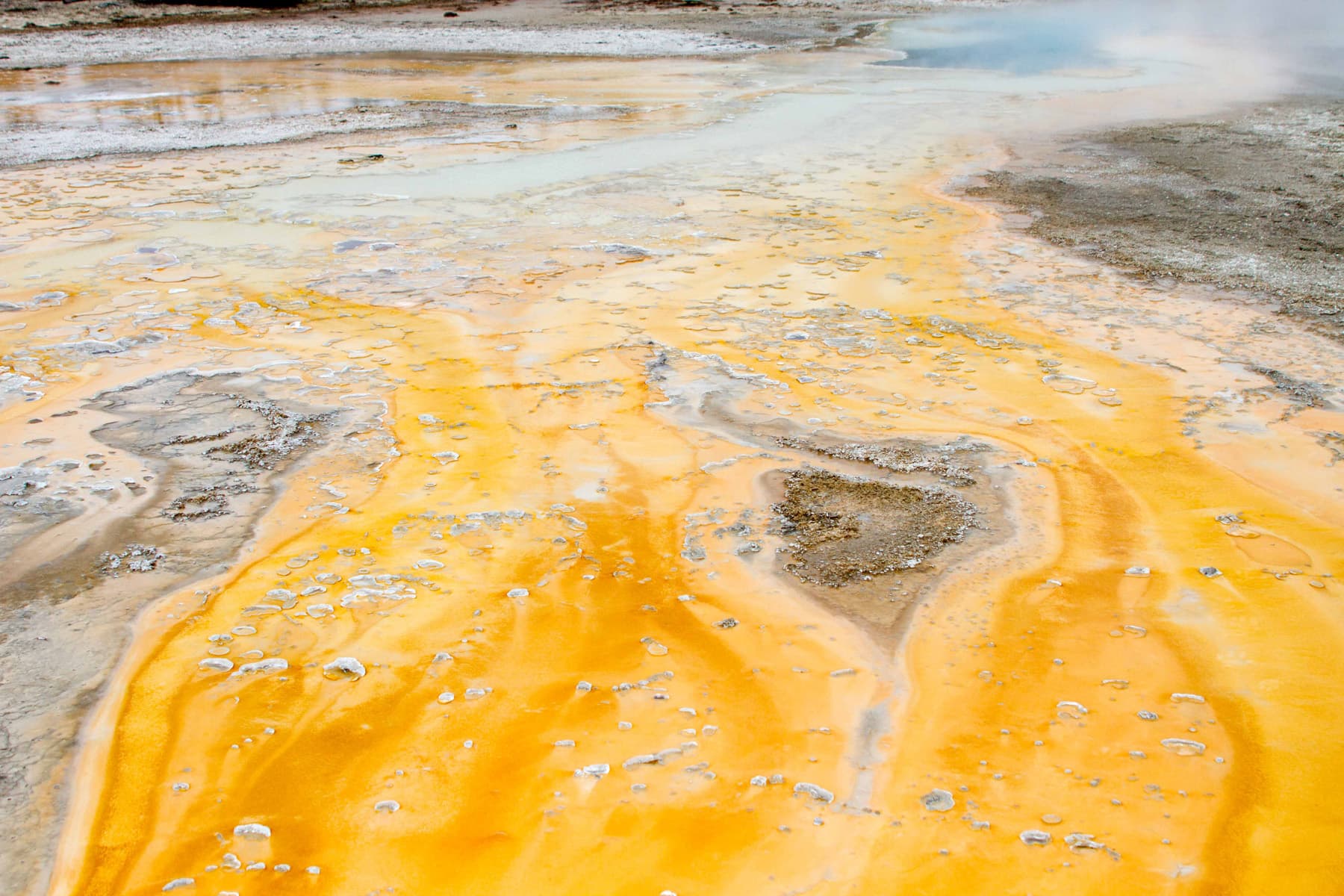
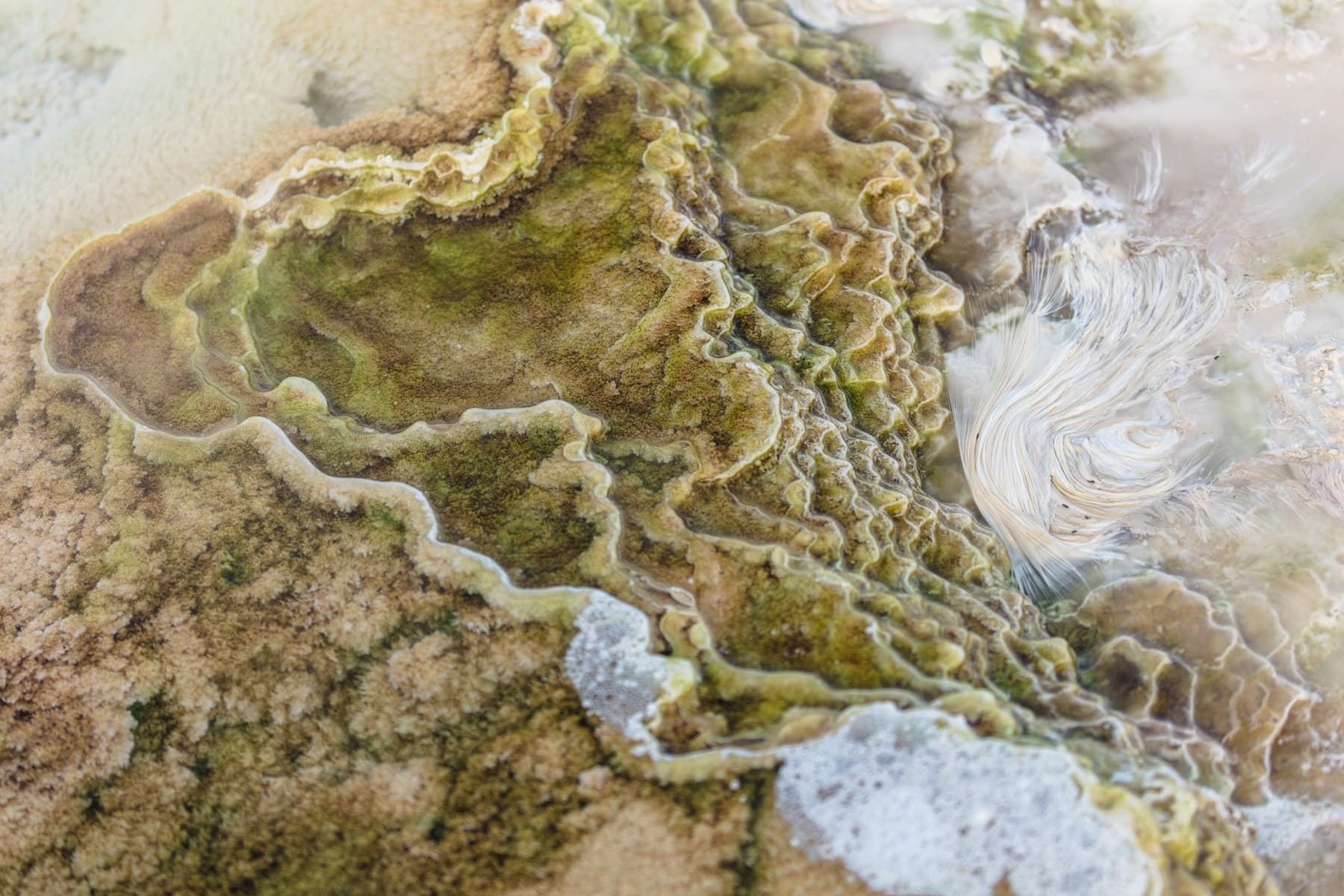
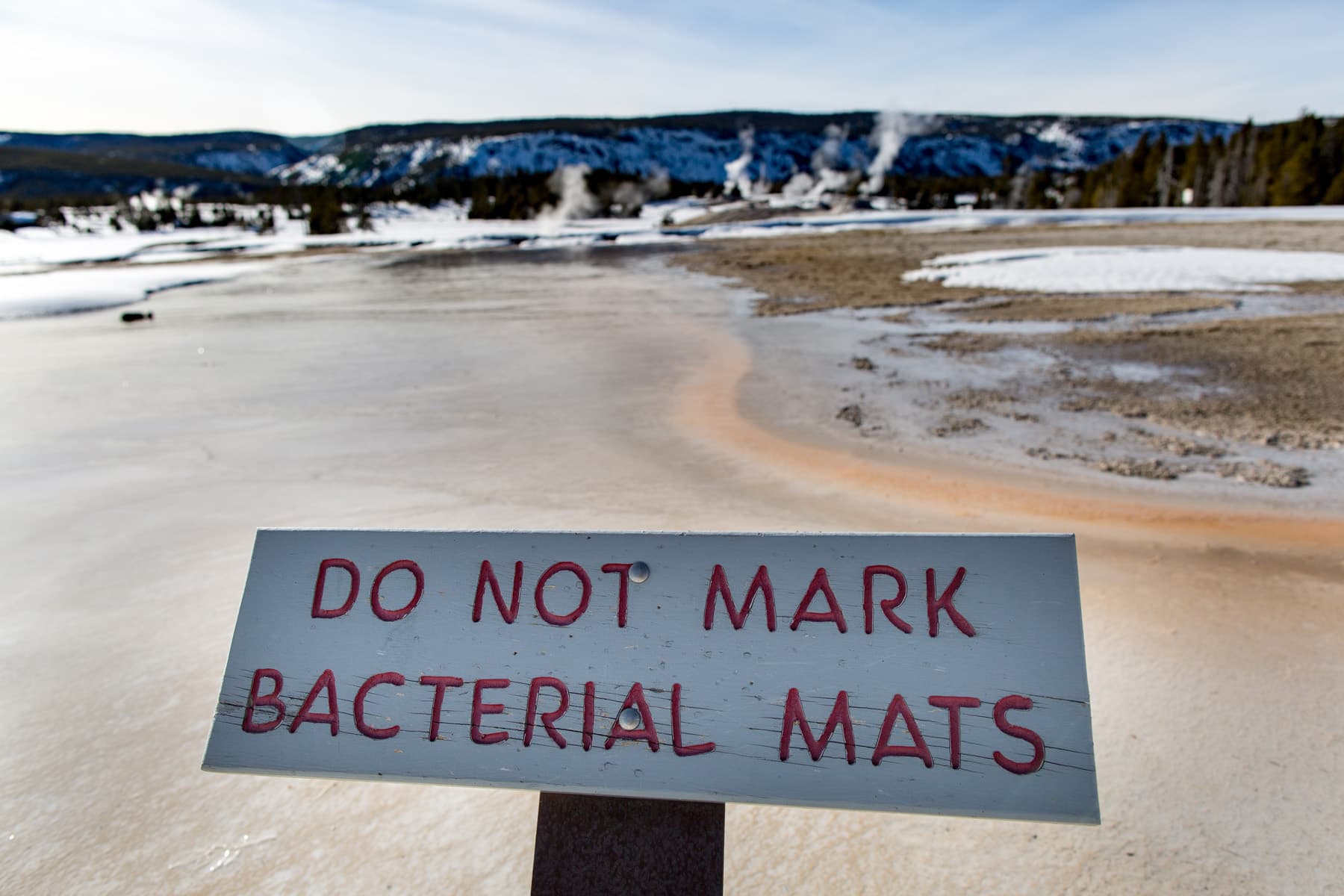
Thermophiles are organisms that can survive and grow in severely hot temperatures. Extremophiles, as the name suggests, thrive in even more extreme environments, such as springs with scalding water that is either highly acidic or highly alkaline. In Yellowstone, you can see these organisms as mats of color in certain hydrothermal features. Researchers studying them have made important, often surprising, discoveries. Dr. Kary Mullis received the Nobel Prize in Chemistry in 1993 based on a bacterium found in Yellowstone’s waters. He received the award for developing the polymerase chain reaction (PCR) method, which is now frequently used in medical research, genome mapping, and even crime scene investigations. The PCR process was developed using a bacterium that Dr. Thomas Brock and colleagues isolated from a park hot spring in 1966. The enzyme’s heat tolerance was key to its success at replicating DNA strands at high temperatures, which led to Dr. Mullis’ invention.
With the world’s highest concentration of certain hydrothermal features at hand, Yellowstone researchers are focused on the past and present of the underlying geology, as well as on the massive super volcano lying underneath the park. Over the past 2.1 million years, the volcano has had three major eruptions, but scientists say there is no imminent risk of another.
“I think the biggest misconception … is probably the idea that we’re going to have a big volcanic eruption any time soon,” says Jefferson Hungerford, a park geologist who has worked in Yellowstone for eight years. However, he differentiates the large eruptions people repeatedly ask about from hydrothermal explosions, which are more common.
In July 2024, there was a hydrothermal explosion at Biscuit Basin that shot steam and debris hundreds of feet in the air and destroyed a nearby boardwalk. While it tossed rocks around, no one was injured. The area was soon closed to visitors. This explosion, Jefferson explains, was shallow and the result of boiling water converting to steam within a confined space, rather than volcanic activity.
Scientists analyze water chemistry to find any recent increases in volcanic activity. With more than a hundred hydrothermal areas in the park—many located far away from boardwalks and trail systems—attempting to monitor them all is a daunting challenge.
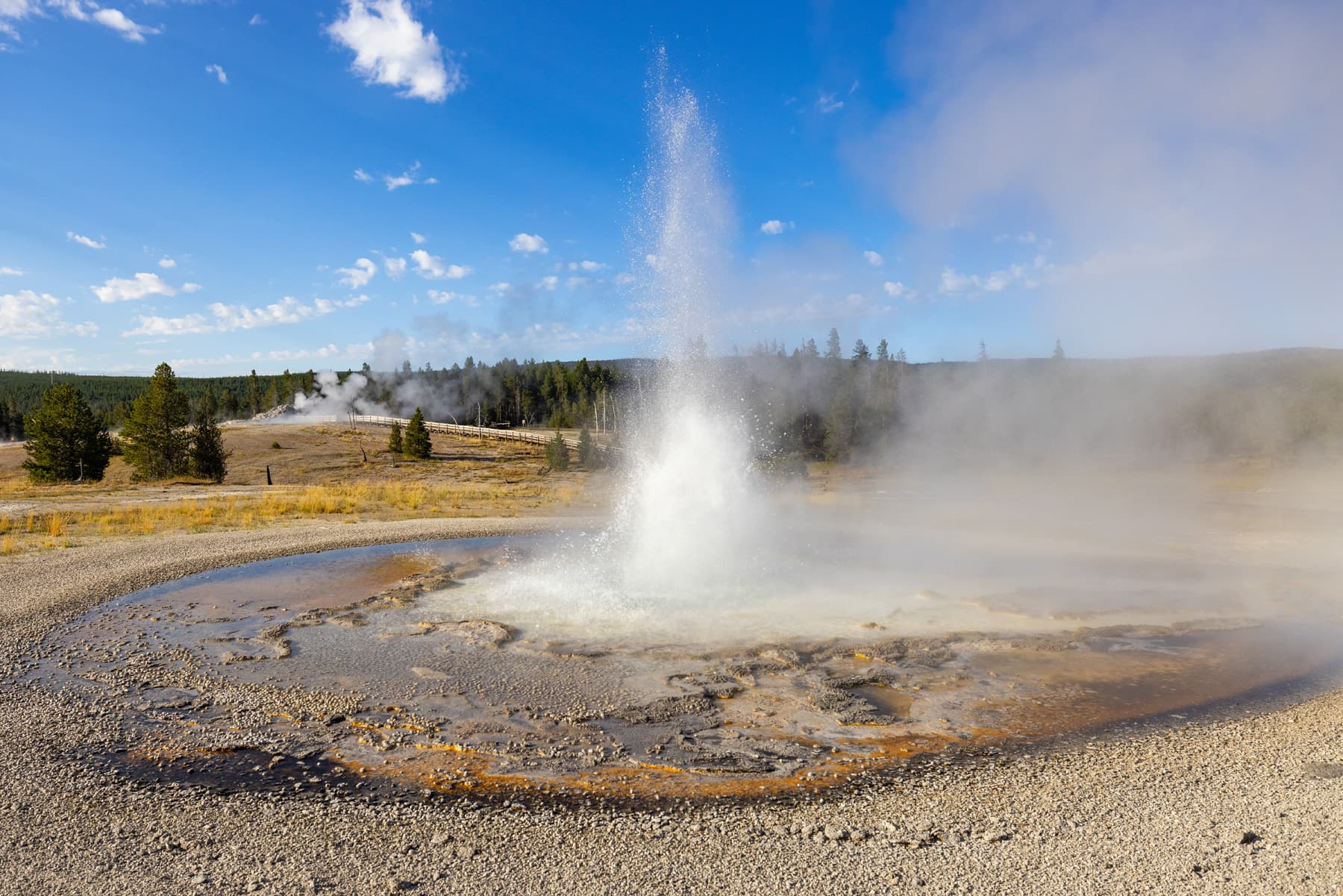
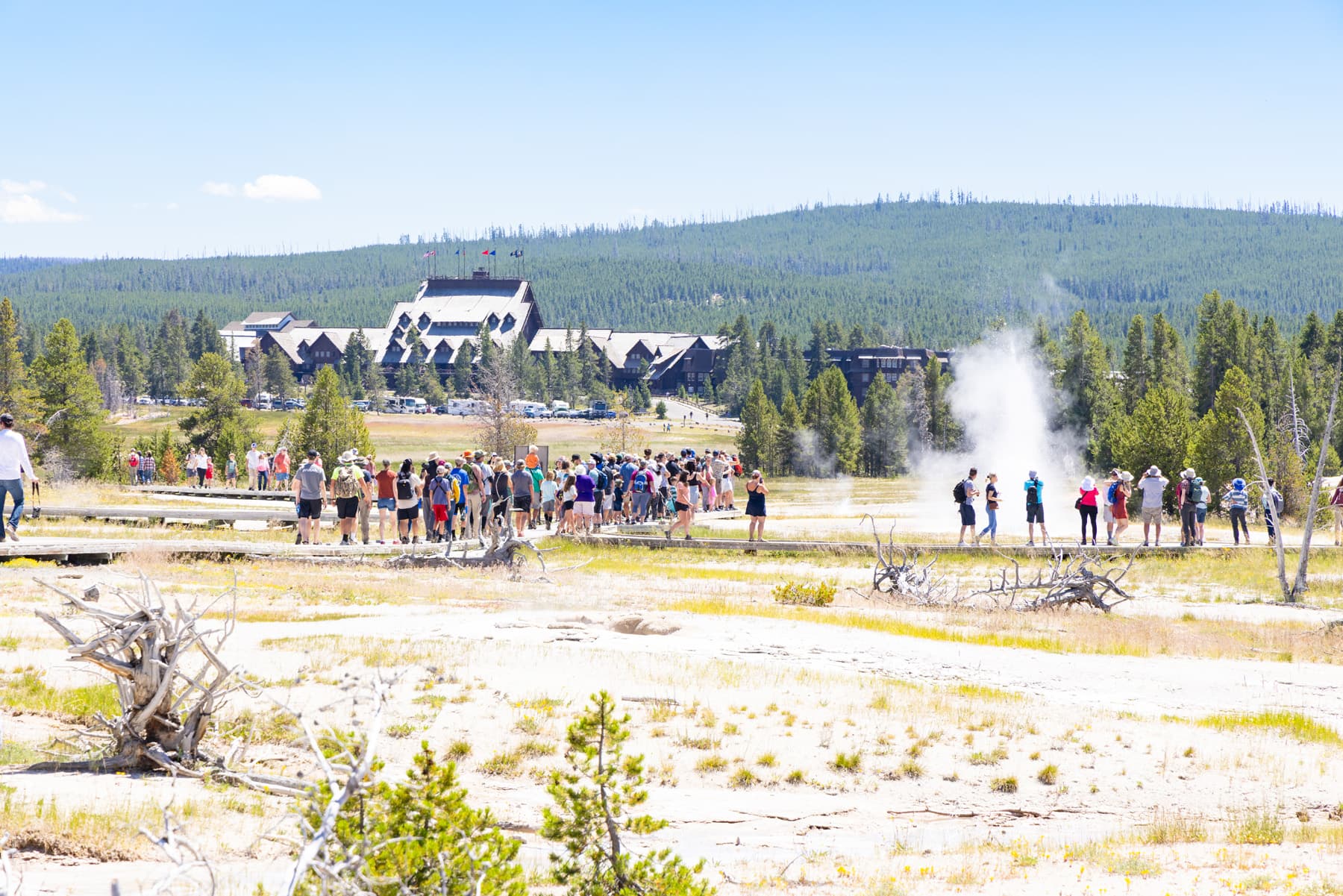
Yellowstone contains around five hundred geysers, a handful of which, like Old Faithful, are relatively predictable. The park publishes eruption times for a few geysers (with a range of variation from a few minutes to a three-hour window), including Old Faithful, Castle, Grand, Daisy, Riverside, and Great Fountain.
“We use statistical means to look at previous activity and we just project that out into the next eruptions,” Jefferson says. “It’s simple statistics. You just look at old behavior, and you use that to model new behavior.”
At the same time, Yellowstone is very seismically active, with two different types of earthquakes: Tectonic quakes involving earth movement, and quakes related to the volcanic system. Every year, anywhere from seven hundred to three thousand earthquakes occur in the park, many in swarms. But most are so small visitors don’t even notice them. The park has seen some big ones, however, including the 7.3-magnitude Hebgen Lake Earthquake in 1959 that killed twenty-eight people and created a new water body, dubbed Quake Lake.
An array of fifty seismometers, part of the Yellowstone Seismic Network, monitors nearby activity. They are a collaboration with the U.S. Geological Survey and the University of Utah.
“Throughout biology and geology there is so much that we learn from this system,” Jefferson says, pointing to the well-studied volcanic system, seismic arrays, rocks ranging from three billion years old to those being created today, geomorphic change, landslides, flood events, and more. “It’s incredible how much there is to just learn from this area and how best we interact with this area, too, so we don’t put people or communities at risk.”
NPS / Jacob W. Frank
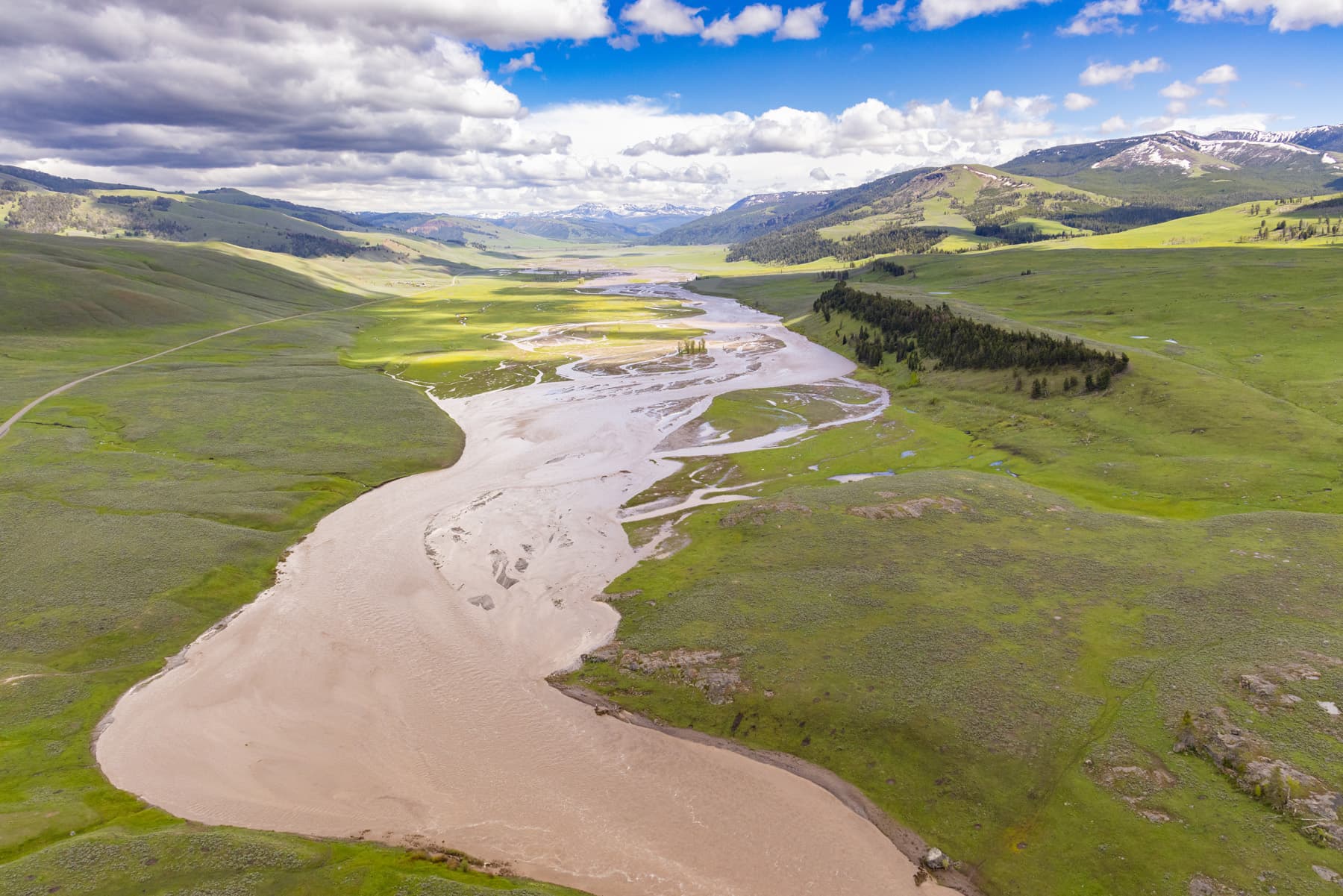
NPS / Jacob W. Frank
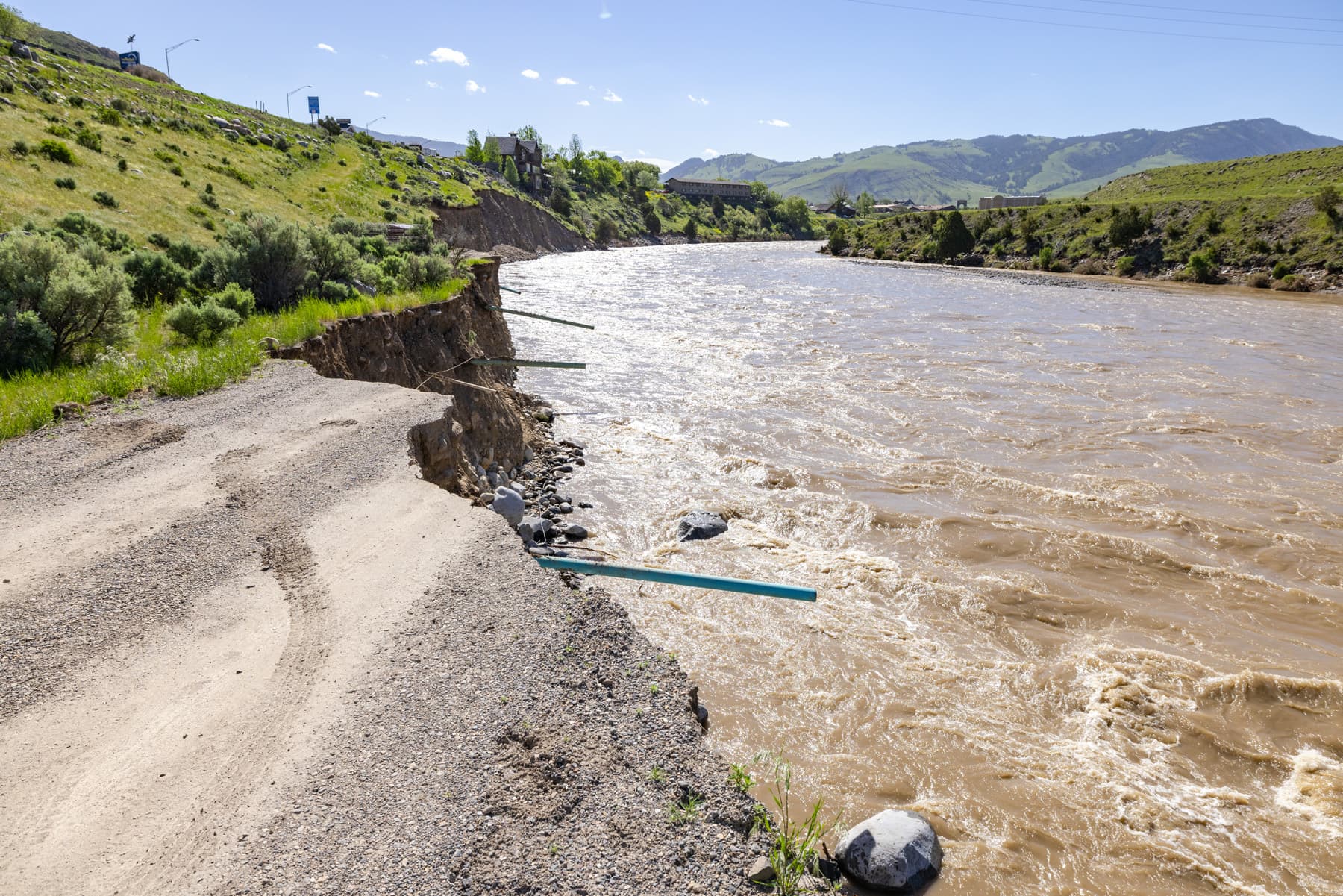
NPS / Jacob W. Frank
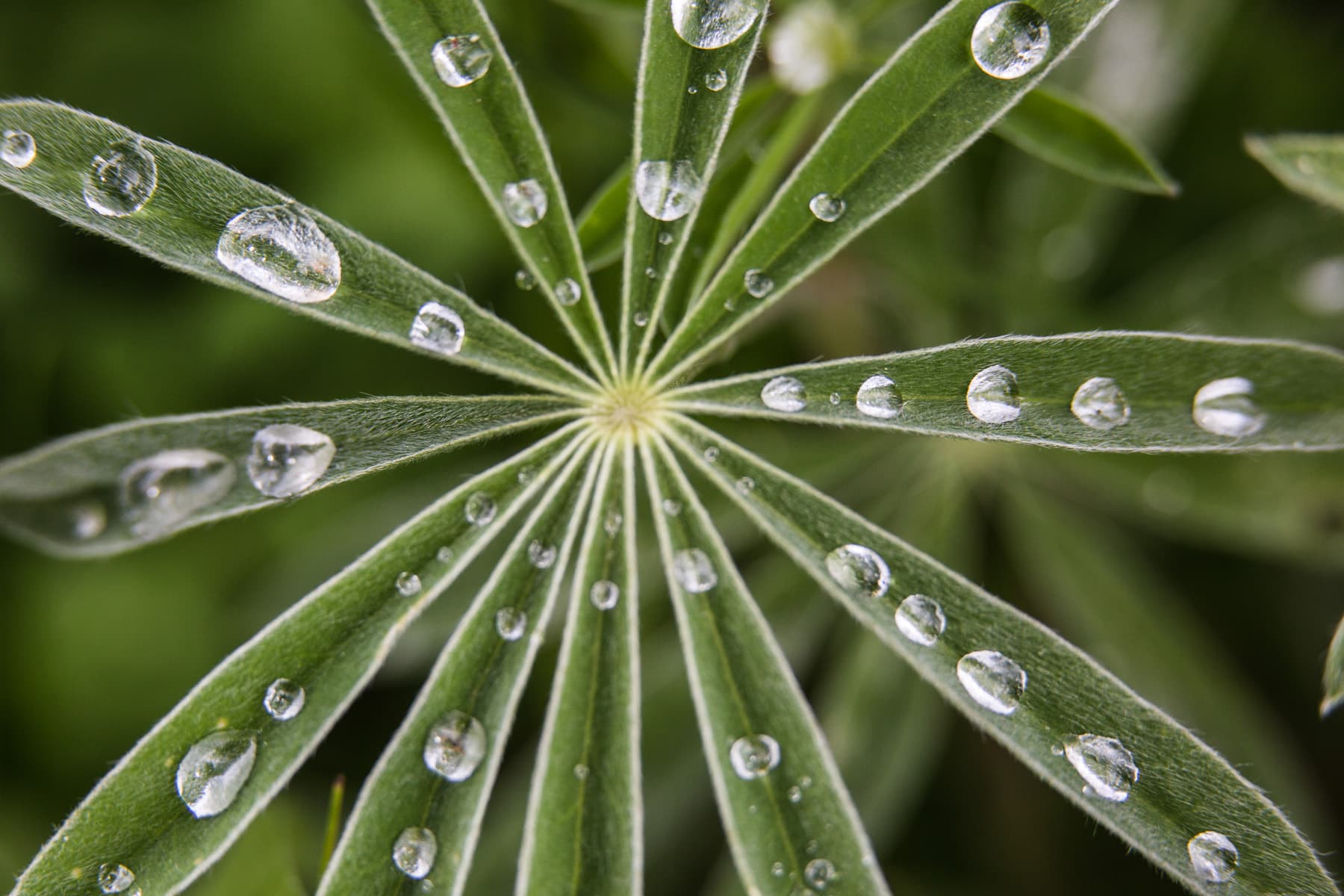
NPS / Neal Herbert
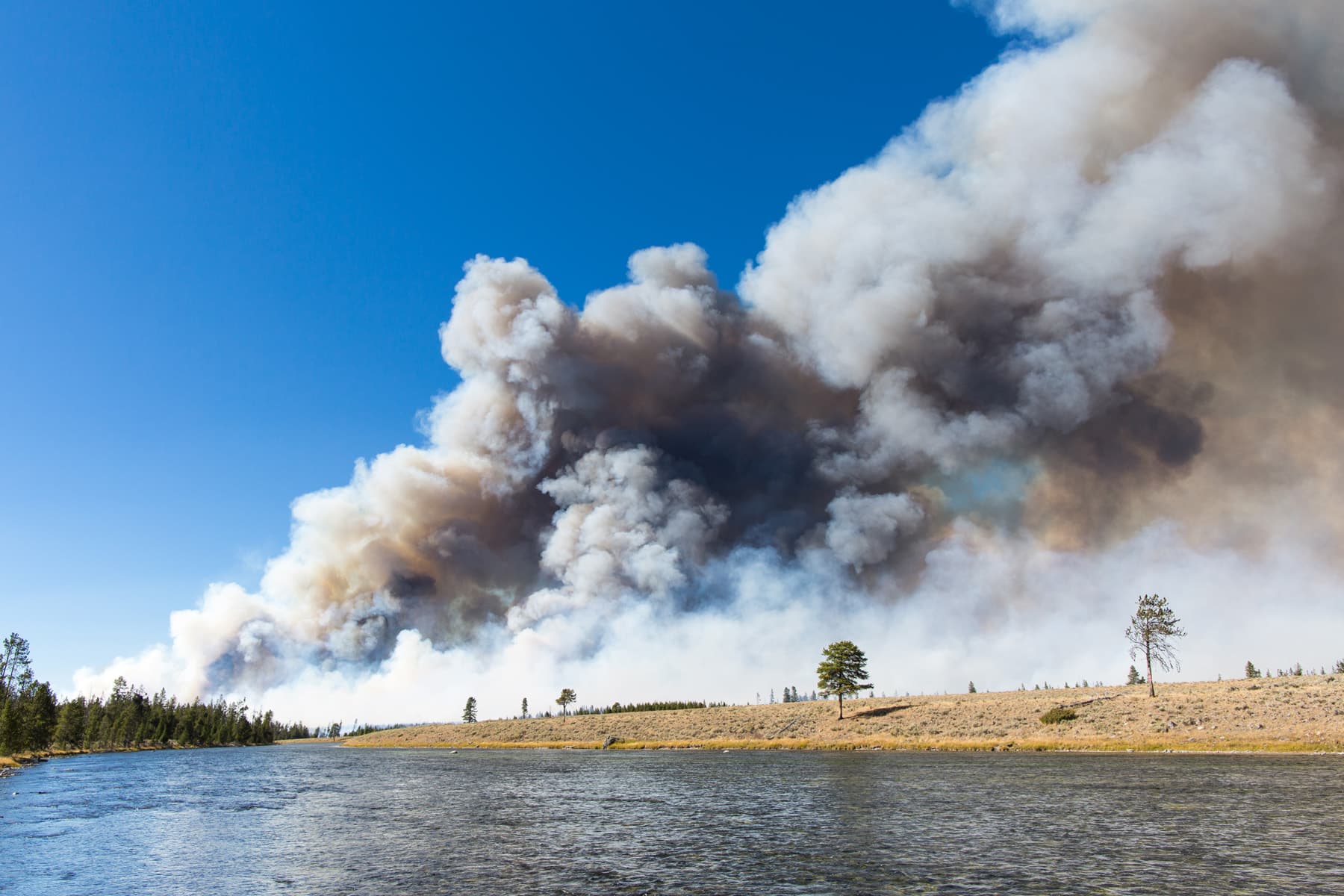
Smoke from burnout operations rises above the Madison River.
A changing environment
Amid Yellowstone’s vast undeveloped area, researchers focus on one area of study that touches nearly every other field: climate change. This issue affects everything, from fire risk to bridge planning to bear behavior.
The Greater Yellowstone Climate Assessment, released in 2021, delves into “past, present, and future climate change in Greater Yellowstone watersheds.” The paper notes that while temperatures will continue to rise, snowpack and summer runoff will decrease significantly (though precipitation will increase slightly), and the growing season will lengthen by up to forty days by 2100.
A longer growing season and other factors, including reduced water availability, will contribute to increased fire risk. This is likely to lead to more frequent larger forest fires, which affect the ecosystem in many ways.
“Fires are a big agent of change,” says Ann Rodman, Yellowstone National Park
supervisory GIS specialist, who coordinates efforts involving climate scientists and the ecosystem. “As we get warmer and drier summers, we have this potential for bigger fires… the conditions that supported the 1988 fire season, where we had really big fires that burned a lot of acreage. Those same conditions are going to become more likely.”
Climate change also shifts the timing of snowmelt. Warmer temperatures lead to faster snowpack loss, which means a rush of early season water followed by diminished rivers later in the summer. This creates warmer streams, which harm the native trout that thrive in cold water chilled by snowmelt.
Other animals are likewise impacted by changes in the snowpack and rising temperatures. Wolverines need deep snow to construct dens, wolves use deep snow to help with hunting, and pikas have a narrow range of temperature tolerance. Amphibians and birds will likely lose important wetland habitat, and many species will face changes in food availability, which could reduce reproductive success.
Plants are also vulnerable, with climate change leading to more insect outbreaks, including western spruce budworm and bark beetle infestations. Changing conditions make it easier for invasive plants to thrive and eventually push out native grasses and threaten the ecosystem. Highly flammable invasives like cheatgrass also contribute to fire danger. Researchers are working on ways to detect the spread of cheatgrass early, including using drones and satellite systems, so they can prioritize mitigation.
Park officials are also working to incorporate projected climate change into plans for future infrastructure work. In 2022, the park experienced a five-hundred-year flood event, with some areas receiving 7.5 to 9.5 inches of rain in the span of twenty-four hours. Massive flooding, exacerbated by the rainfall’s effect on snowmelt, washed out roads and closed the park for days. Ann describes this as “climate-amplified change,” with extreme rainfall at a time of very high runoff. The park is adjusting for these types of future hazards with its preventative measures. This includes things like installing larger culverts and building higher bridges to anticipate larger floods. Similarly, managers are considering the addition of air conditioning to park housing in areas that never needed it before.
“People are much more aware of climate change than they were ten years ago; [we are] thinking about it and [are] much more knowledgeable,” Ann says. “People with expertise in all kinds of areas are incorporating climate change into their research.”
This living laboratory known as Yellowstone National Park has yielded hundreds of scientific findings, from the renowned to the virtually unknown. Researchers continue learning more, and who knows what impact future discoveries may have? Protecting and preserving this place is important not just for its recreational offerings, but to safeguard the treasure trove of science within, for today and tomorrow.
Editor-at-large Michael McCoy contributed to this story.