The Quaking Aspen
June 18, 2025 , Fishlake National Forest, Utah
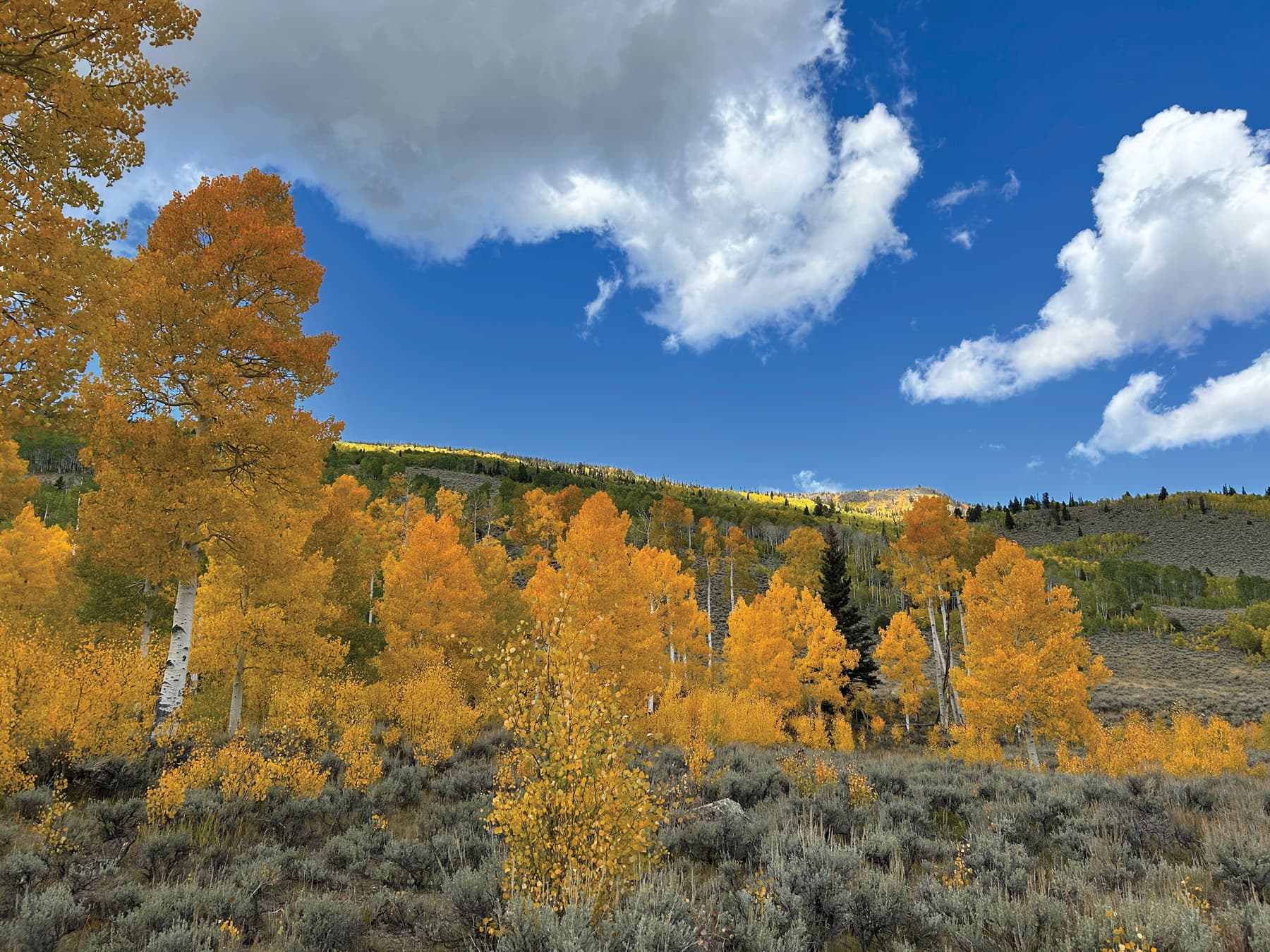
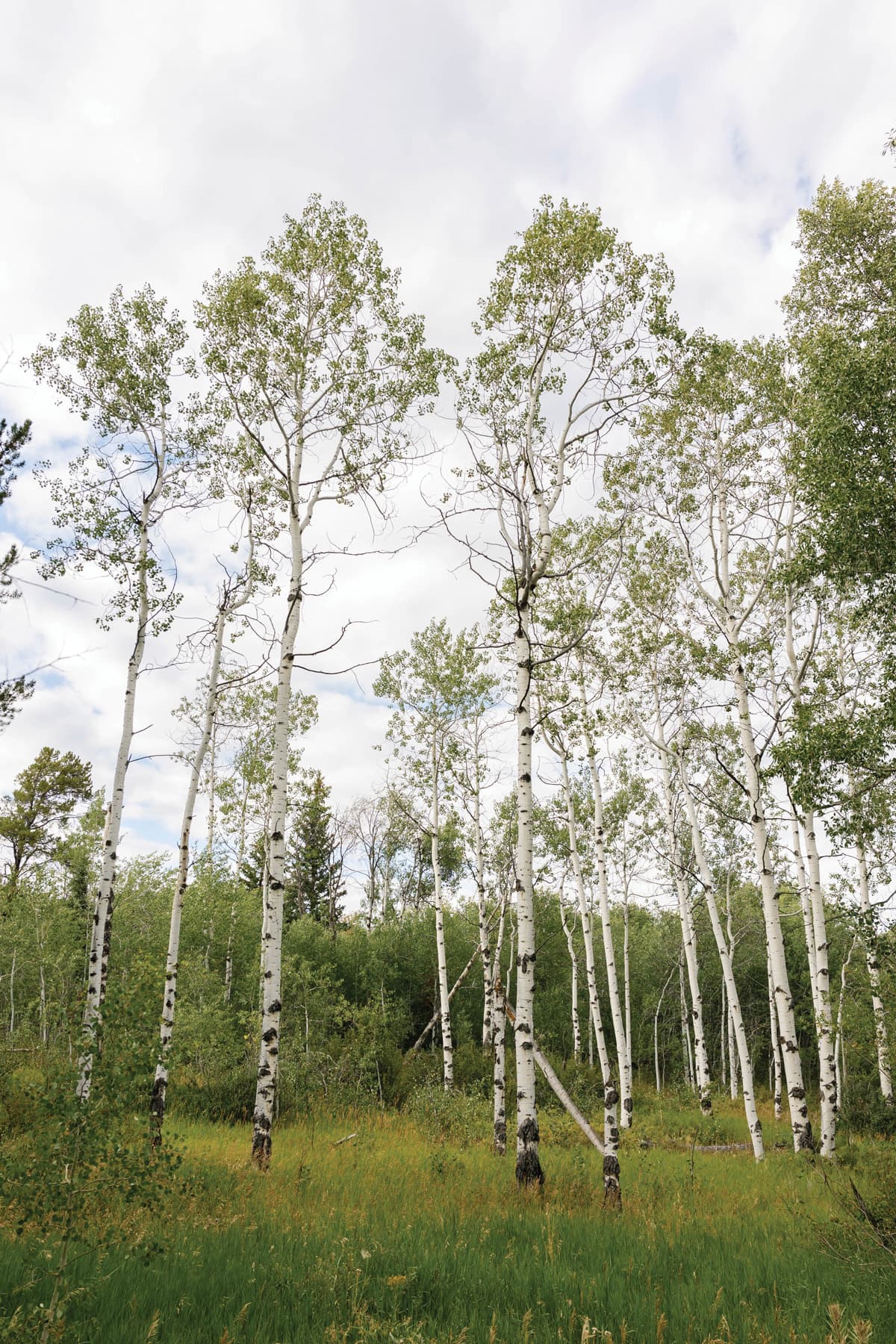
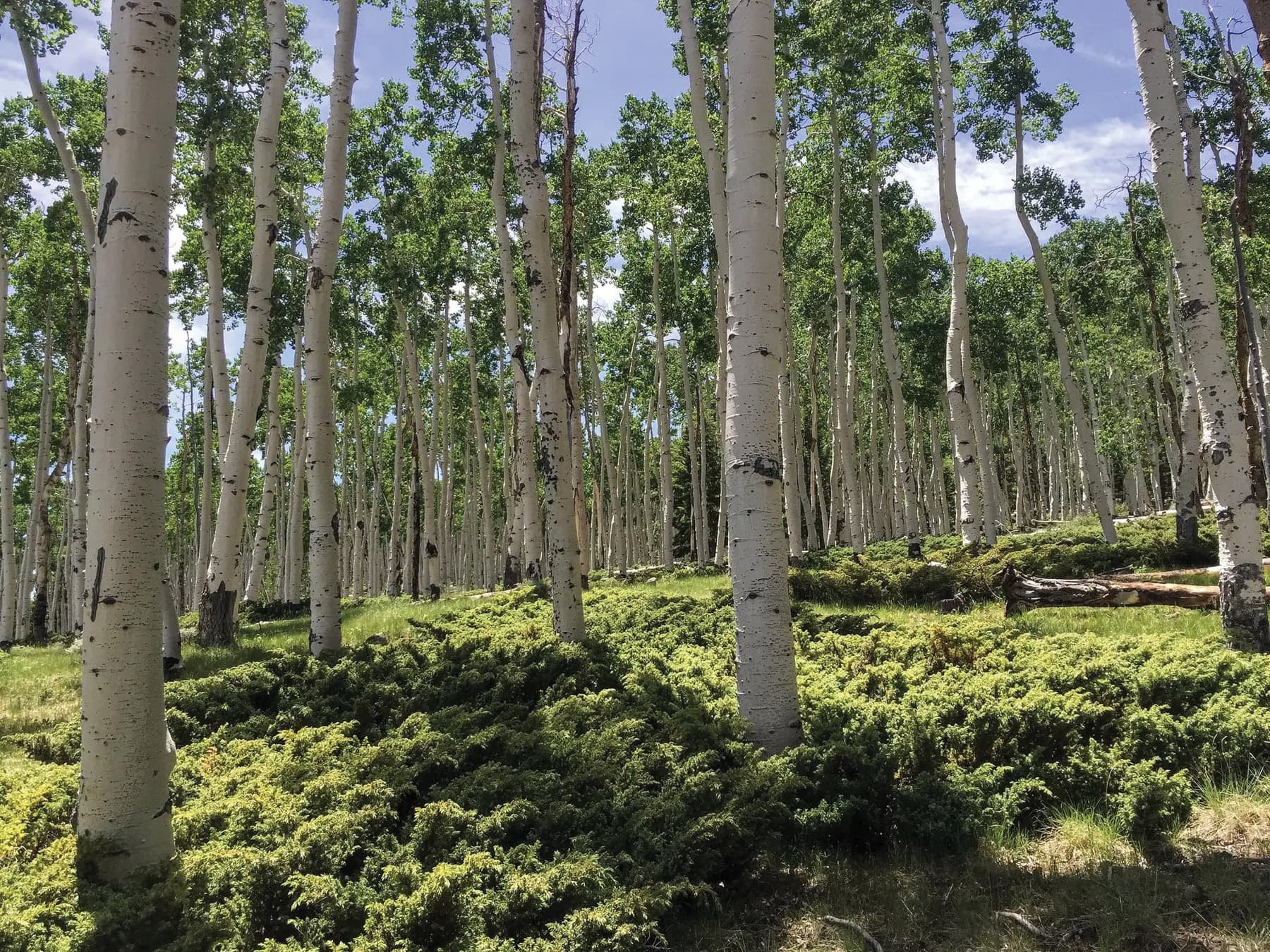
The afternoon is hot, even here at 8,500 feet above sea level. I’m happy to be relaxing in the copious shade of tall quaking aspens, sunlight bouncing off their trembling leaves overhead. Their foliage creates shadow-dancing on the beefy trunks of trees farther away. Black nubbins and fissures appear where branches once extended or injuries occurred. Black blotches on white trunks—zebra trees. Young aspen shoots boast large leaves that shiver alongside the smaller, more static sagebrush. Short aspens and tall sagebrush reach to similar heights of three to four feet; Populus tremuloides joining forces with Artemisia tridentata to create the understory. A brilliant male mountain bluebird pops out of a cavity near the base of one neighboring tree, close enough to hit with a pine cone if I wanted to (which I don’t). The large hollow may be the result of trauma, perhaps a lightning strike. Roughly half the circumference of the trunk base is gone, yet the tree appears to be thriving.
Sage and aspen blanketing a south-facing foothill slope: A ballet of birdsong, fluttering foliage, and upslope breeze. It’s a song and dance of the Mountain West.
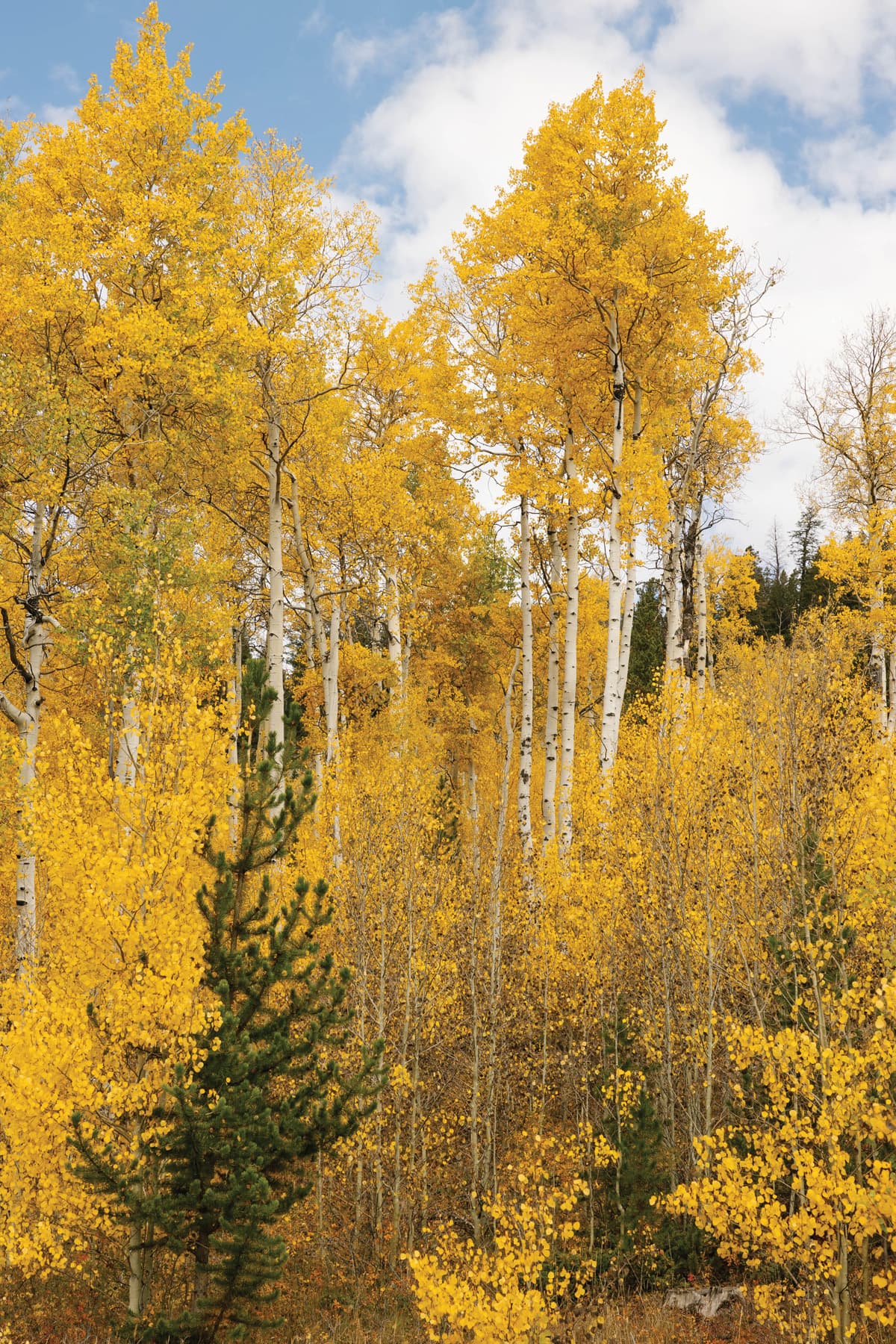
This could have been any old run-of-the-hill aspen grove whose sights, sounds, and shade I was enjoying. But it wasn’t. I was immersed in Pando, an organism so special and spectacular that it has sprouted its own nonprofit organization (friendsofpando.org). Possibly 10,000 years old—although the oldest trees, or “branches,” seen standing above ground are likely no more than 150 years of age—and the largest known tree on Earth, Pando encompasses more than a hundred acres and 47,000 branches, or stems. While these appear to be individual trees, they are actually components of a single giant organism that is connected by a colossal, intertwined root system.
Discovered only fifty years ago, Pando’s fitting handle is Latin for “I spread.” Like other, smaller aspen stands, Pando is technically a clone, which means it can reproduce by self-replicating through suckers, or shoots that sprout from the roots. Botanists tell us that every part of Pando is genetically identical to the seed that marked its creation thousands of years ago. As such, its millions of leaves emerge at the same time in the spring and simultaneously turn their unique shade of yellowish orange in the fall.
We may not have a Pando in Teton Valley, but we have plenty of smaller groves of Populus tremuloides. They are abundant with wildlife. To watch a mule deer bounding through such a grove is something to see. Mixed forests of aspens and conifers also host moose, mountain lions, bears of both the black and grizzly variety, elk, pine martens, red squirrels, red fox, porcupines, weasels wearing their wintery ermine coats of white; and birds: warblers, pileated woodpeckers, northern goshawks, great grey owls, ruffed grouse, ravens, and so many others.

The groves are also fruit stands, marked most deliciously by the bounty of huckleberry patches they hide in late summer. And they served as living pharmacies and construction centers long before Walgreens and Home Depot. Prehistoric indigenous people recognized aspen bark’s soothing properties and used it to treat fevers, indigestion, heart conditions, poor appetite, and even fussy infants.
The inner bark was a sweet treat, and the white powder on the bark’s surface acted as a precursor to modern antiperspirants. Aspen logs were used to make temporary shelters and deadfall traps for animals. Knots in the trees could be fashioned into drinking cups, and the bark could be turned into cording.
The aspen is the most widespread deciduous tree in North America. Aspen habitat stretches to Alaska, central Mexico, California, and throughout the Northeast. They prefer damp, well-draining soil and require abundant sunshine.
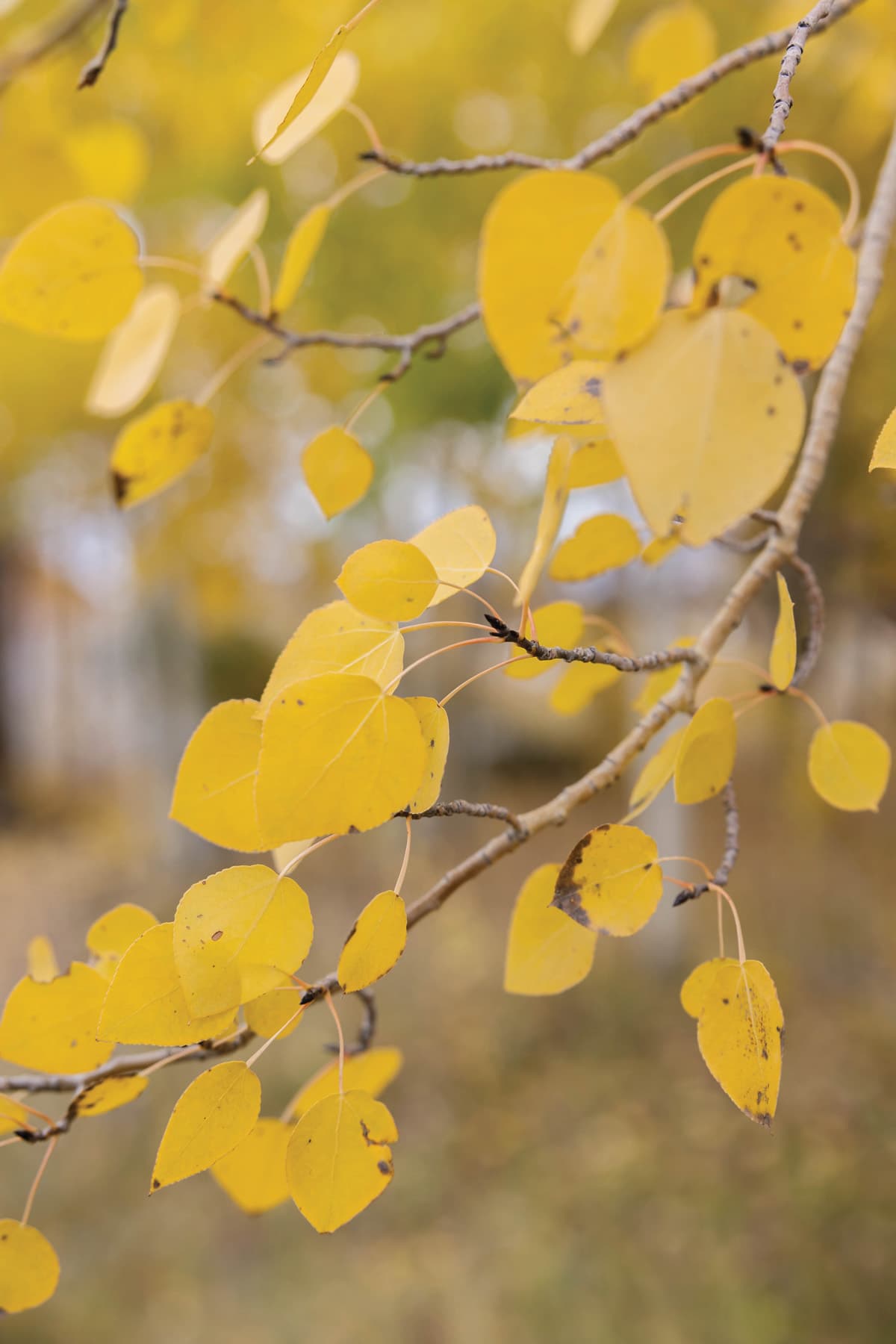
Smooth, roundish leaves, thin and firm, attach to a small stem that is flat along its entire length. This structure enables the characteristic foliage-quaking of the aspen. In even the slightest of breezes its leaves tremble and flicker, like the wings of a billion butterflies. Wind moving through the leaves creates a mellow rustling sound unique to aspen stands.
Aspens grow constantly. Lying beneath the white outer bark is a thin photosynthetic layer that permits the tree to produce sugars when other hardwood species are dormant. This sugary layer provides nutrients to wildlife such as elk and deer in harsh winter conditions.
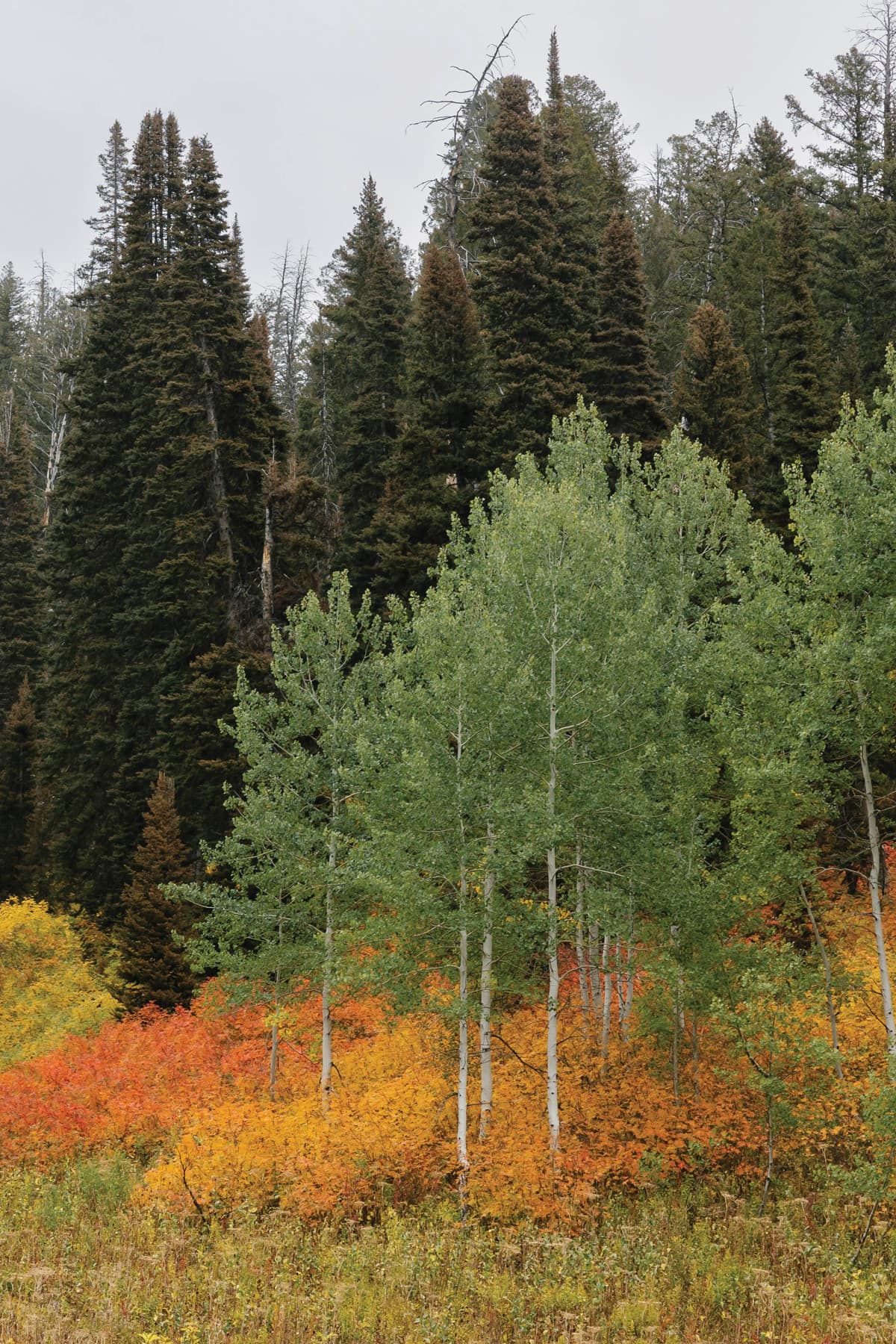
Snowshoe or cross-country ski through a winter stand of aspen, and you’ll be struck by the sight of white trunks—with contrasting black blemishes—on white snow. Despite the cold, the scolding of a red squirrel might come from above. The first budding in May lends a hint of green to the Big Hole and Teton foothills so faint that at first you might think you’re imagining it. But within days, the ghostly, dichromatic hillsides of winter color up, saying, “We’re ready for four months of summer!” In the fall, individual clones turn their unique hues at different times, transforming into islands of gold, butter yellow, and orange among the conifers.
If killed by fire, or impacted by insects or disease, aspen stems release hormones that stimulate buds in the root system to start growing. This trait, along with a fast rate of growth, allows the trees to quickly recover. In fact, prescribed fire is a tool used to promote aspen growth. Its rapid growth also makes aspen one of the softest “hardwoods.” Tender new shoots are especially rich in sugars, and are a nutritious food source for wildlife large and small—from moose to a variety of insects, which in turn provide sustenance to warblers and other birds.
My favorite stand of aspens, hidden on a hillside in the Big Holes, has only four trees … er, stems. It was a beautiful, peaceful place to bury the ashes of Lulu the Labrador and Eddie the spaniel, our Henderson Canyon dogs who, I’m convinced, enjoyed the place as much as we did. I still miss them, but I’m glad they’re where they are.
An aspen grove like Pando is a special, magical place. Food for the soul; good for a stroll. It can even inspire poetry. On the spot I compose a rhyme sure to compete (I tell myself, tongue in cheek) with the best of Wordsworth or Frost: “I know it depends on who you’re askin’, But to me nothin’s prettier than a grove of aspen.”