When Teton Dam Failed
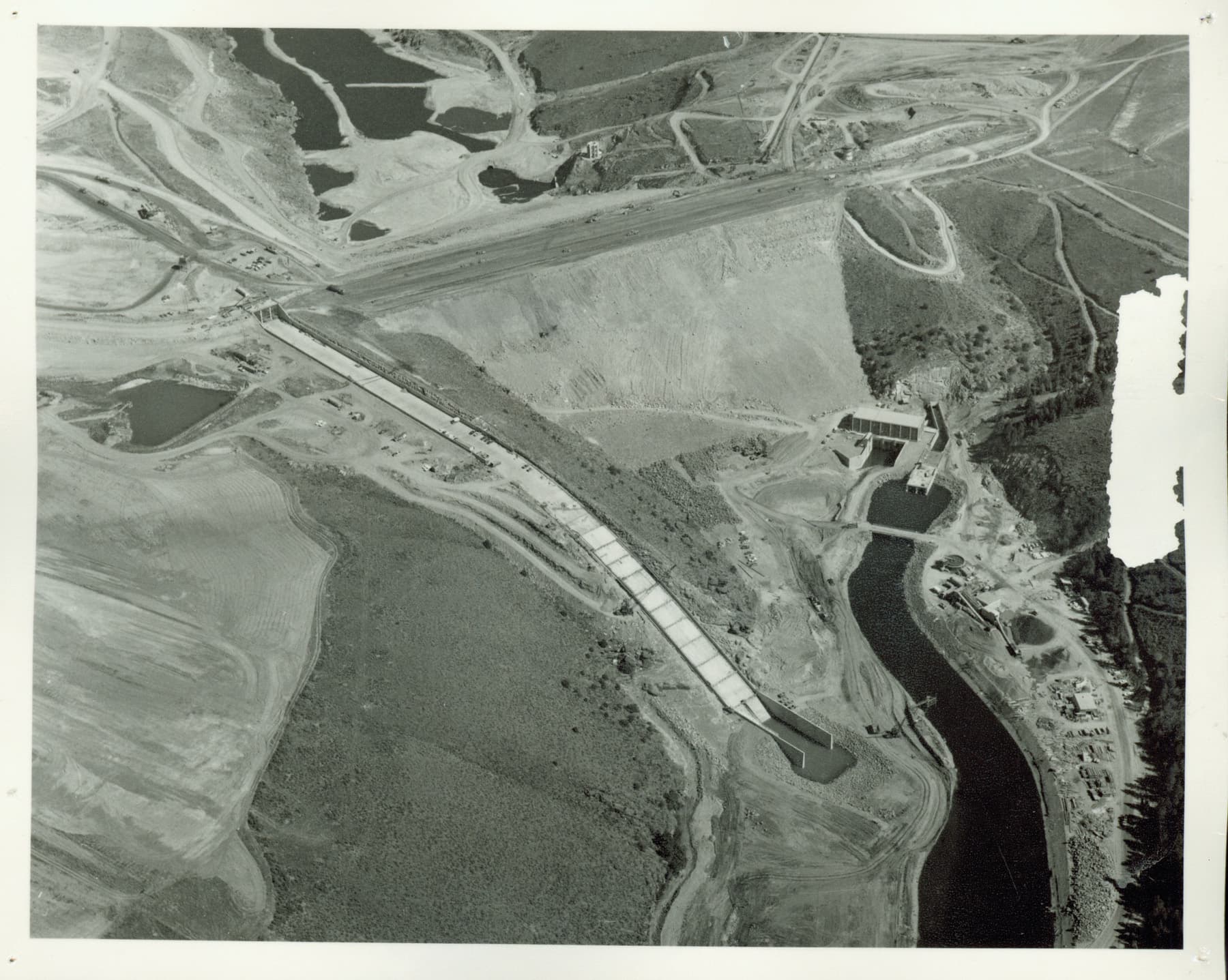
Traveling on Highway 33 to and from Teton Valley, most people won’t notice the inconspicuous sign just east of Newdale that indicates the Teton Dam site, one and a half miles up a side road to the north. While old-timers recall the tragic events of June 5, 1976, many newer residents have never heard the astounding story of the Teton Dam failure, which marks its fiftieth anniversary this summer.
Construction of the dam was controversial from the start. With plans and federal funding announced in the early 1960s, the earthen dam was intended to create a reservoir to supply water for agriculture, as well as provide for recreation. Environmental concerns stalled construction until 1971. Detractors noted the disruption, and voiced warnings about the challenges of securing the dam into the porous, volcanic rock surrounding the proposed location. But work on the 305-foot-high, 3,100-foot-wide structure proceeded, including complex grouting into the weak basalt ground that required over half a million cubic feet of cement. Upon completion, the reservoir began to fill in October 1975. Plans called for a gradual fill, but with a heavy snowpack that winter, the reservoir neared capacity by June of 1976.
Saturday, June 5, 1976, dawned a picture-perfect summer day. Upper valley residents were mowing lawns, planting gardens, and enjoying the sunshine. A few days prior, out at the dam site, personnel had noticed some small springs several hundred feet downstream. No one thought much of it. But early Saturday morning, the chief engineer saw a small wet spot on the dam’s dirt face, which continued to grow. Mid-morning, Jay Calderwood, a Teton Valley native and the dam’s foreman of excavation, got the call to report immediately to the site.
“I told the wife I’d be back in a couple hours,” he said, as documented in a dramatic video interview with East Idaho News. But when he arrived, the leak on the face had widened to ten feet. “I seen that hole in the side of the dam where it was washing out, and I thought, ‘Oh man, I don’t know that we’re going to be able to stop this.’”
Calderwood and co-worker Jay Hatch drove out onto the dam in a pair of Caterpillar D9 bulldozers and began to push medium-sized stones called riprap rock into the hole. A giant whirlpool had formed a fifty-foot-wide, twenty-to thirty-foot deep funnel, “like pulling the plug out of a bathtub,” Calderwood said in the interview. “We’d get a dozer full of that big riprap and push it off into the whirlpool … We didn’t figure we’d stop it, hoping we’d slow it down enough … so it wouldn’t wash the dam out.”
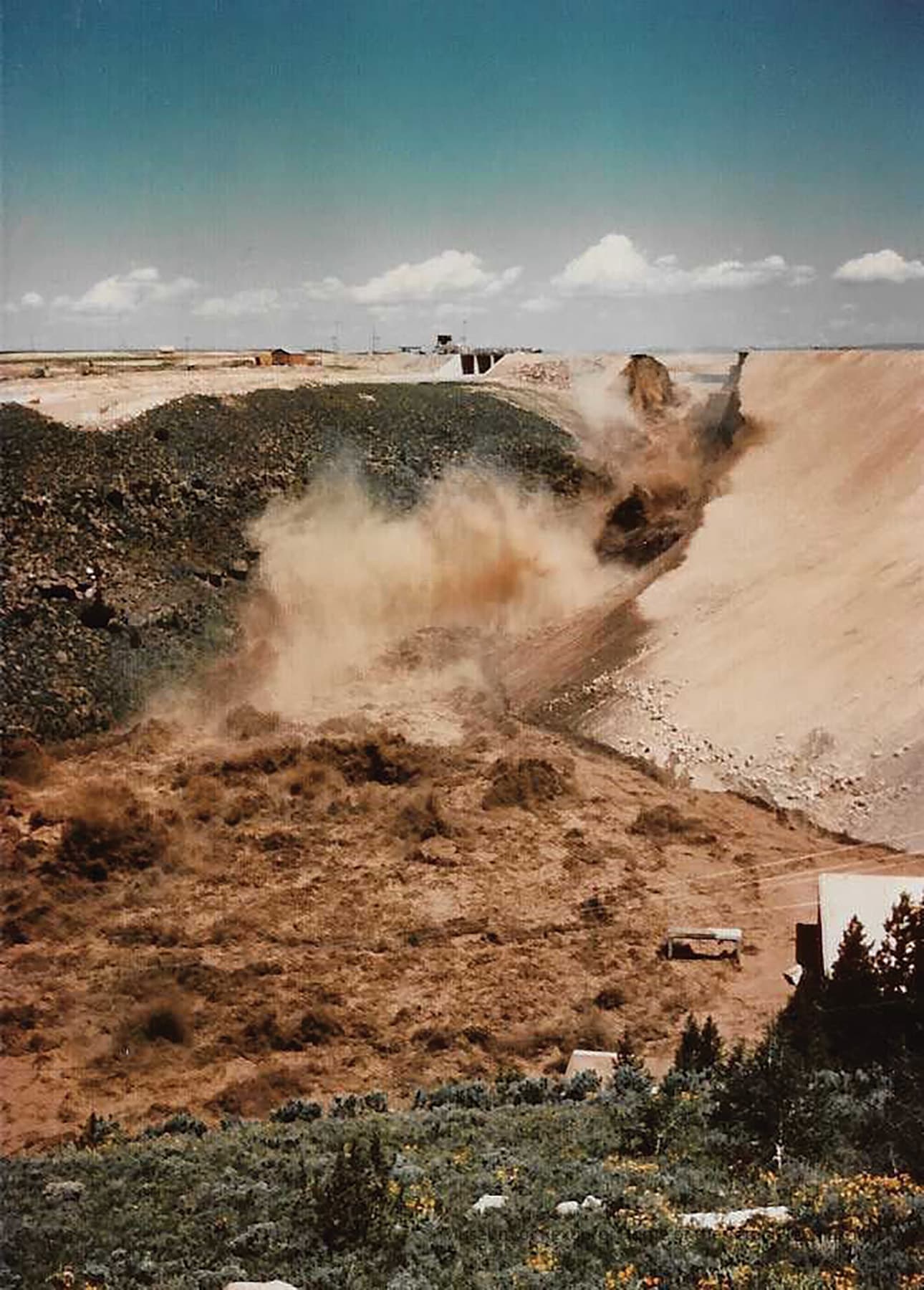
But the hole kept growing, and suddenly the ground settled severely. On the bank, superintendent Lew Payne frantically waved the dozer operators back, and then took off running. As Calderwood retreated, he witnessed huge chunks of earth caving in just behind him. “I thought, ‘Boy, I’m not gonna make it, this is it.’” When he finally reached safe ground and climbed off the dozer, he said, “My knees were so weak, I couldn’t stand.”
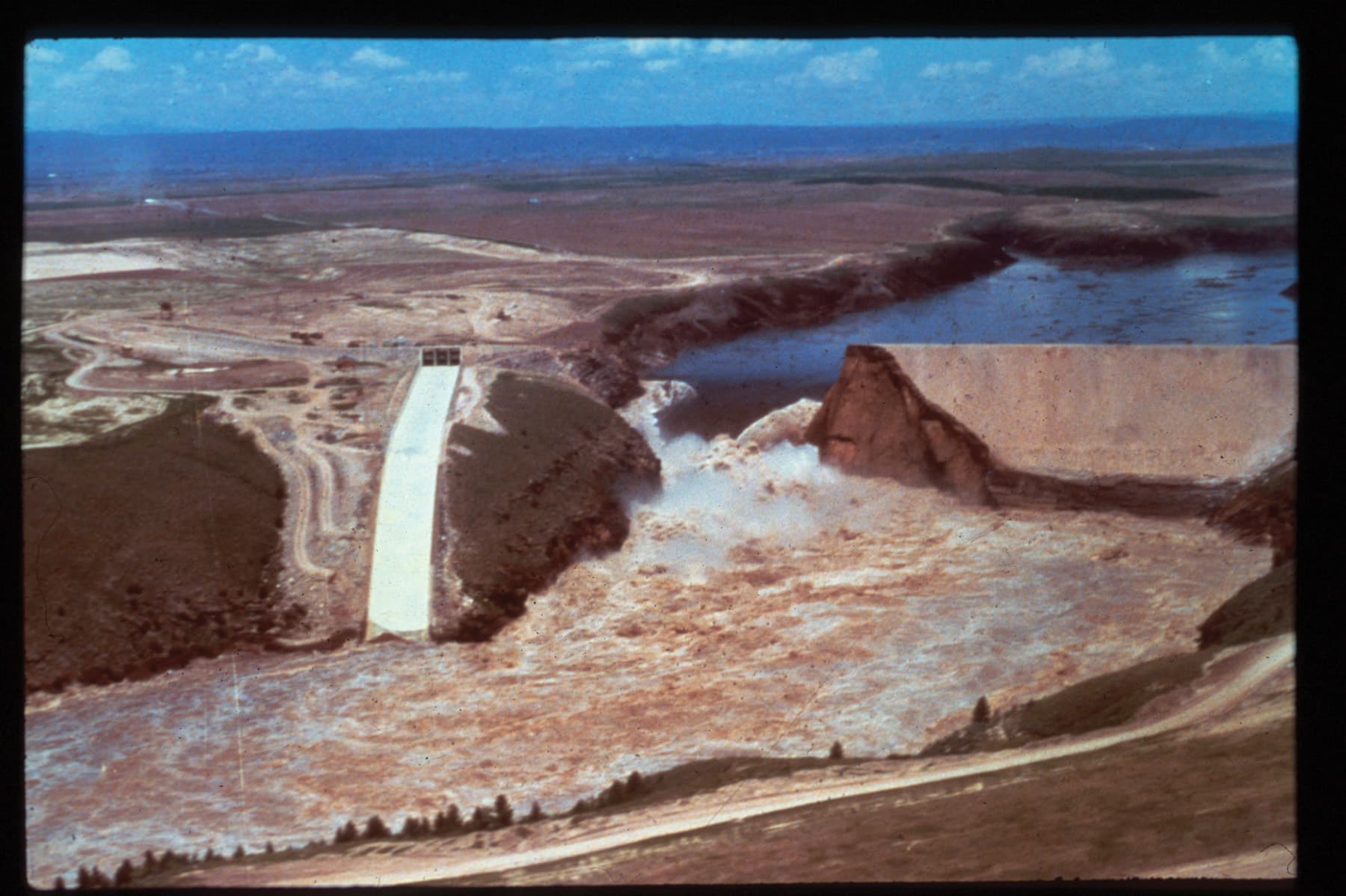
Word down below had begun to get out a few hours earlier. The Teton Dam was officially breached at 11:57 a.m.
From his now-safe vantage point at the top of the dam, Calderwood was one of the first to observe the massive flood that followed the failure. “That water going down the canyon was mowing those huge, big old cottonwoods like it was mowing alfalfa,” he recalled. “It was a really frightening experience to see how much power [the water] has.” The Bureau of Land Management estimates the initial release at over one million cubic feet per second. Witnesses gauged the wall of water at twenty to thirty feet tall.
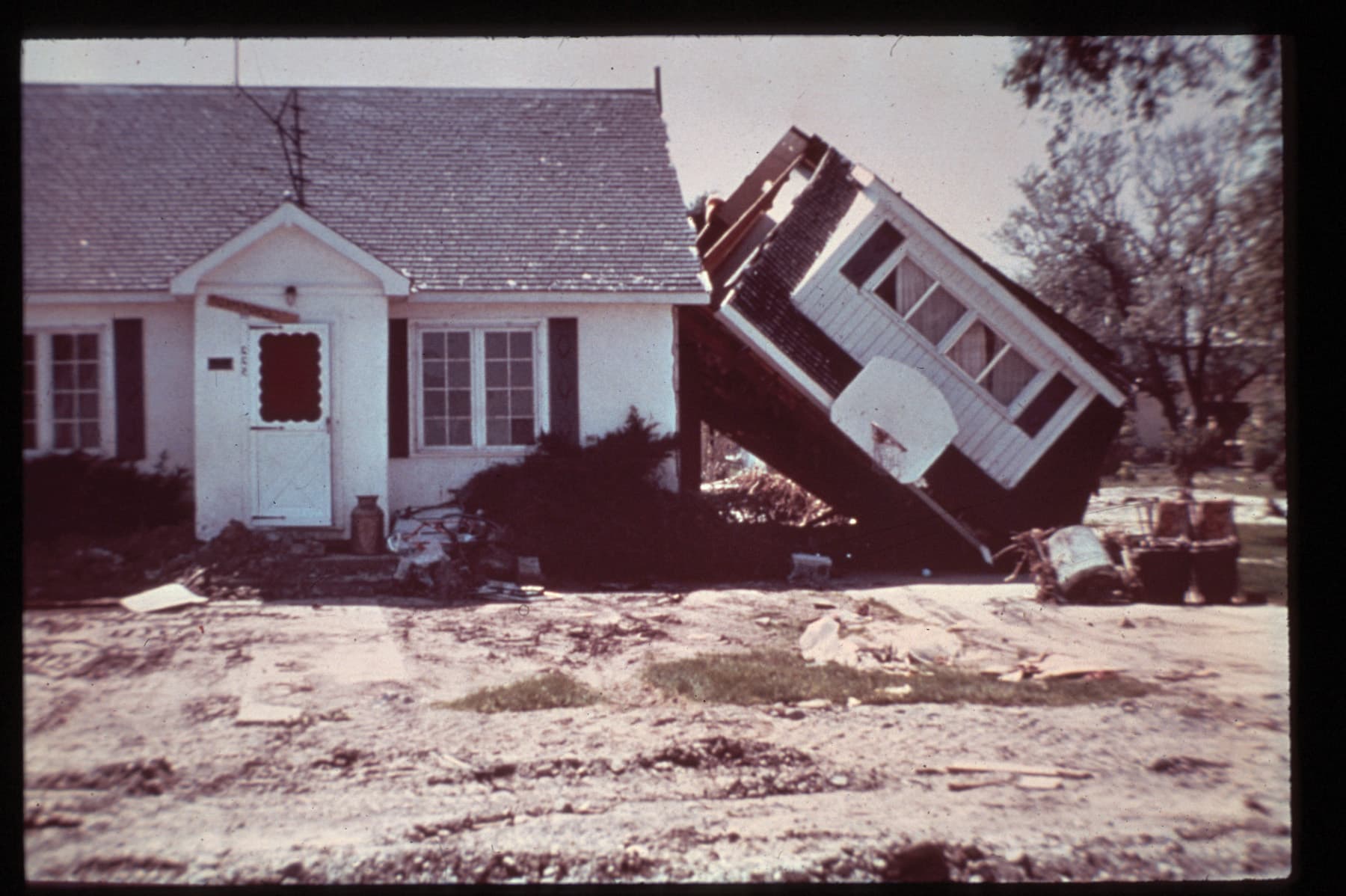
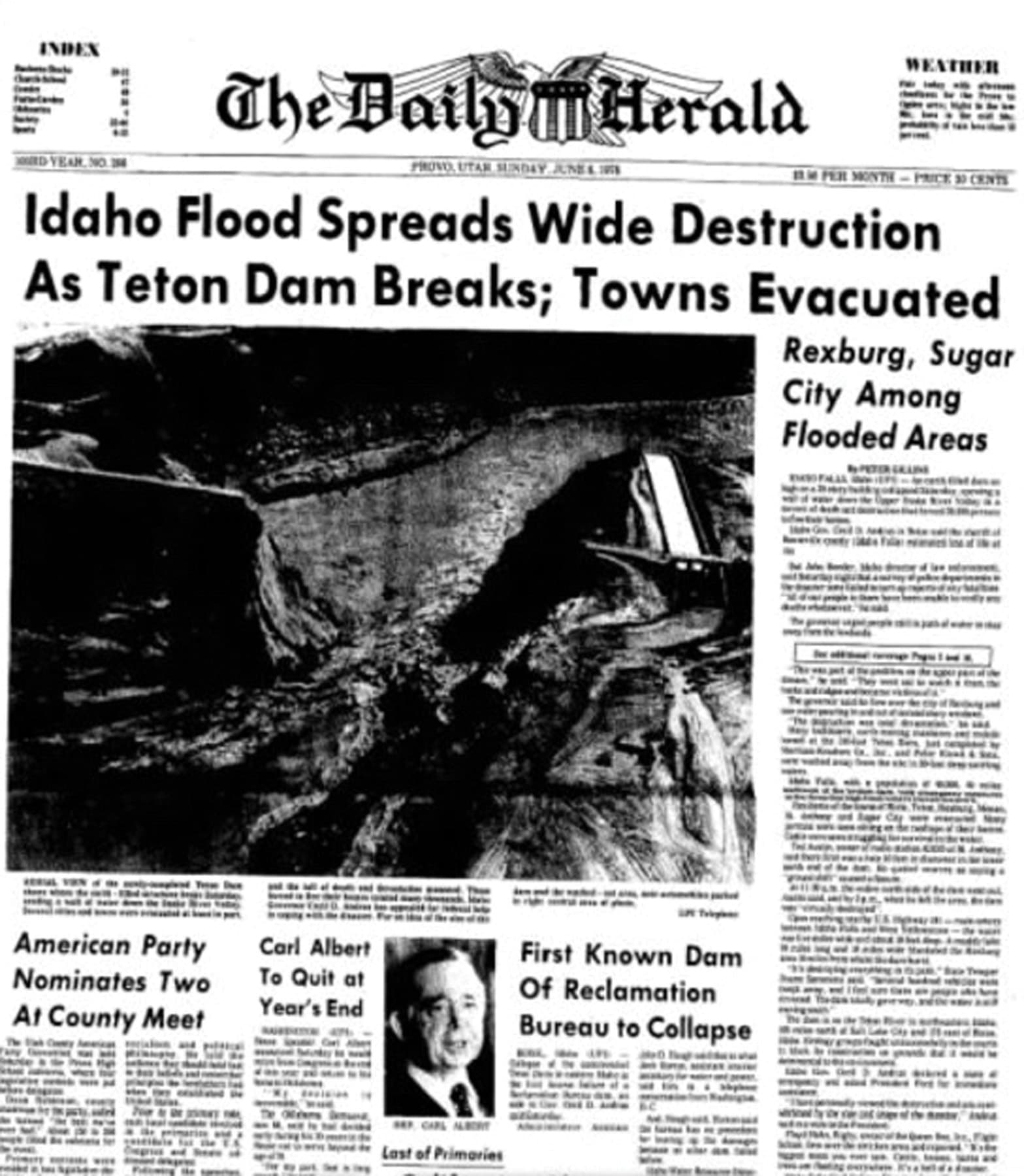
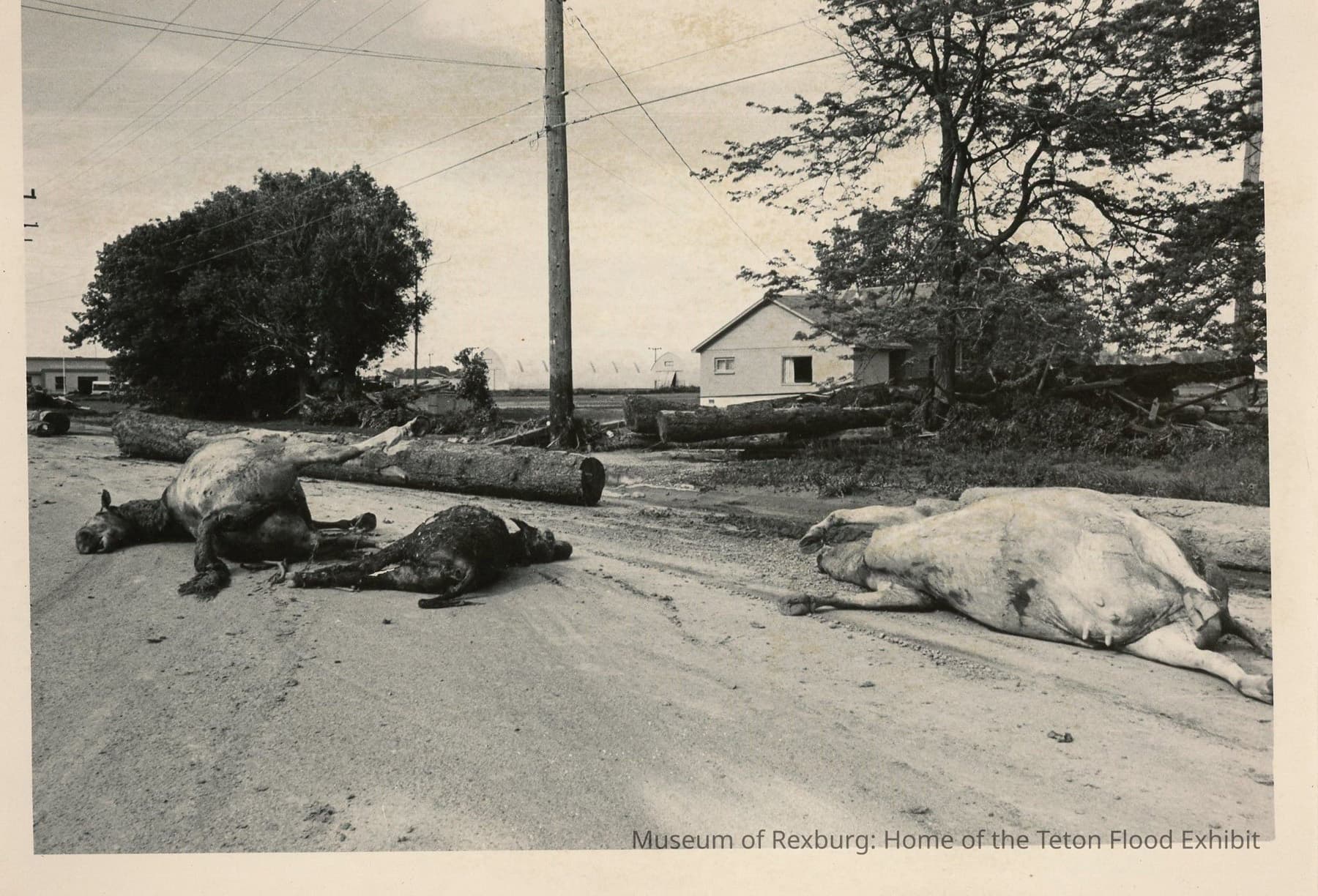
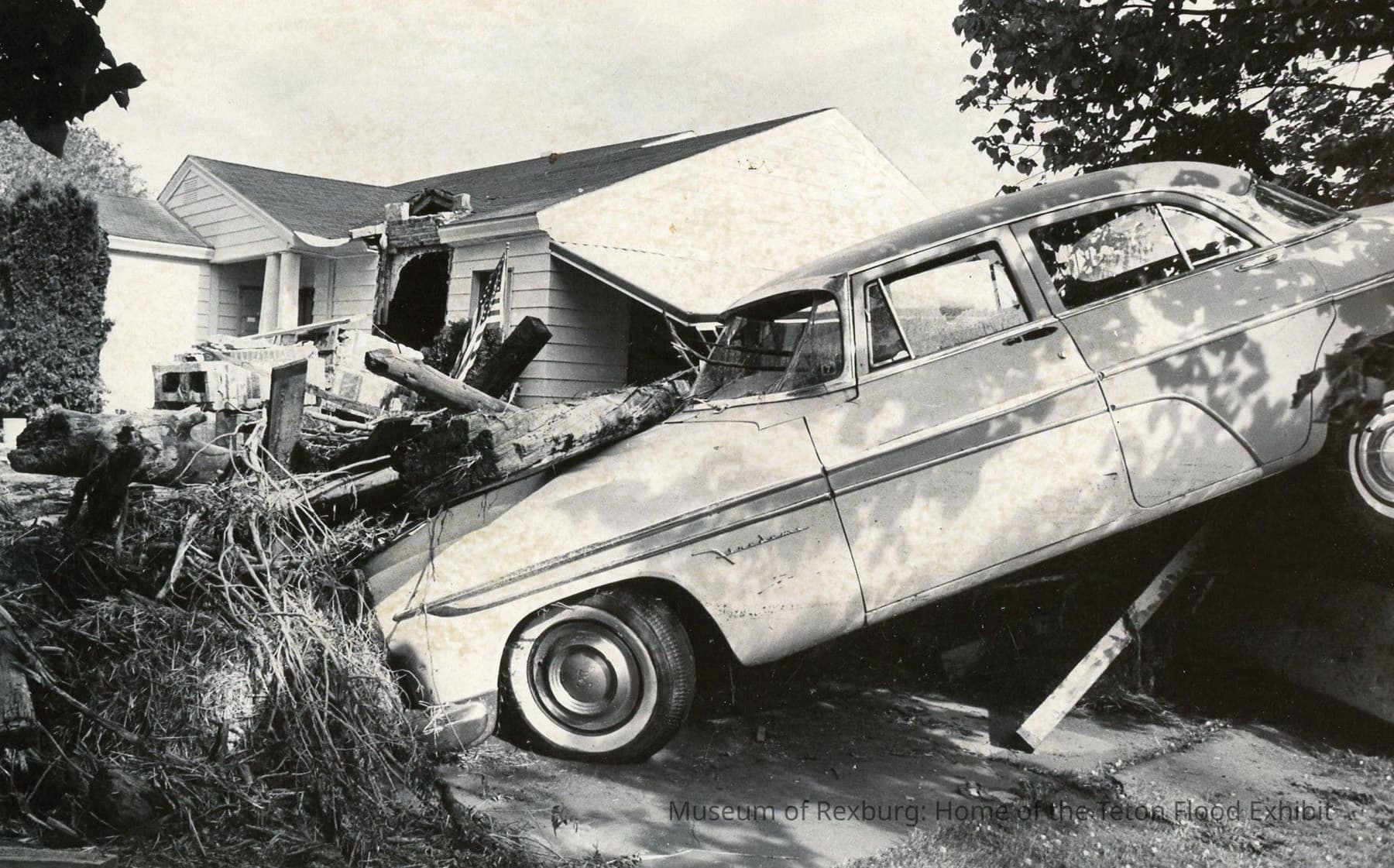
The raging flood first demolished the tiny community of Wilford, directly in the river’s path, then moved on to Sugar City. Traveling at an estimated sixty miles per hour, flood waters ripped houses off their foundations, swept away livestock, took out utility poles and phone lines, and crumbled roads and railroad tracks. In a time before cell phones, residents were warned by emergency TV and radio alerts, as well as by neighbors rushing door-to-door. From a distance, the wave of water looked like a massive dust cloud. As the flooding reached Rexburg, almost twenty miles away, it had spread out to a seven-mile-wide path.
Nestled against the foothills, Ricks College (now BYU-Idaho) in Rexburg occupied higher ground and became the gathering point for those fleeing floodwaters. The Church of Jesus Christ of Latter-day Saints and the Red Cross immediately set up relief headquarters on campus. On Saturday afternoon, Teton Valley native Michael Whitfield, who was 29 at the time, traveled backroads to Rexburg and
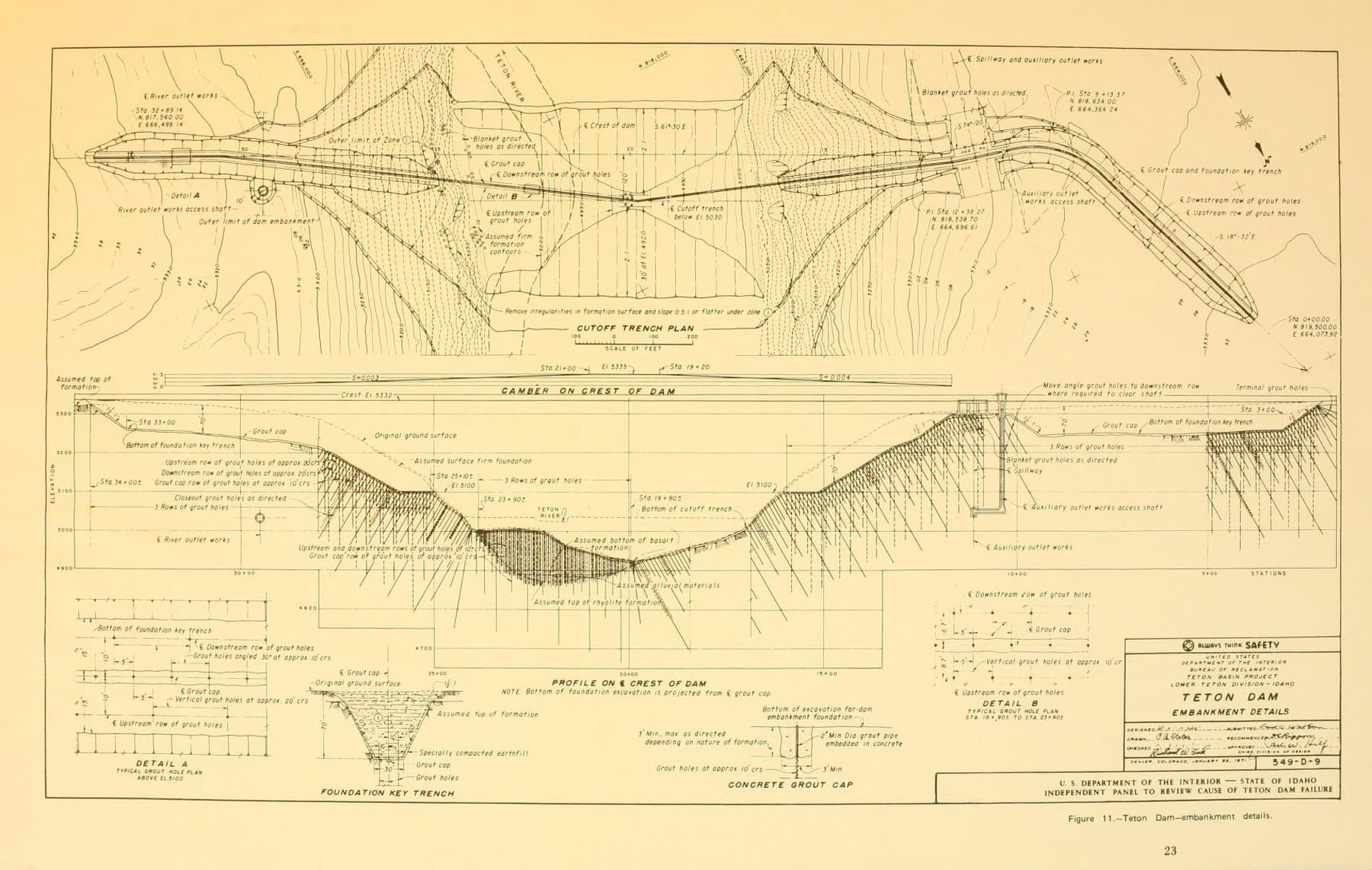
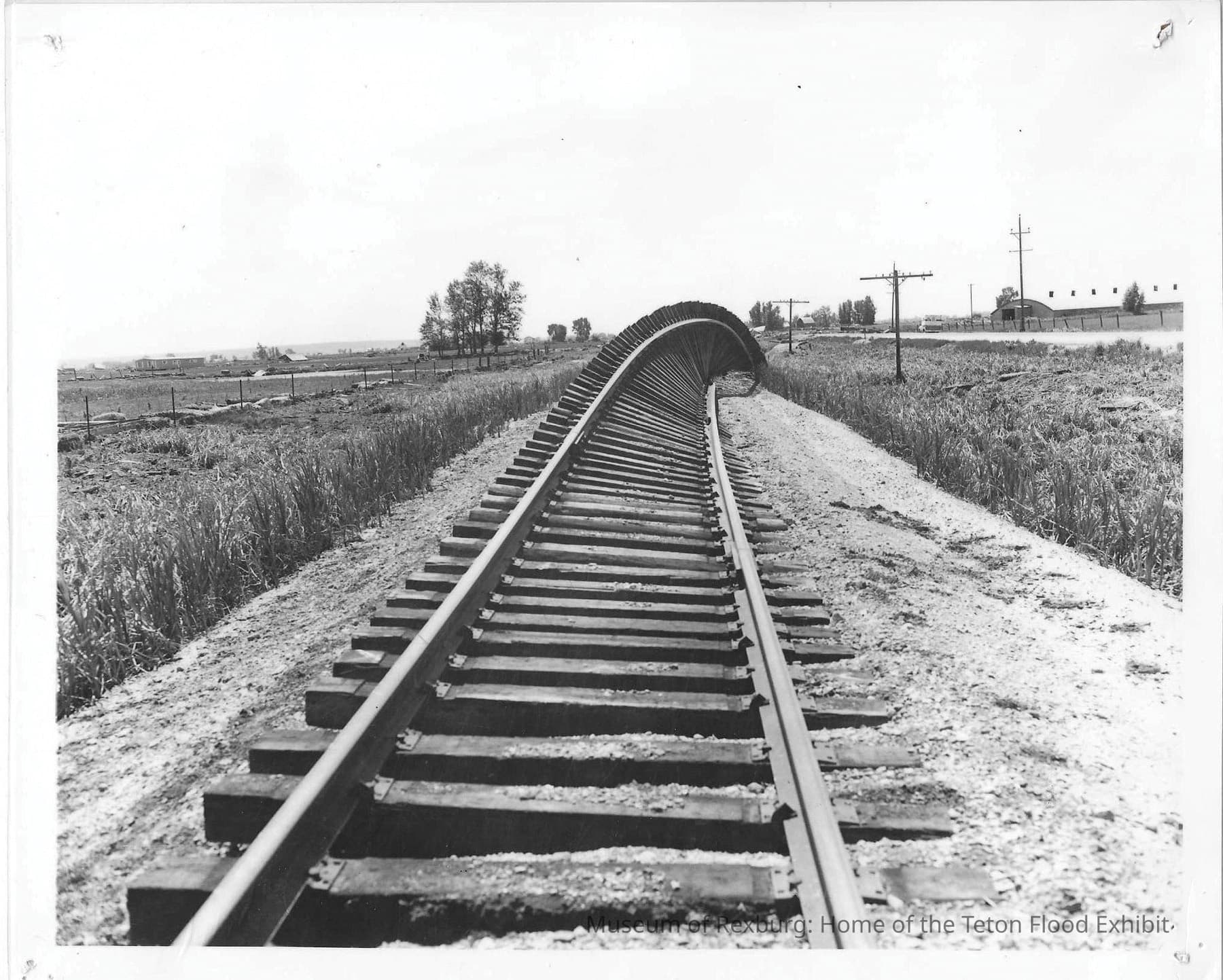
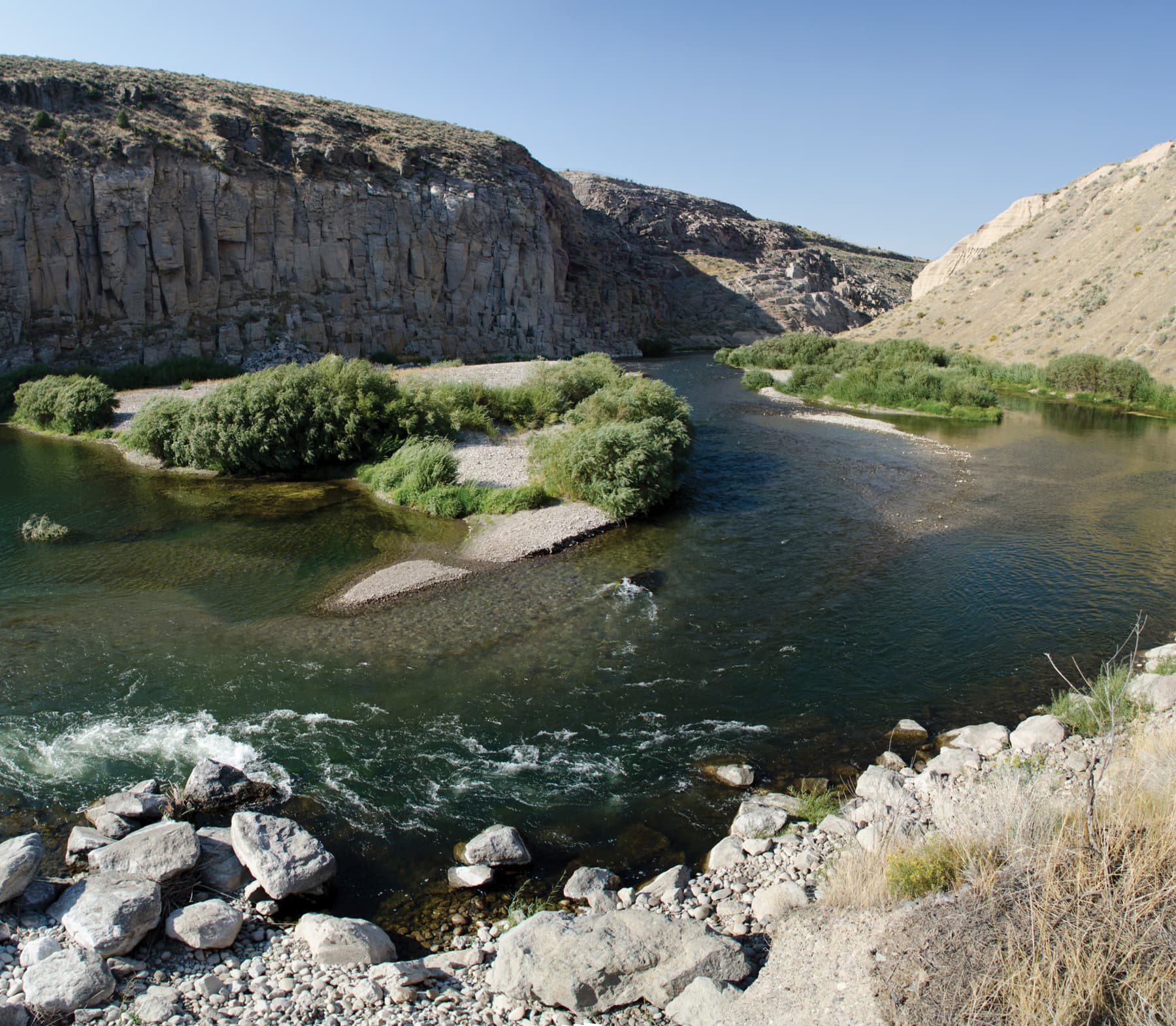
June 5, 1976 the recently built Teton Dam had failed emptying it’s 280 foot deep resevior downstream. The remains of the dam stand as monument to the 11 people who lost their lives.
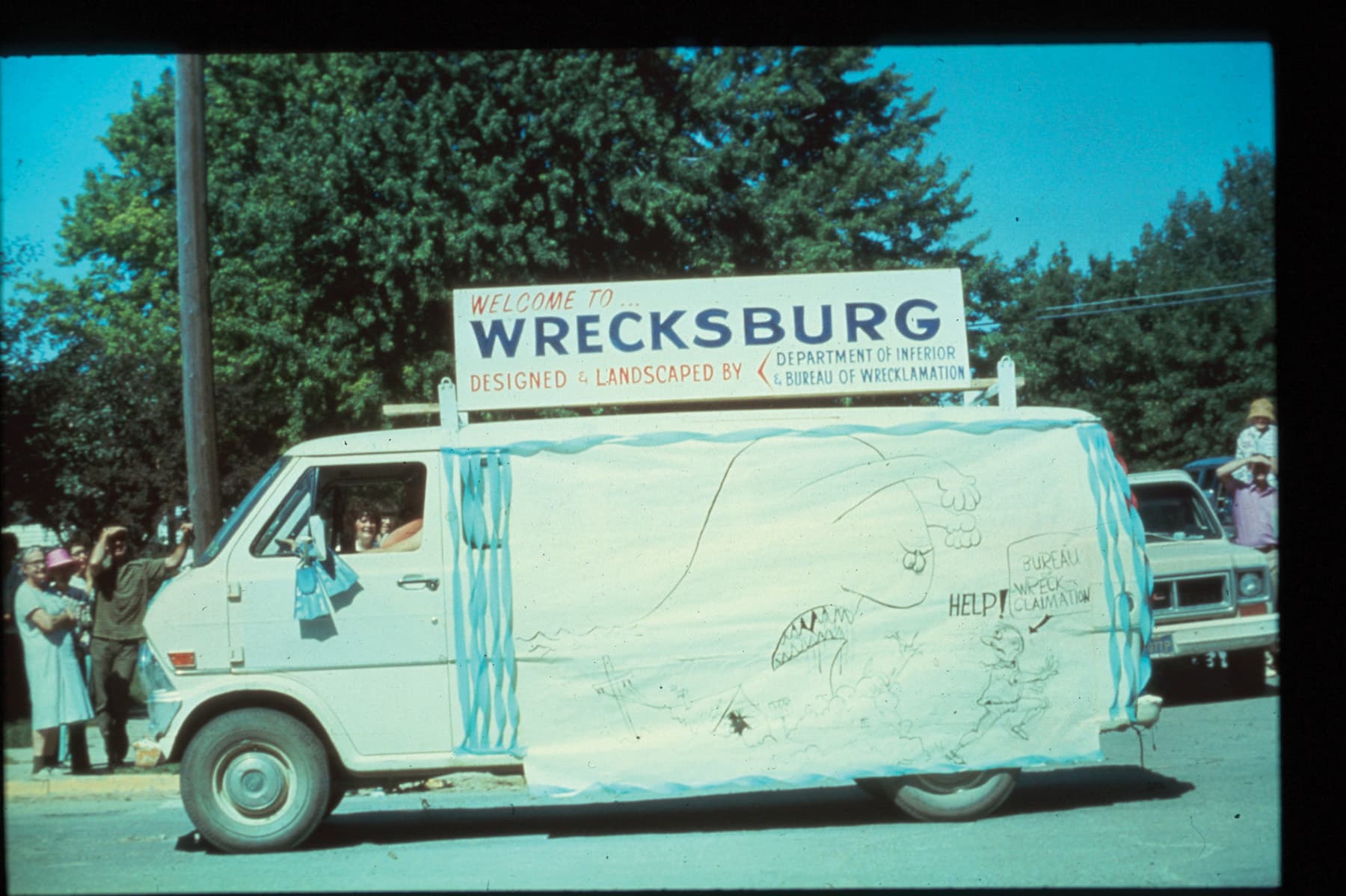
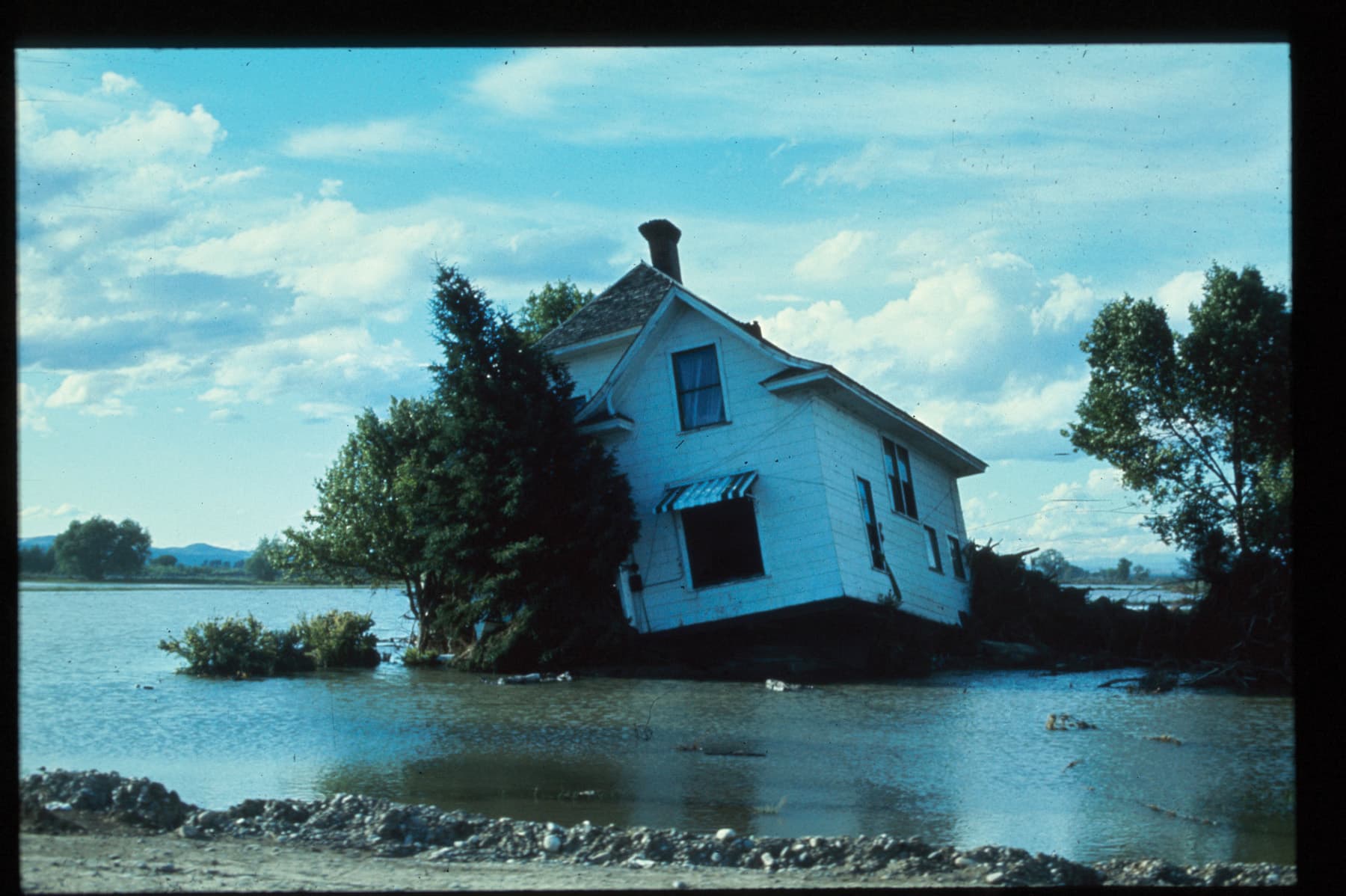
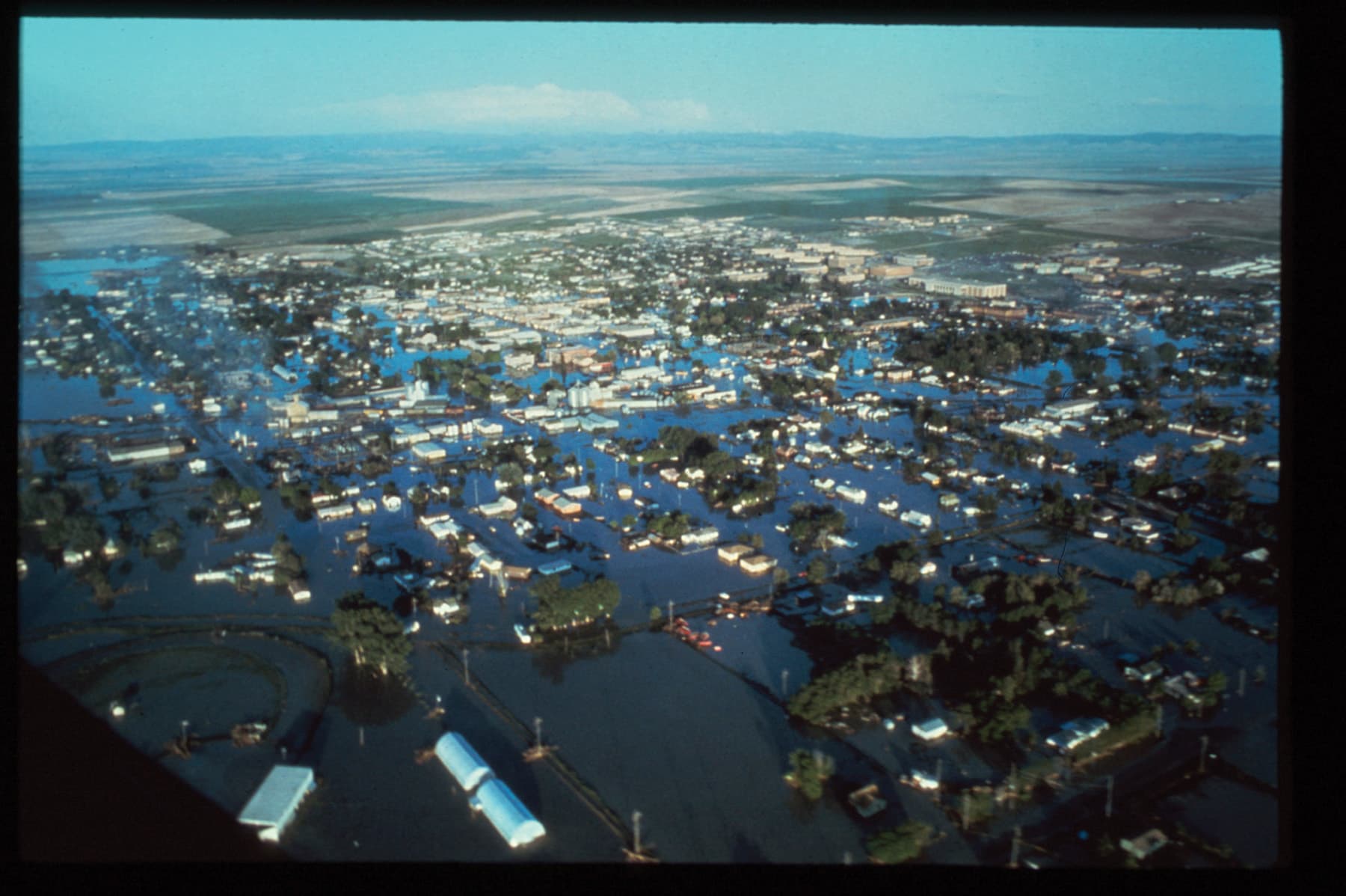
witnessed the scene firsthand.
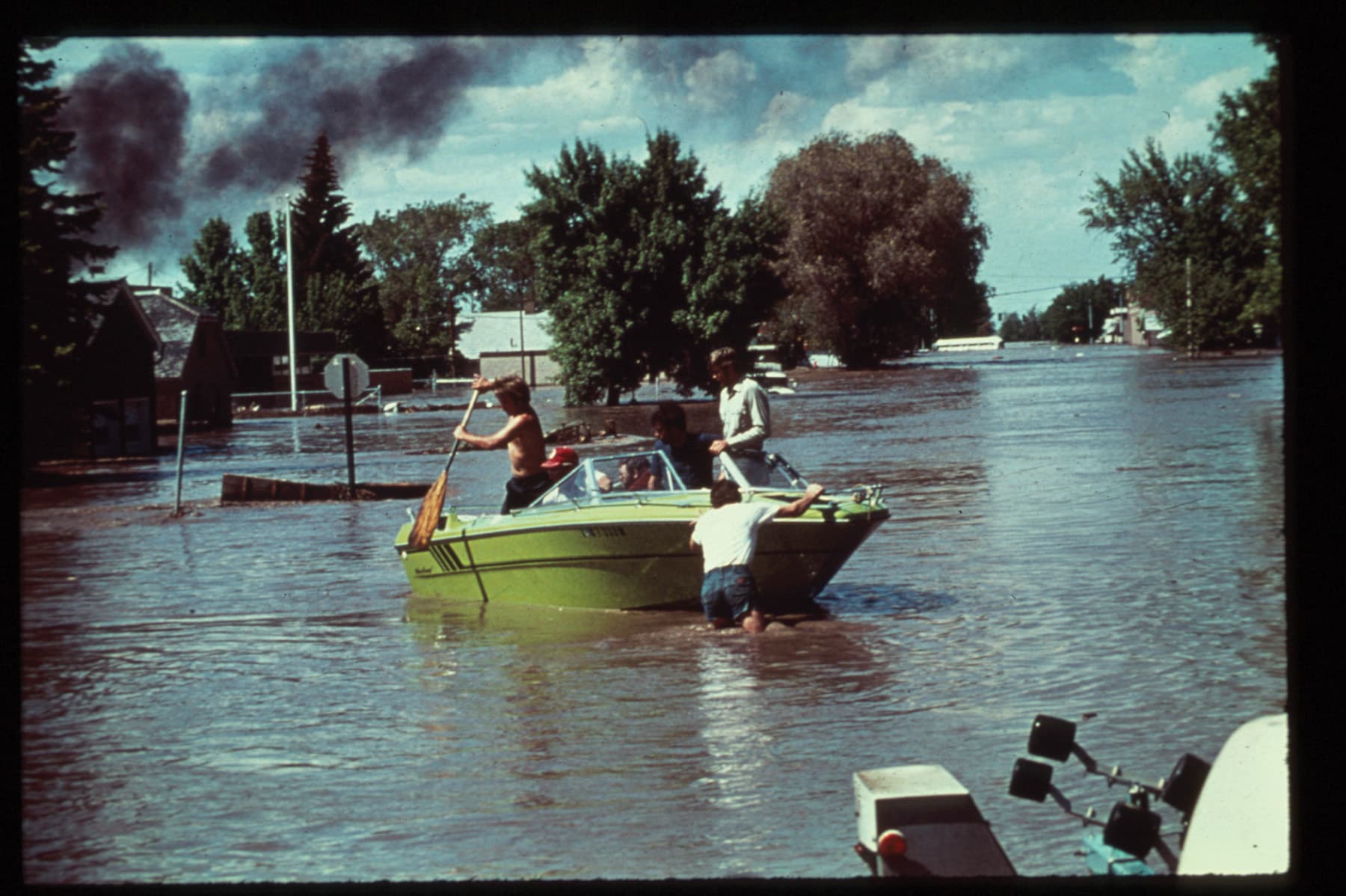
“It was chaos,” he says. “I saw houses floating down Main Street, horses on the steps of the courthouse, and cows wandering around.”
The stench of mud, dead animals, and toxic chemicals was horrible. Mud and water coated buildings several feet high. A Louisiana-Pacific lumber mill east of town had stockpiled thousands of Douglas fir logs, which in the flood became battering rams, lodged into structures and strewn around the community.
An employee of the United States Forest Service (USFS), Michael had been sent to locate displaced fellow employees. With all communications down, the task proved difficult. Most heartwrenching of all, he says, it was his job to tell USFS dispatcher Jay Benson that his son, David, had been killed while fishing on the Teton River when the dam broke. Michael, along with hundreds of residents, then began the tedious job of clearing massive piles of mud and debris.
Floodwaters, their pace of flow tempered only slightly, continued along the path of the Snake River to Idaho Falls. Given a day’s notice, citizens there began filling sandbags by the thousands, and building banks eight feet high. When water threatened to overflow the Broadway Bridge, workers trenched a canal around it as a bypass route.
Further downstream, Blackfoot suffered more serious flooding. Three days after the dam breach, Teton floodwaters reached American Falls, where reservoir capacity was barely adequate to contain the still-substantial flow.
Data later emerged to describe the catastrophic losses: 3,500 farm buildings, 250 businesses, 13,000 to 20,000 head of livestock, 100,000 acres of topsoil, and damage to nearly 4,000 homes, totaling $1 to $2 billion in damages. Eleven people were killed. Floodwaters also damaged the ecology of the lower Teton and Snake rivers and habitat of the native Yellowstone cutthroat trout, with riparian areas washed away and sediment engulfing stream sections.
In Rexburg, the tremendous relief effort continued throughout the summer. Displaced families were housed, clothed, and fed in the Ricks College dormitories. LDS church volunteers contributed over one million man-hours, arriving by busloads from Utah and other parts of Idaho. Utility crews worked around the clock to replace thousands of utility poles and two-hundred miles of wire. The U.S. Department of Housing and Urban Development provided trailers for families who had lost their homes. Many homeowners rebuilt, and a construction boom ensued.
Numerous state and federal agencies investigated the cause of the dam failure. While rapid spring filling of the reservoir was initially thought to be the culprit, final reports revealed that the catastrophe was precipitated by a combination of extensive fracturing in the surrounding volcanic rock abutments, and inadequate grouting in those areas, as well as cracking in the internal, fine-grained sediment core of the dam face itself.
So, the next time you drive out below toward Rexburg, consider making the short detour to view the Teton Dam site. Flowing placidly around the vertical scar of the demolished dam, the Teton has reclaimed the chasm. But memory preserves the fury and damage done by the river that would not be contained.
Will Teton Dam Rise Again?
With extended droughts and a burgeoning population in Eastern Idaho, water demands have grown in recent years. New talk of rebuilding the Teton Dam has emerged.
Back in 2007, the Idaho Department of Water Resources identified a new Teton Dam as a possible water storage solution. In spring 2025, Republican State Senator Kevin Cook of Idaho Falls sponsored a proposal for a Teton Dam rebuild. It passed the Idaho House and Senate unanimously in November of last year. Its supporters are now seeking federal funding.
Proponents of a new dam cite an urgent need for more water, for both agricultural and domestic use. Conservation advocates disagree, predicting major impacts on Yellowstone cutthroat trout populations, nesting bald eagles, wintering trumpeter swans, and mule deer and elk winter habitat.
Whatever decision is made on the dam, everyone agrees that safety is paramount. While new technology may mitigate some risks, environmental factors, like the porous rock that caused the original dam’s historic failure, still exist. How to work around this conundrum of geology is still unknown.