
A Legacy of Care
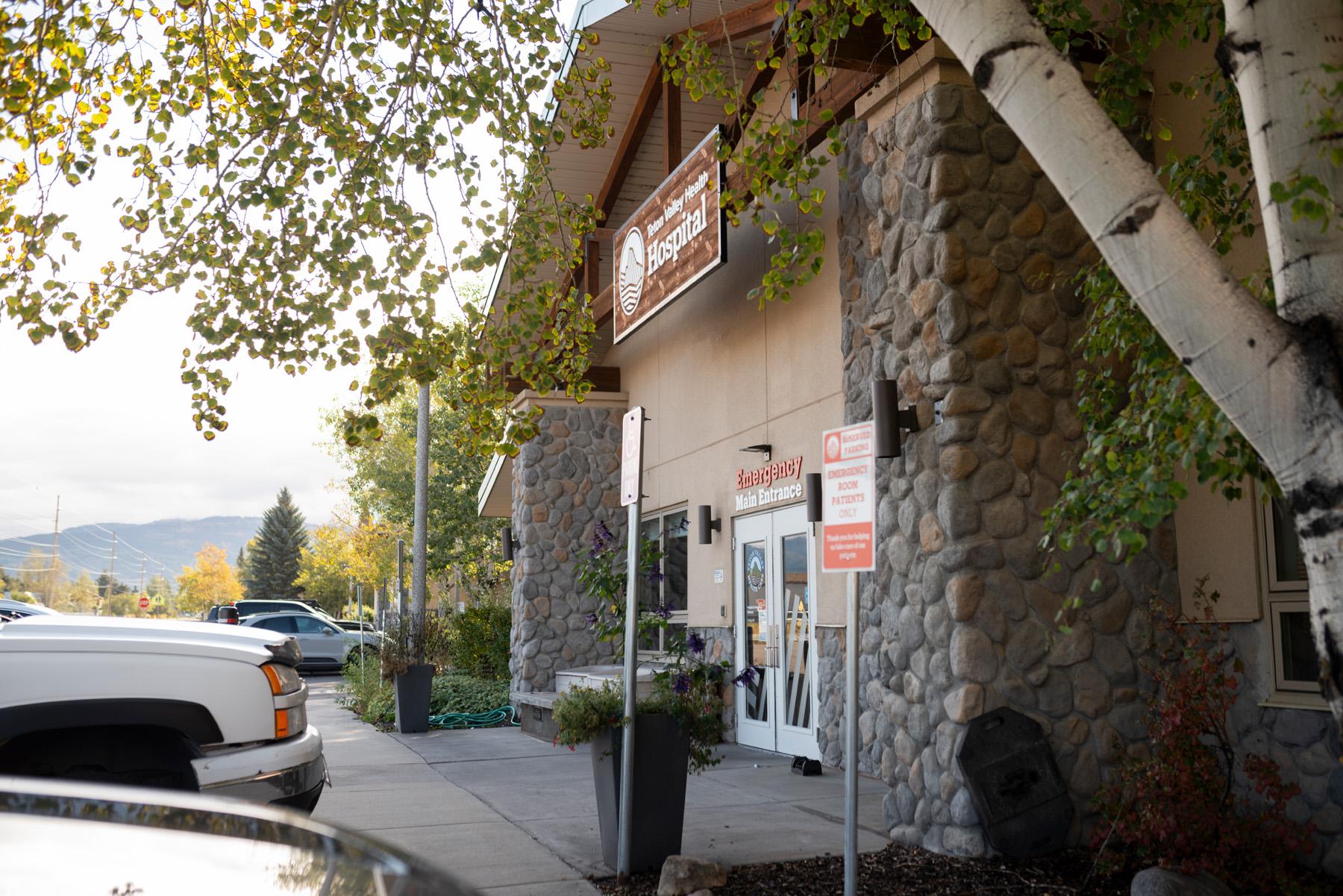
If Michelle Berry smelled coal smoke while working the night shift at Teton Valley Hospital, she knew that meant the coal-fired furnace in the basement needed stoking. So, after checking on her patients, she would head down to the basement to shovel coal. “Shoveler” was just one of the many hats she wore on the job.
Michelle, who worked as a registered nurse at Teton Valley Hospital from 1984 until 2007, says in the early days she had to be willing to do a little bit of everything—even if some “everythings” had nothing to do with her nursing skills. In addition to shoveling coal, that meant serving as the rural dispatcher during her night shifts. She’d listen to the police scanner and take emergency calls, and, if needed, pull a lever on the wall that turned on the sirens in Victor and Driggs. Michelle had a list of emergency medical technicians living in the valley, and when someone called the hospital looking for help, she’d start ringing up everyone on the list, praying someone would answer the phone.
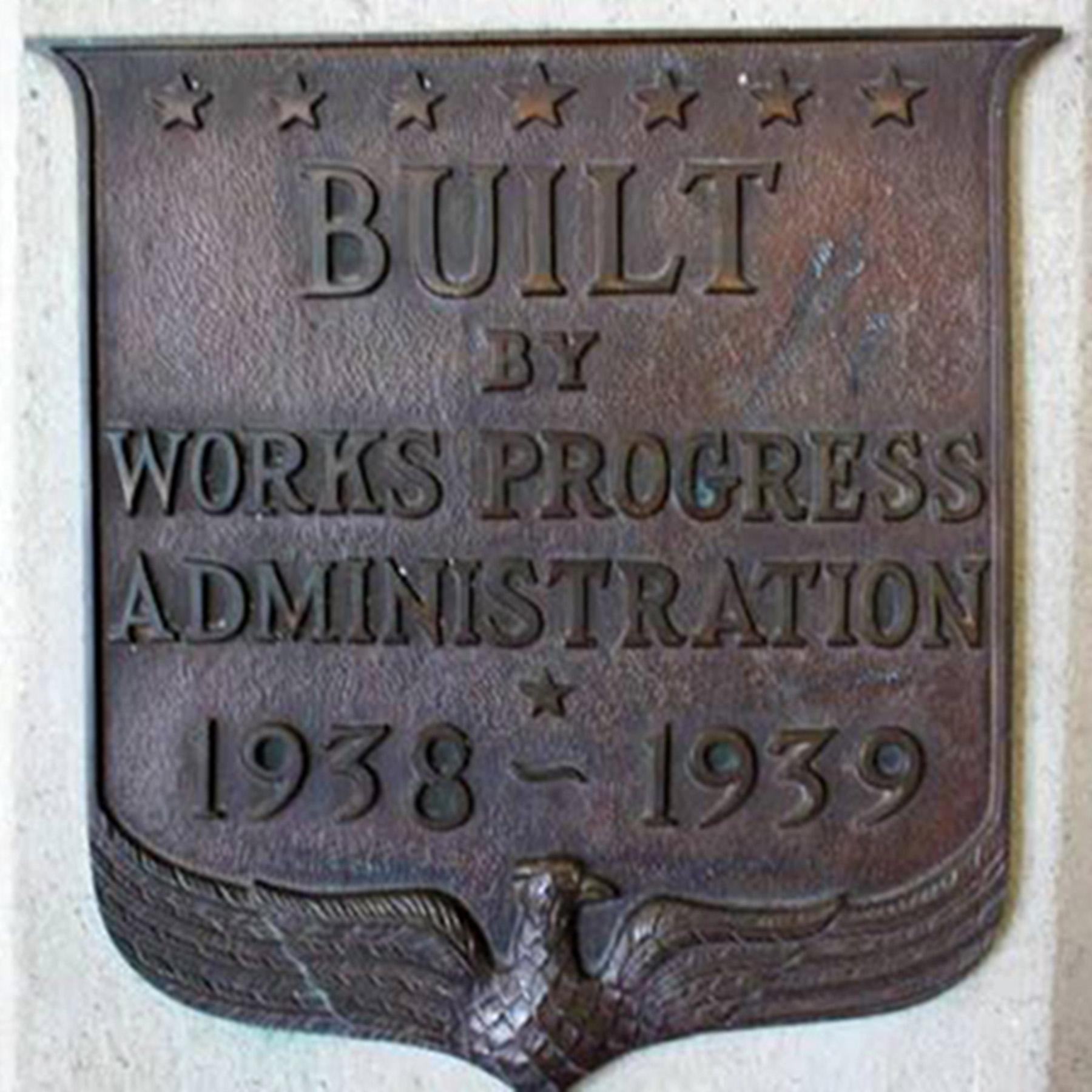
Teton Valley Hospital, now known as Teton Valley Health Care (TVHC), opened its doors in 1939. Built under the Works Progress Administration—the New Deal program created during the Great Depression to stimulate job growth—using limestone from the Fox Creek quarry, the hospital has always required community support to be viable. More than $40,000 of its original funding came from locals who raised money auctioning livestock, firewood, and coal. As the story goes, even kids in the valley got involved and pitched in money from selling Valentine’s Day cards to help get the hospital built.
For the next twenty-six years, the Church of Jesus Christ of Latter-day Saints ran the four-bed hospital. It provided essential services, critical emergency care, and routine checkups for the community, which in those days was small. Teton Valley had one grocery store and no stoplights, and everyone knew everyone. Money-making wasn’t the church’s motive for running a hospital; community wellbeing was. That role continues to be crucial to Teton Valley today, even as the landscape of healthcare in the United States has shifted, particularly in rural areas.
In 1965, the church turned ownership of the hospital over to Teton County, spurring decades of growth and transition alongside the valley’s. That year, the hospital underwent a 6,600-square-foot expansion project. In 1997, it completed a $3.7 million renovation and expansion.
In 2002, Teton Valley Health Care became a Critical Access Hospital (CAH). This designation was part of a national federal program to help preserve access to essential health services in rural communities after nearly four hundred rural hospitals closed in the 1980s and early 1990s. CAH facilities are isolated from other hospitals, offer 24/7 access, and are vital resources in health emergencies. Thanks to the distinction, the hospital receives key benefits like a cost-based Medicare reimbursement.
The county saw the hospital through decades of change and growth. Financial concerns lingered in the wake of the Great Recession that marked 2007 through 2009, but voters signaled their support. In August 2008, they approved a two-year emergency levy to help finance its operations. Just a month later, the hospital made the difficult decision to cut labor and delivery services, ending the community’s ability to deliver babies locally.
In 2013, the county commissioners were faced with what looked like another unstable future for the hospital and how it would subsequently affect the county. Their answer: Transition the facility to an independent nonprofit. At the time, the hospital had $12 million in uncollected revenue.
“I think it was at my first meeting as a newly elected county commissioner when the hospital came to us in crisis,” says Kathy Rinaldi, who served on the Teton County (Idaho) Board of County Commissioners from 2009 until 2015. “Their unpaid revenue could have bankrupted the county.
“There’s so much working against small rural hospitals,” she continues. “It’s so hard to keep them alive. The way they get paid is also totally messed up.”
Kathy remembers a five-hour public meeting about the future of the hospital where one resident after another got up and spoke, begging the county to keep the doors open. She says there was a lot of fear and anger, particularly around the idea that if the hospital shifted to a nonprofit, it would lose local control and lead to closure.
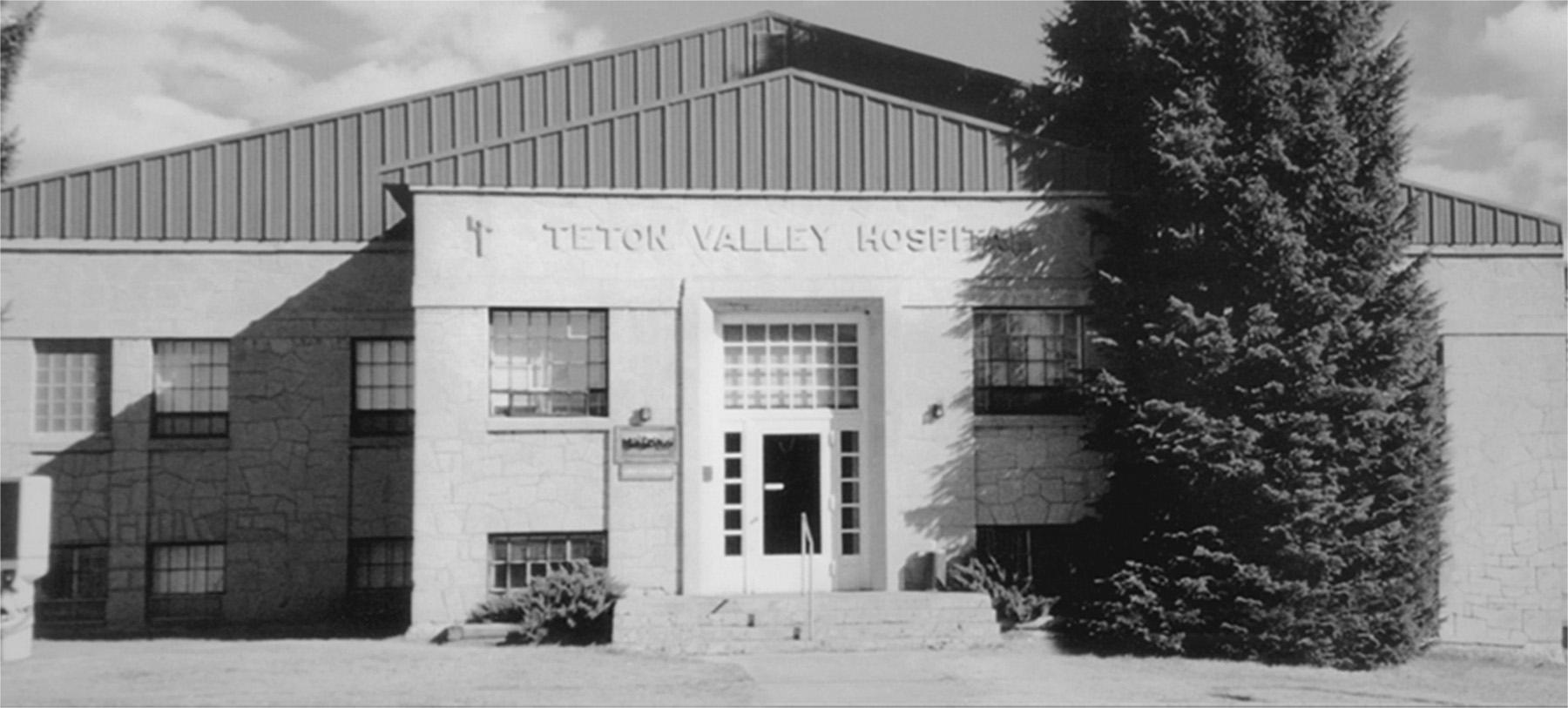
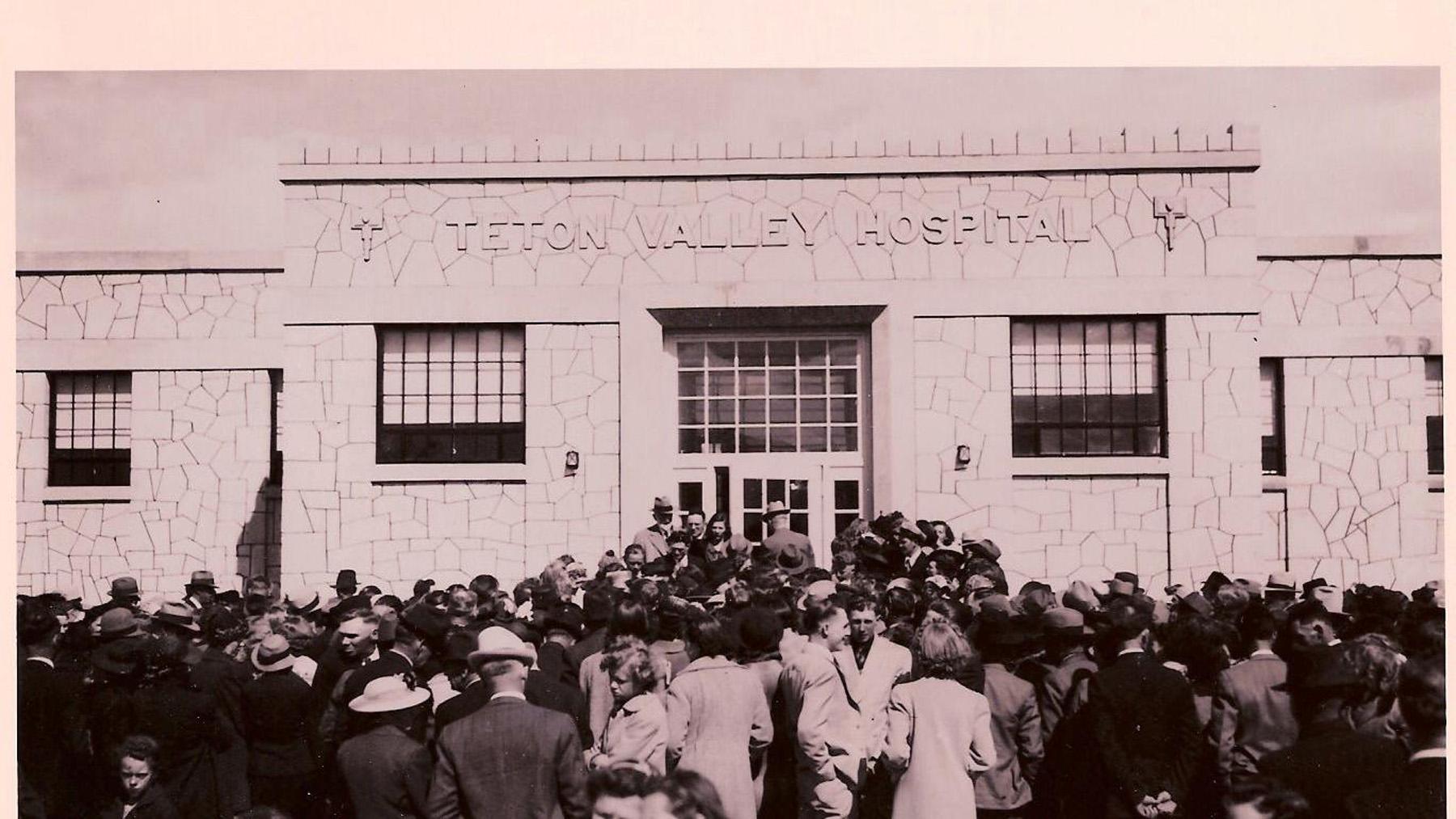
Community hospitals in nearby Ashton and St. Anthony both shut down in the 1990s. People worried that would happen in Teton Valley as well, forcing residents to drive to Idaho Falls, Jackson, or Rexburg for their healthcare. That drive would work for routine checkups or special services, but when it came to an emergency, driving over Teton Pass to Jackson or along the treacherous roads through the dry farms to Rexburg could become life-threatening.
“You don’t appreciate the hospital until you need it,” says Ken Dunn. Ken, the chair of Teton Valley Health Care’s board of directors, has been on the board since 2023. “It’s in the background; no one thinks about it until suddenly they have an emergency, and then they need the hospital in a hurry.
“I learned that when I was a kid. In 1973, I wiped out on my motorcycle while riding on our family’s property. It was back in the days of no helmets, and I was hurt pretty badly. I needed forty-two stitches in my head. They sewed me up at the hospital here in Driggs,” Ken recalls. “You don’t have to live here long before you find yourself in the hospital, especially in a community where recreation and farm work are prevalent.”
To save the hospital, maintain local control, and separate hospital finances from the county, Kathy and the Teton County Board of Commissioners turned the institution into the nonprofit “Teton Valley Health Care.” The government retained ownership of the building, which Teton Valley Health Care now leases. Finances stabilized, at least for a few years, allowing the hospital to continue doing what it did best: providing personalized primary care to valley residents and growing available services. But the future was far from secure.
2016 brought another rocky chapter in the hospital’s history. The county commissioners voted to dissolve the Ambulance Service District (a separate taxing district that the county commissioners oversaw). Previously, the district had contracted with Teton Valley Health Care to run one of two ambulance services in the county. Now, all ambulances would be consolidated under the Teton County Fire Protection District, which already managed an ambulance service in both Driggs and Victor. Part of the decision came from the hospital charging the Ambulance Service District $140,000 per year for administrative expenses, as well as an effort to streamline emergency medical services, the Teton Valley News reported in February 2016.

Cindy Riegel, then a county commissioner, was a part of the decision. “The hospital was doing well at the time, and the fire district was able to cover all the ambulance services with a 24/7, capable staff,” she says. “And we were able to save taxpayer money by dissolving the district.”
“While perhaps contentious at the time, this consolidation set up Teton County Fire Protection District to progress into the professional public safety agency it is today,” says Teton County Fire and Rescue Chief Mike Maltaverne. “All employees are dual purpose responders that are trained in firefighting and providing emergency medical care, as well as being the transport agency for the county. This provides the community with the most return on their investment in terms of public safety.”
Gretchen Stumhofer is Teton Valley Health’s chief medical officer, head of the emergency department, and an emergency room physician. She moved to Teton Valley after working at a bigger hospital in San Francisco. She says it takes a certain kind of healthcare worker to be drawn to a small rural environment.
“I’ve worked in big hospital emergency rooms where you call a consultant when something comes in that’s unusual,” she says. “Here you’re on your own. The hospital resources are limited. You’re the one doctor there. It’s a whole different level of autonomy and responsibility. You have to be more resourceful. I like that.
“At other places I worked, I’d have no idea who most of the staff at the hospital were. Here you know everyone, and you know how much you depend on those people to make the hospital function.”
Dr. Stumhofer says knowing everyone also means you know your patients. Doctors who work in Teton Valley have to be comfortable running into patients at the grocery store or at Music on Main. Not all physicians like that, and she says that’s okay. She thinks it’s important to recruit the right people to work for Teton Valley Health Care.
Personally, Dr. Stumhofer has always been drawn to small mountain towns, partly to have the chance to get to know her patients and their families. She likes the challenge of having to think on her feet and figure things out. She enjoys walking to work with the mountains close by. And she appreciates the community atmosphere of the hospital and hopes it can survive.
But survival is tricky, especially with the current way healthcare in the United States is being funded. In January 2026, Teton Valley Health Care hit another financial crisis. Due to declining revenues resulting from both delayed insurance reimbursements and an unexpected 41 percent decrease in patient volume attributed in part to a low-snow winter, the hospital found itself with just seventeen days of cash on hand. In the healthcare industry, hospitals with less than eighty days of cash on hand are considered to be highly vulnerable.
Teton Valley is not alone in its challenges. At least ten hospitals in Idaho reported less than eighty days of cash on hand in 2025. That same year, Wyoming had four hospitals with just four days of operating funds. The causes of rural healthcare’s struggle are complex, but they boil down to low patient numbers, heavy reliance on government insurance like Medicaid and Medicare, and high fixed operating costs. Medicaid and Medicare pay less than private insurance, thereby reducing Teton Valley Health Care’s revenue. In addition, reimbursement from private insurers can be delayed for months, creating cash-flow challenges. And round-the-clock care for any population is expensive regardless of the number of patients served.
When everything comes together in the wrong way, hospitals have little maneuvering room. Last January Teton Valley Health Care was forced to lay off twenty-six employees and close its infusion clinic—an important service that provided IV medicine and bloodwork for treating conditions like cancer and autoimmune diseases, as well as infections. The decision put a spotlight on the hospital’s uncertain prospects.
Even with these measures, it took a $2 million donation from philanthropist Thomas Tull to steady the cash flow and give the hospital some breathing room.
People appreciate small rural hospitals because there, they feel as if they are treated like individuals rather than numbers. They like getting to know their caregivers. They like the small-town, intimate feel. They like calling their providers by their first name, and having them recognize their grandkids. They like not having to drive an hour or more for care.
In the early days that kind of personal care meant things like a Spanish-speaking nurse who willingly came in after hours to help translate. It meant cooks who came up from the basement kitchen to find out what the patients wanted for dinner. It meant an annual community barbecue and Christmas party. It meant nurses willing to shovel coal, make beds, ride in the ambulance, and bump into their patients walking around town. It still means a lot of these things, but healthcare has changed, and with those changes some things are lost while others are gained.
On the positive side, recent additions to healthcare include more knowledge and improved technology. Locally, caregivers have more training and resources and are asked to do fewer tasks that are unrelated to their expertise.
On the negative side, changes to billing and insurance have added to the complexity of the system both for providers and patients. For Teton Valley Health Care, this often translates to going months without receiving payment for services rendered. The hospital is a nonprofit, so its motivation is not to make money, but it does need to cover its costs. Thomas Tull’s donation, coupled with staff reductions, eased the pain temporarily, but the cut to workers and the perception of insecurity at the hospital hurt morale both among its own staff and the community at large. Now, the board of directors is working to find ways to stabilize the financial landscape and rebuild trust.
“It’s a big issue facing smaller hospitals,” Ken Dunn says. “I could go down the rabbit hole about the current national healthcare crisis. Obviously, the insurance model we have is not working. When you look at that on a small community level, the numbers get worse. We are not a lone ranger. Our situation is just one small piece of a bigger healthcare problem. Even Jackson’s hospital has issues.”
Ken says earlier this year the board hired Stroudwater Associates, a healthcare consulting group, to perform a strategic, financial, and operational assessment of the hospital, and to offer recommendations.
At the same time, the board was looking into options for the hospital’s future from remaining independent, joining with a larger hospital, or being bought out, but Ken says the board is focused on staying independent.
“We think the hospital can better serve the community if it is run by our community,” he says. “Our focus as a board has been on how we do that. There is an overwhelming sentiment of the board that we want to stay independent.”
Ken explains that there is some concern that being absorbed into a bigger enterprise could move our hospital toward an urgent care center, or possibly take away services.
“We are trying to grow services,” Ken says. “We have felt that the best way to do that is to ensure the hospital is run by locals and not from an enterprise that is doing it as a profit center, which may or may not be as concerned with servicing the community.”


The monetary challenges have also made it difficult for staff. Teton Valley Health Care’s chief executive officer and chief financial officer, Leianne Everett, says a main objective moving forward is staff recruitment and retention. She says a small hospital relies on the quality of its providers, and they want to make sure people feel supported and secure. That depends on an organization having healthy finances.
Leianne is leaving her own role at the hospital and returning to Tennessee to be closer to her mother in late December. The board is undergoing a national search for a new CEO.
She believes the hospital is essential for the health of the community, and that health isn’t just physical. People are reluctant to move into places without access to emergency care, which affects the local economy. Furthermore, the hospital itself provides important, well-paying jobs. She says a hospital’s economic stability has ripple effects on Main Street that many people don’t realize.
“What I value and want to protect about the hospital are interrelated,” Leianne says. “I don’t want to lose the small-town, hometown feel of our hospital. What we provide—personalized care—feels very different from what you get at a big hospital. I don’t think we need to make concessions to the quality of our services to maintain that individualized attention and care.”
Jo Anne Kay, who served on Teton Valley Health Care’s board of directors from 2020 until 2026, moved to Teton Valley as a new bride in 1971. She’d met her husband at Brigham Young University–Provo and remembers being shocked when she first arrived in Idaho.
“We drove forever, and there was nothing there,” Jo Anne says. “I’d never lived on a farm. Never lived somewhere where you could forget your purse at the grocery store and come back the next day to pay.”
Jo Anne says her family has always relied on the hospital. Three of her four sons were born there. She’s put hours and hours of work into helping TVHC succeed, and believes people like her value having a small, locally-owned hospital.
“I think people like the fact that the hospital is not owned by a big corporation. They like local control and feel as if they have more of a voice, rather than if it was run by some faceless company back East.
“For a small hospital, Teton Valley Health Care offers a lot to the people of this valley.”