Rock the House
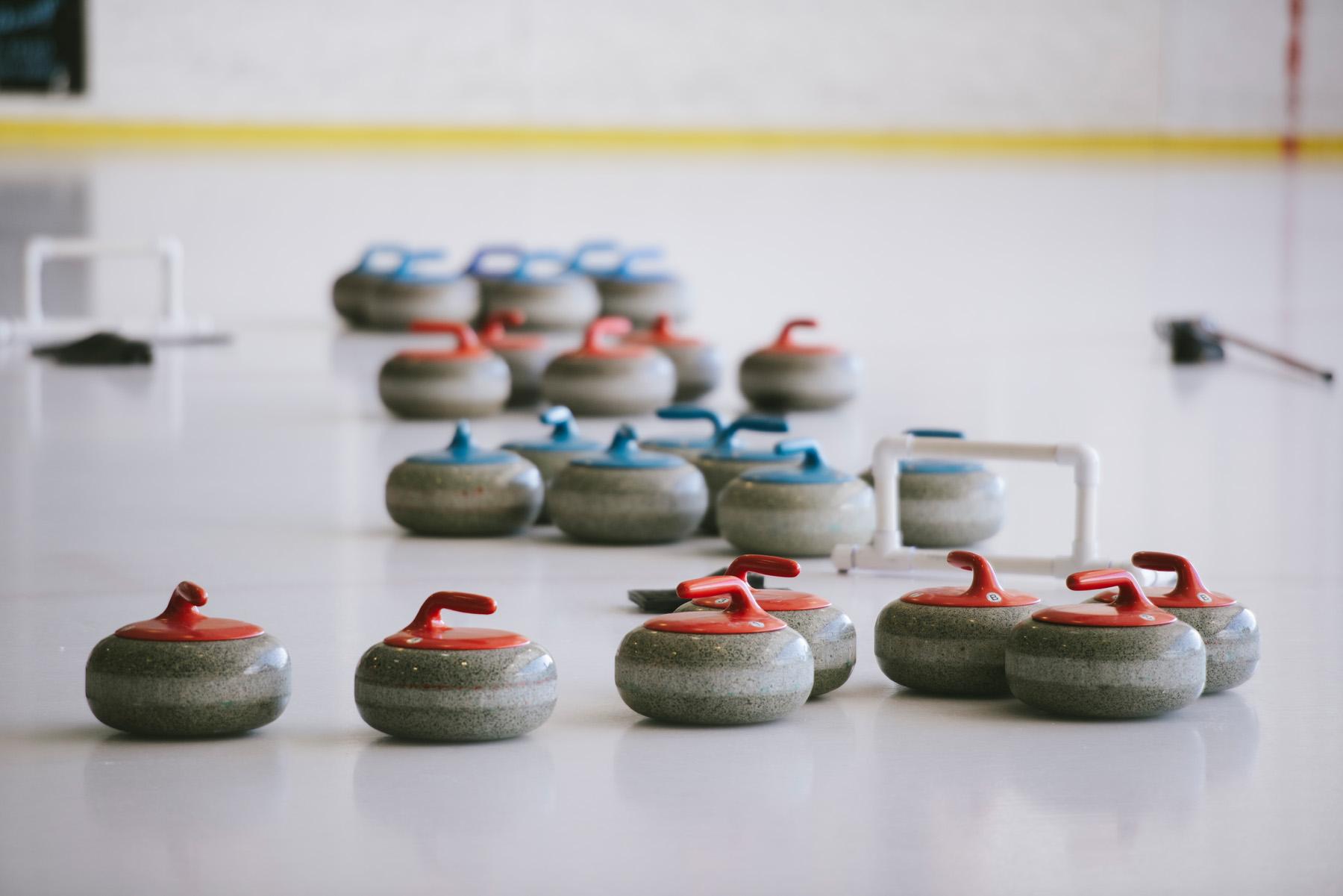
The Italians have bocce. The English invented shuffleboard. The French prefer pétanque. And the Scots pioneered the game of curling. Now, the latter, a centuries-old game that involves ice and a heavy stone, has found an enthusiastic home at Victor’s Kotler Ice Arena. Modern-day Idaho isn’t far from curling’s origins five hundred years ago, either. Patrons hit the ice for a little fun when the sun sets a bit too early and the weather is best suited for sub-zero activities.
It’s a cold winter in the sixteenth-century Scottish Lowlands. The local farmers have retired from their seasonal chores and surrendered their water sources—ponds, lochs, and marshes—to a frozen state. To pass the time until spring planting, this group of men invent a new game. Flat-bottomed “channel stones” (stones naturally smoothed by water’s action) are selected and equipped with crude iron handles. Sweepers use their corn-straw brooms, called cows, to clear snow and debris from the stones’ path on the ice. The objective: Each team attempts to get their stones closest to a center target, called the house, while knocking away opponents’ stones to gain points.
By the 1830s, this farmer-bred sport had become a national sensation with a governing body known today as the Royal Caledonian Curling Club (RCCC). Curling exploded around the world, making its Olympic Winter Games debut in 1924 in Chamonix, France. Since then, it has been featured in twelve Winter Olympics, with Canada coming out on top at seven gold medals to date.
Today’s curling equipment is a far cry from the makeshift rocks and brooms Scottish farmers used. Modern stones come from only one place in the world: Ailsa Craig, a small, uninhabited volcanic island off the coast of Scotland. The unique, quartz-free micro-granite stones are water-resistant and tough enough to withstand heavy impacts on the ice without cracking. Today’s curling brushes are equipped with a synthetic head for sweeping the ice and balancing the player.
Each team consists of four people: a lead who throws the first two stones, the second who throws the third and fourth stones, the vice-skip who throws the fifth and sixth stones, and the skip, or captain, who throws the last two stones and calls shot placements and sweeping techniques for the team. When a stone is thrown, the ice grabs it and pulls it into a turn (hence the name “curling”), and it’s up to the teammates to manipulate the stone’s direction with a series of sweeps led by commands and hand signals.
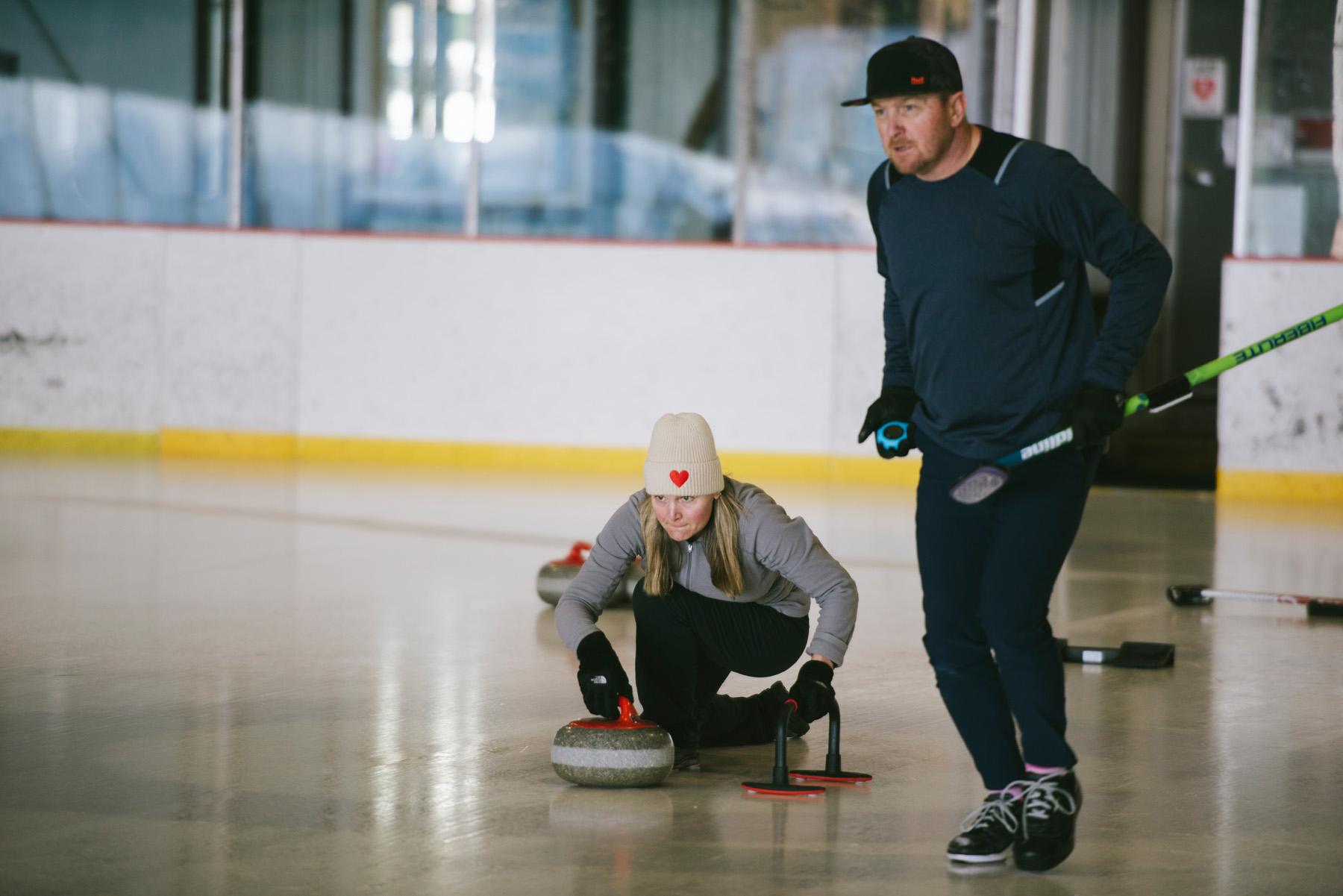
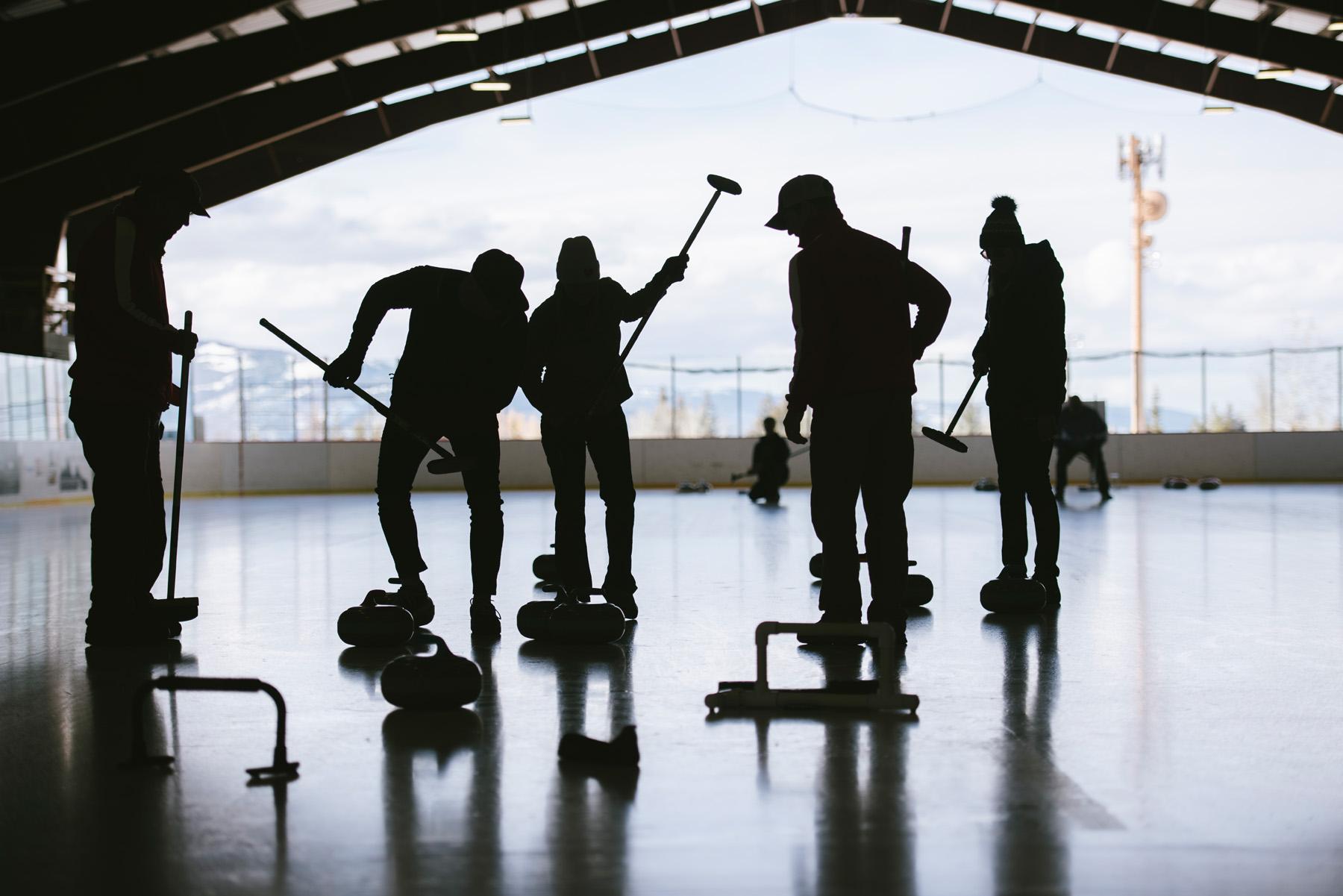
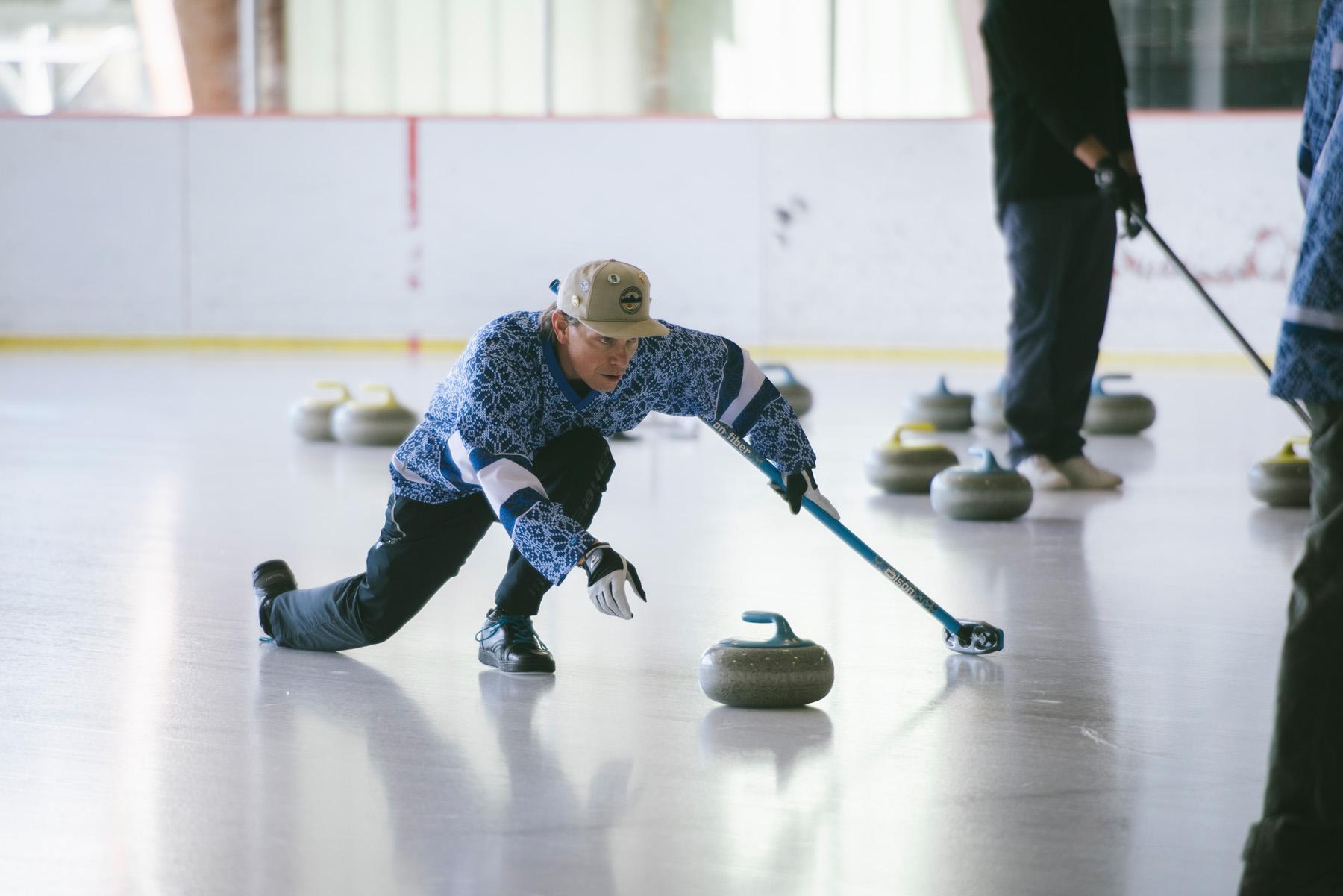
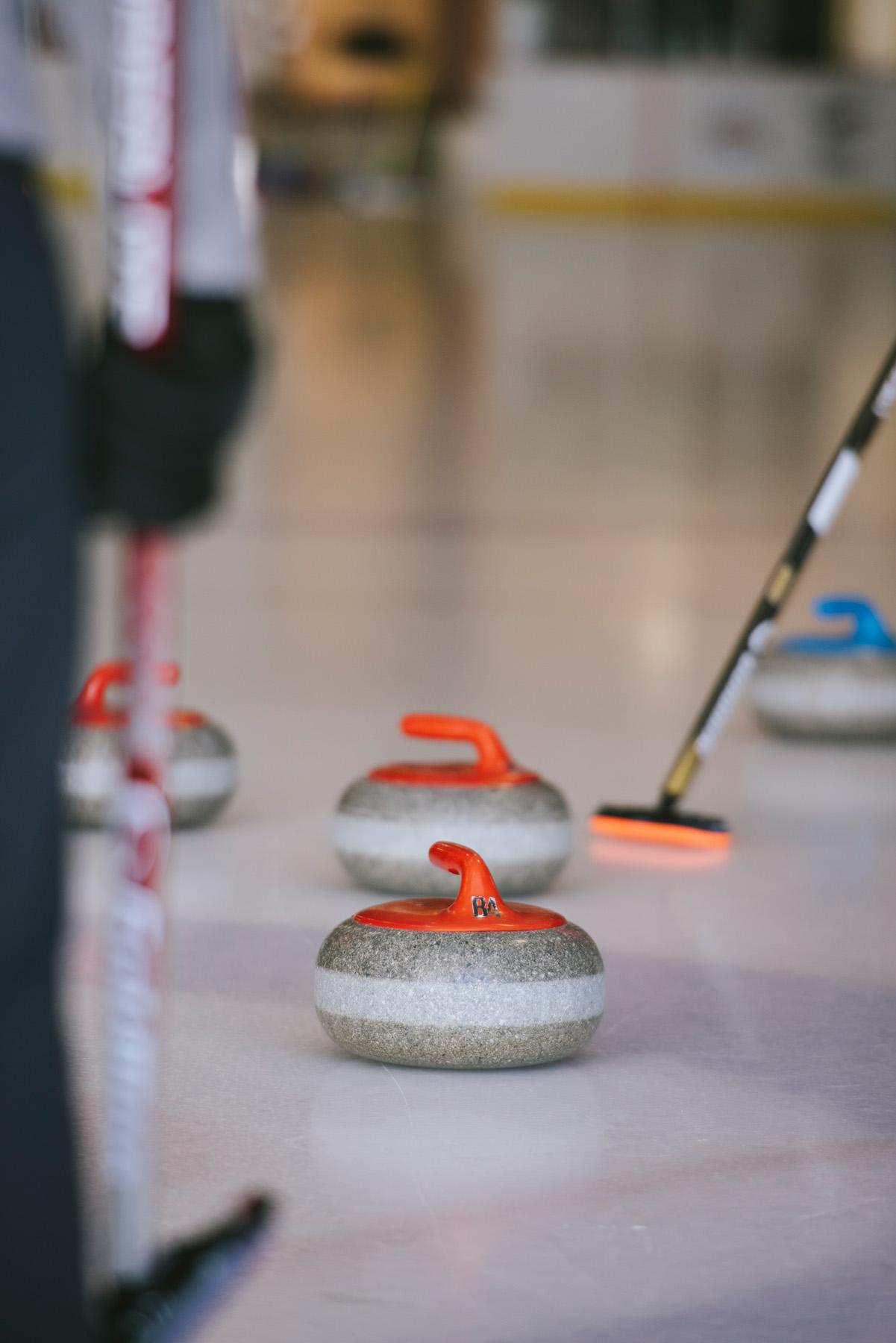
Teton Curling Club founders Hans Wilbrecht and Aaron Danz explain that the tactics are similar to playing chess on ice. “But with our team, it’s more like checkers than chess,” Aaron says.
“The strategy changes game to game depending on how accurate each team is,” Hans says. To which Aaron replies: “It’s not over until the hammer [final stone] is thrown.”
Friends for fifteen years, Hans and Aaron first watched curling during the Olympics on television.
“It piqued our interest, and we joked that it’s our last chance for Olympic glory,” remembers Aaron.
So, they decided to learn how to curl, attended regional events, taught their wives, and, determined, set out to introduce the sport to other Teton Valley residents.
To build enthusiasm and lay the groundwork, the two men recruited the help of experienced curlers from the Boise and Ogden curling clubs to run “learn to curl” events at the Kotler Ice Arena. They grew the local club to about ten teams, and then, in the fall of 2021, hosted their first bonspiel, or curling tournament.
After five years of renting stones from regional groups, the Teton Curling Club purchased sixty-four used stones from a Midwestern club in 2024. The league also owns its own brooms, slides, and balancers, all used to outfit teams and community members looking to get into the sport.
The league, which meets for two sessions of six consecutive Sundays, gives valley residents the option to engage in a winter sport, no matter the weather outside, that is meant for all. Both Hans and Aaron say that the barrier to entry is low, as it is not a very physically demanding sport.
“We’ve had twenty-somethings to seventy-somethings,” Aaron says. “If you can throw [push] a forty-pound stone, then you’re in. And if you can’t, there are throwing assistants.”
“We’ve played in blizzards and 60-
degree weather,” Hans says. “We don’t get fogged out. No matter what happens, we can play.”
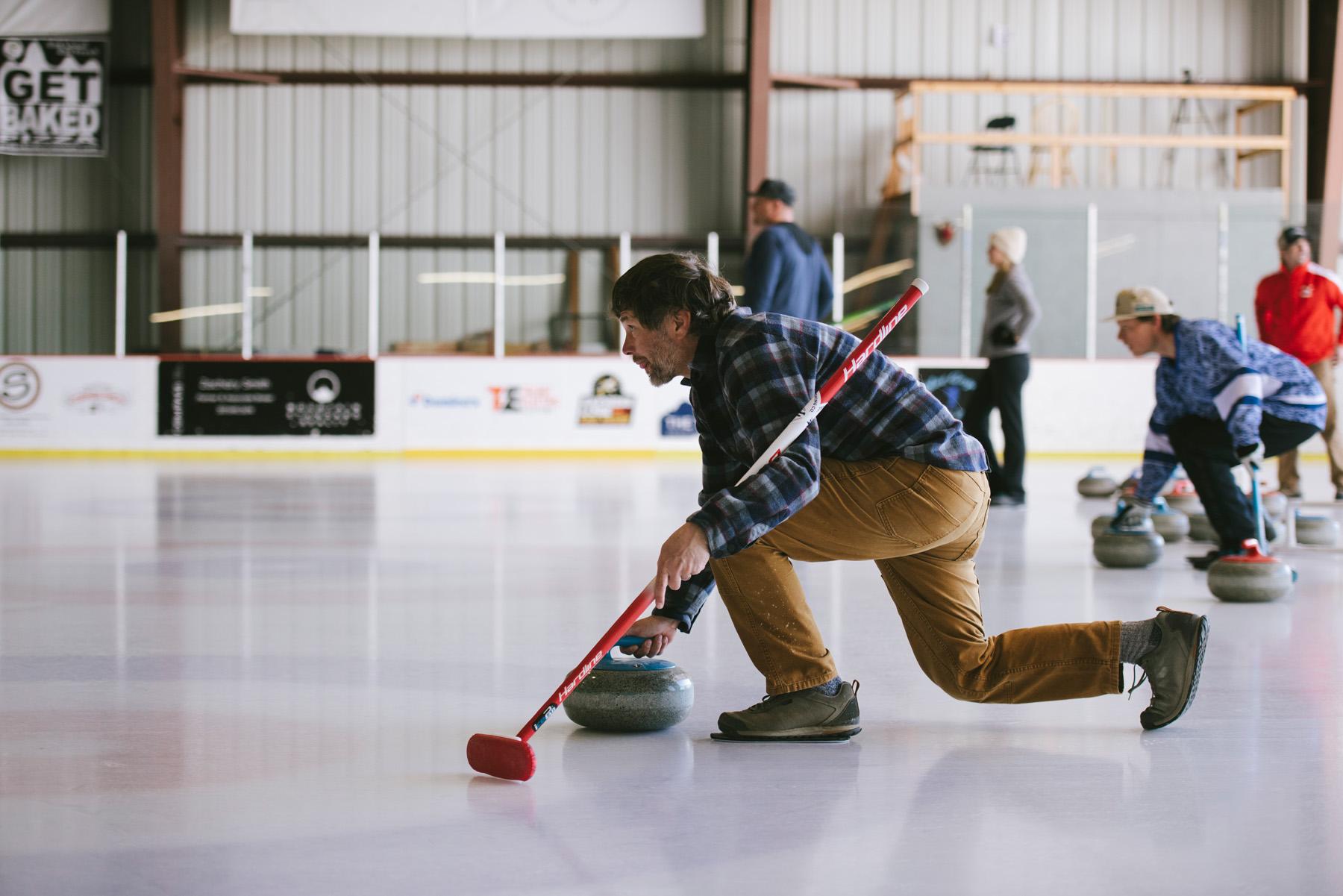
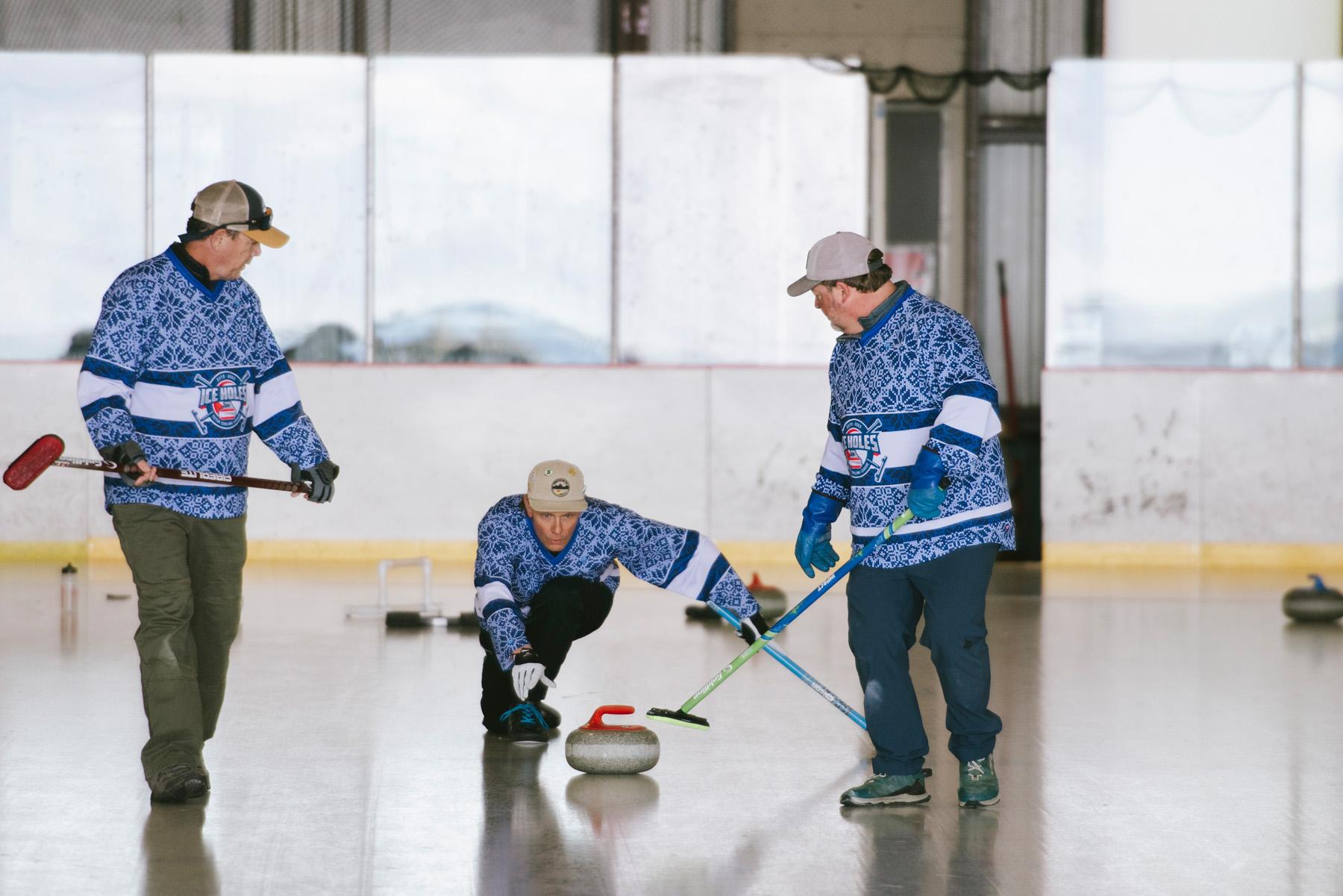
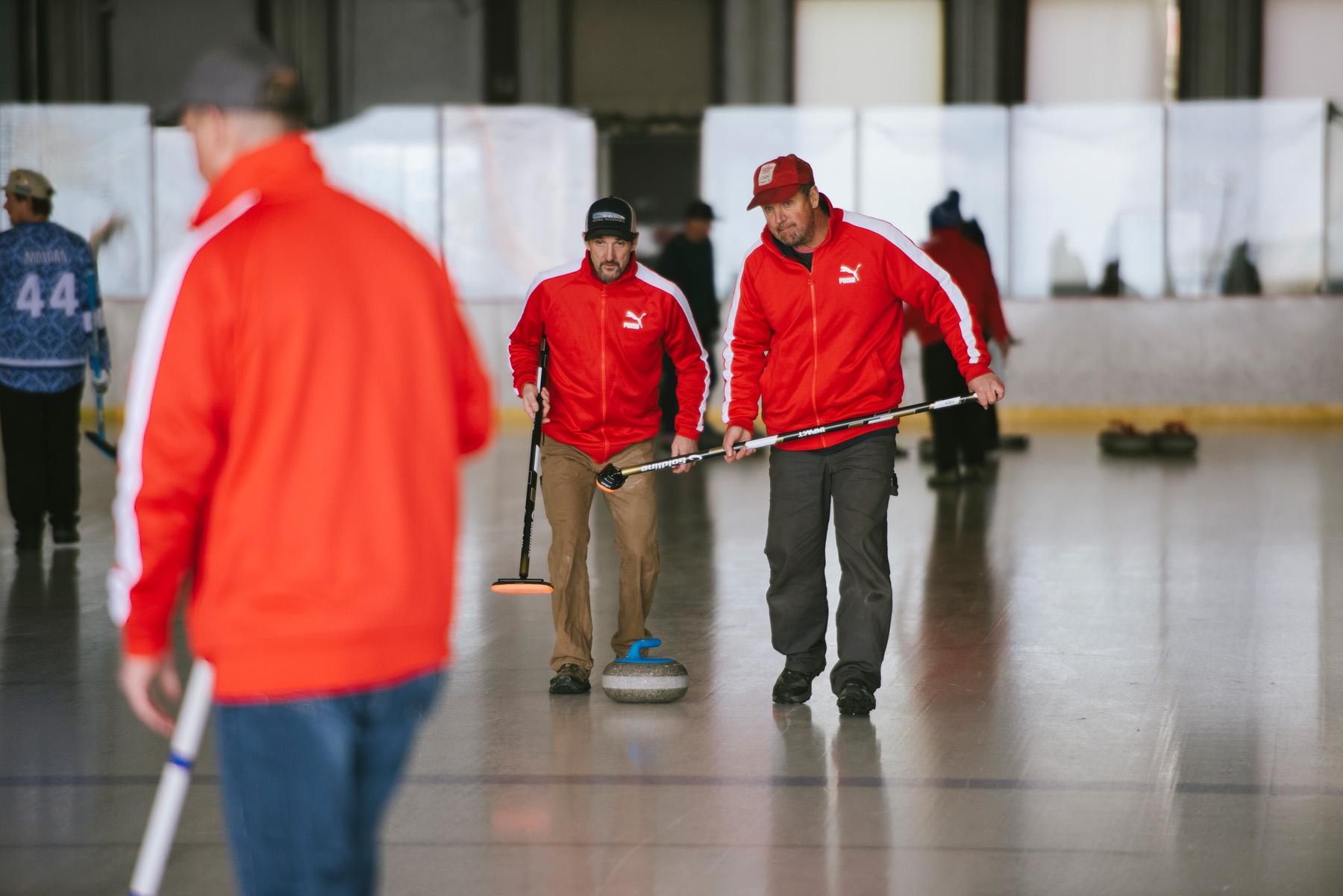
Hans (the skip), Aaron (the vice-skip), and their wives, Suzanne and Kelsey respectively, make up team “Short n Curlies.” They’ve traveled to places like Ogden, Boise, Bozeman, and Butte to play in bonspiels, and they’ve welcomed teams from Jackson (which has no league) to play in their competitions. The Short n Curlies battle it out on the ice against other teams with names like “The Iceholes,” “Bullseye Baddies,” and “The Housewreckers,” some of whom sport T-shirt mottos such as “I’ve swept with your wife.”
“There’s a lot of humor,” Hans says.
Suzanne Wilbrecht typically leads the team in a stretching routine before games, and they all wear Green Bay jerseys on weekends when the Packers play. And while the team has had some great victories, the men admit it’s mostly the losses they remember.
“We never add up our score before the last stone is thrown,” says Aaron. “We’ve been up by five and have lost… We’ve had our share of heartbreak. Still, win, lose, or draw, we’re having a beer with our competitors after.”
Ian Hosek, adult programs director for the Kotler Ice Rink, loves the sense of community and camaraderie that revolves around curling. He says the sport attracts open-minded individuals who want to share their experiences with others and have fun in a low-stakes environment.
Ian notes that, unlike other leagues that play in enclosed indoor ice rinks, Teton Valley’s venue is unique because it’s covered yet open-air, which makes ice conditions more challenging.
“It’s not a pristine surface,” he says. “You get condensation on the roof, which creates drips here and there and disrupts the pebbled surface. Part of curling is being able to read the ice, and after a couple of throws you adapt your technique to suit it. An open-air rink makes it more fun.” The late-day sun provides another challenge. “It can create more of a slick surface, or slow things down,” he says.
But what Ian likes best is the backdrop of the valley’s open-air rink. “Last year during the bonspiel, the competition lasted through sunset, and we saw the Big Holes light up right in the middle of a match,” he recalls.
Megan LaTorre, executive director of the Teton Valley Foundation, which oversees the Kotler Ice Arena, loves that curling is a multigenerational sport.
“It reaches a different population than hockey, skiing, and other winter sports,” she says. “We have a lot of multigenerational teams—grandpas to kids. You can do it as a senior, or as a kid, and you don’t have to know how to skate. We have all the equipment; you just have to show up, have a good attitude, and want to learn.”
This year, the Teton Curling Club is offering a fall and a spring session. They hope to recruit up to sixteen teams to play for four to six weeks, ending with a tournament.
Aaron encourages community members to give it a try and stick it out for at least one season. “That first season, I didn’t know if I was really into it, and now I’m watching YouTube videos on curling,” he says.
Aaron also says your team can look like anything. You can have mixed couples, teenagers, or adults and kids together. Aaron’s team once almost lost to a particularly skilled high school team from Bozeman.
“It was touch and go for a while…” he says.
Ian encourages participation, noting that curling is a low-stakes activity. “It’s not cost-prohibitive, like hockey or skiing, which have big barriers to entry,” he says. “You can show up with some clean street shoes, warm clothing, and go curl.”
After all, who wouldn’t want to be greeted with the Teton Curling Club’s infectious enthusiasm? This inclusive group offers a less extreme winter sport option for valley residents who don’t (or do) ski, snowboard, or snowmobile, and it’s one you can even do in your sneakers. Head on over to the ice rink to watch a match and see if it’s for you. Maybe Olympic glory will be in your future. Aaron and Hans are still hoping for theirs.