Christmas Bird Count
For more than a century, the National Audubon Society has held the annual Christmas Bird Count between December 14 and January 5, a hemispheric avian census that brings together thousands of volunteers for the world’s longest-running community science project. The purpose? Slow down, take a walk through your own backyard or a nearby forest, and count birds.
Each Christmas Bird Count (CBC) encompasses a circle, which is a designated space fifteen miles in diameter. Volunteer groups are assigned to areas within the circle’s boundaries to tally every bird they spot—or hear—on a given day within the date range. While only birds on the actual day are counted, a species seen up to three days before and after that date may be listed, rather than tallied.
The CBC is more than a scenic walk in the woods. It provides key data to help conservationists better understand how populations are changing, how migration patterns shift as the climate changes, and what species-specific conservation to pursue.
This winter-focused bird census now takes place in the United States, Canada, Latin America, the Caribbean, and the Pacific Islands.
Susan Patla, a retired nongame biologist for Wyoming Game & Fish, founded Teton Valley’s holiday avian tradition in 1994.
“The Christmas Bird Count began as an antidote to the Christmas bird hunt tradition where people saw how many birds they could kill in one day,” Susan says. “Bird scientists suggested a count instead of a hunt. It’s an incredibly valuable database and influences a lot of research.”
Susan was a regular participant in the Jackson, Wyoming CBC. “At the time, we had a big concentration of wintering great grey owls in Tetonia,” Susan says. “I figured out how to set up the circle and get the official count going so we could count them. That year, ours was the largest count of great grey owls in the entire country and has remained the highest count since.”
The circle was set, and a local tradition began. Susan spent nearly thirty years managing the annual count. Some years, snow piled high. Others, negative temperatures turned counts frigid. Participants have headed out on skis, snowshoes, or their own two feet. No matter the circumstances, the day is rooted in a shared love of birds, enjoying being out in nature, and connecting with community. Now, the count is managed by naturalists Colin Boeh and Mary Chris Harrison Boeh.
“I am so grateful to Mary Chris and Colin for continuing it,” Susan says. “If you don’t have people who want to do the work, it can fade.”
The husband-and-wife duo has organized the event for the past decade, covering their own route and compiling each group’s findings. For Mary Chris, this role is also a return to an anchoring childhood memory.
“My parents like to tell me that I have been doing the Christmas Bird Count since before I was born,” she says. “My dad is a birder and has walked his CBC route along the Shenandoah River in Virginia for many decades. My mom went along with him when she was six months pregnant with me and again when I was a nine-month-old.”
When Mary Chris was old enough to accompany her dad, she remembers her first job was to hold the clipboard and keep a tally of each species, learning to identify birds they saw and heard on the damp, chilly December days.
“As the years went by, he and I developed shared memories about our days out in the woods and the fields doing the CBC,” Mary Chris says. “‘Do you remember that one time there were two thousand robins in this tree?’ or ‘Do you remember when I stuck my foot under the stream bank, and a winter wren flew out?’ ‘Do you remember when those two foxes were chasing each other and ran right by us?’”
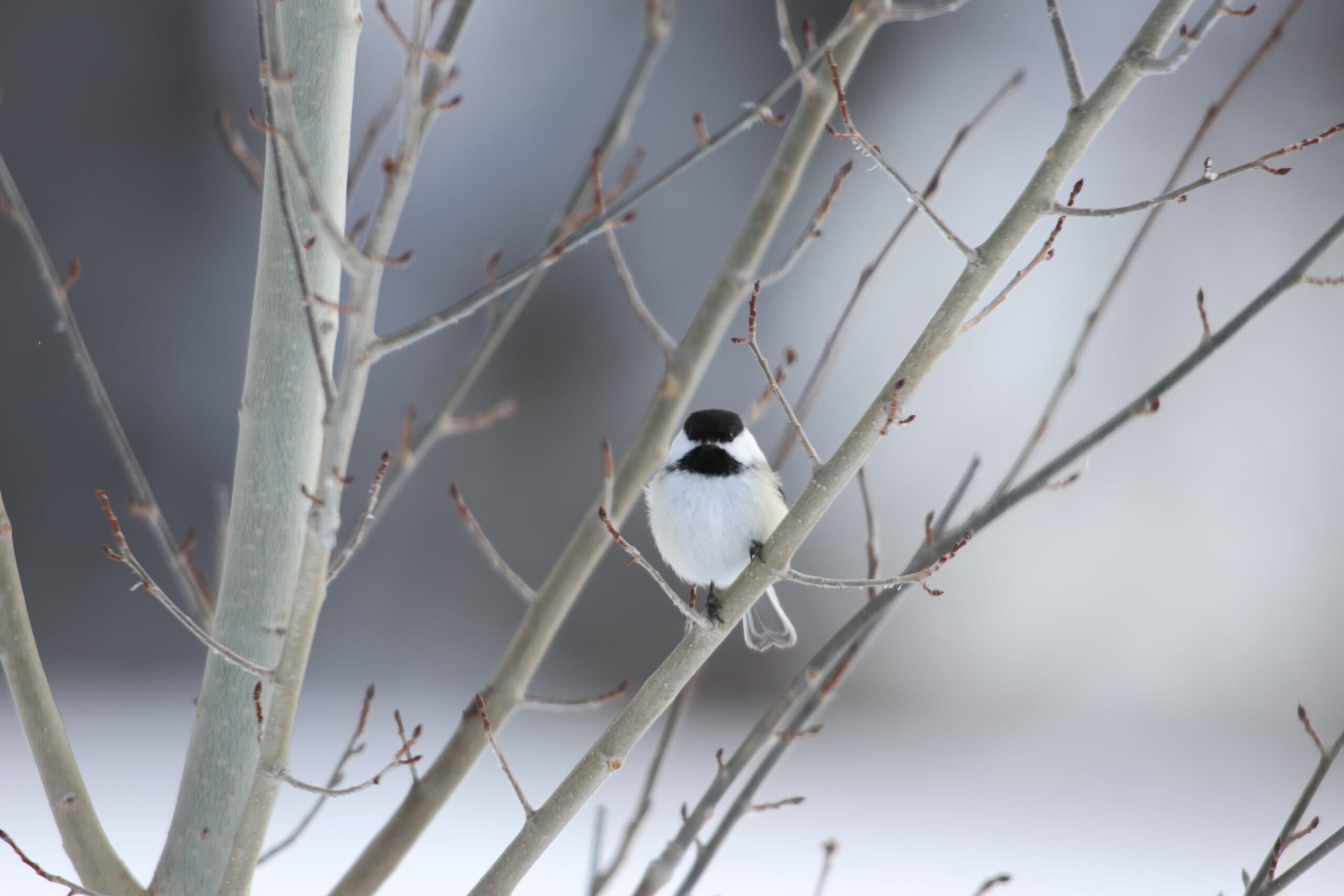
When the Boehs moved to Teton Valley, Colin heard through his work as a naturalist at Grand Targhee that there was a Christmas Bird Count locally, and the couple decided to join. They were given the Teton Canyon route. On the first count, Mary Chris remembers seeing an American three-toed woodpecker along the Sheep Bridge Trail, as well as American dippers, golden-crowned kinglets, and mountain chickadees.
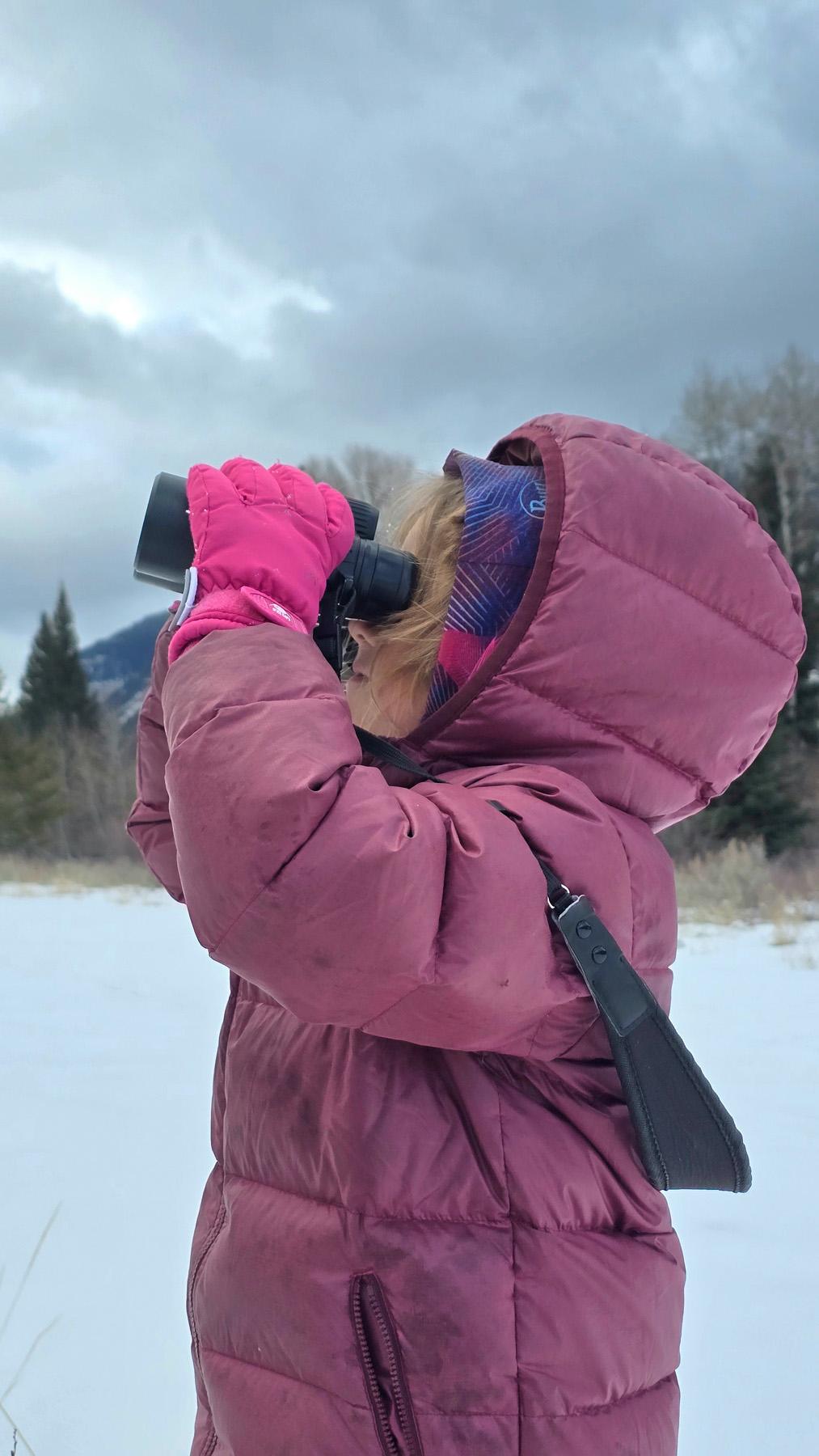
“A few years later, Susan asked us to take over compiling duties, and we have stayed in that role for the last eleven years or so,” Mary Chris says. “We now have two kids; Harrison is seven and Marilla is five. Both have done the CBC for their whole lives. Rilla was only a month old on her first count.”
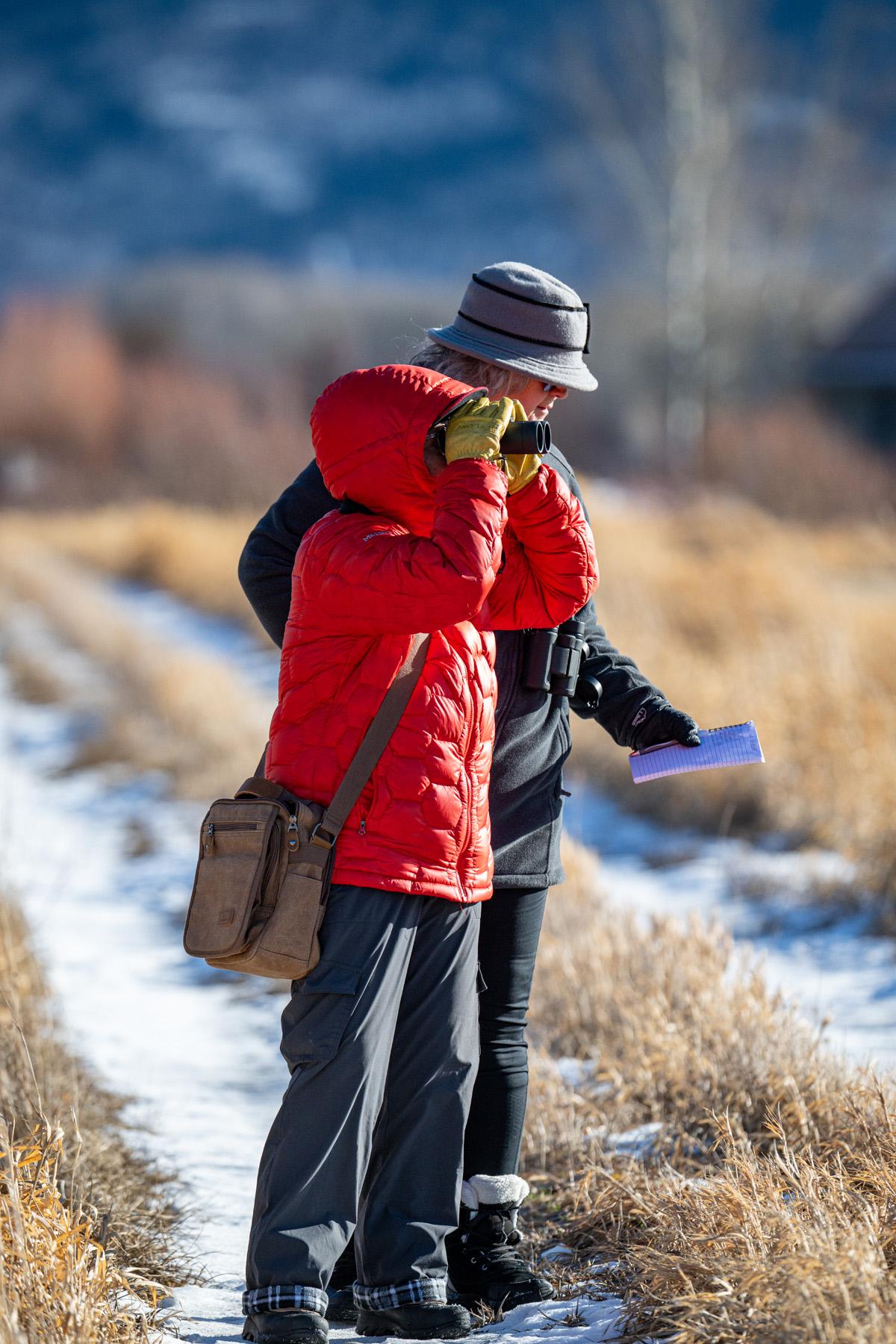
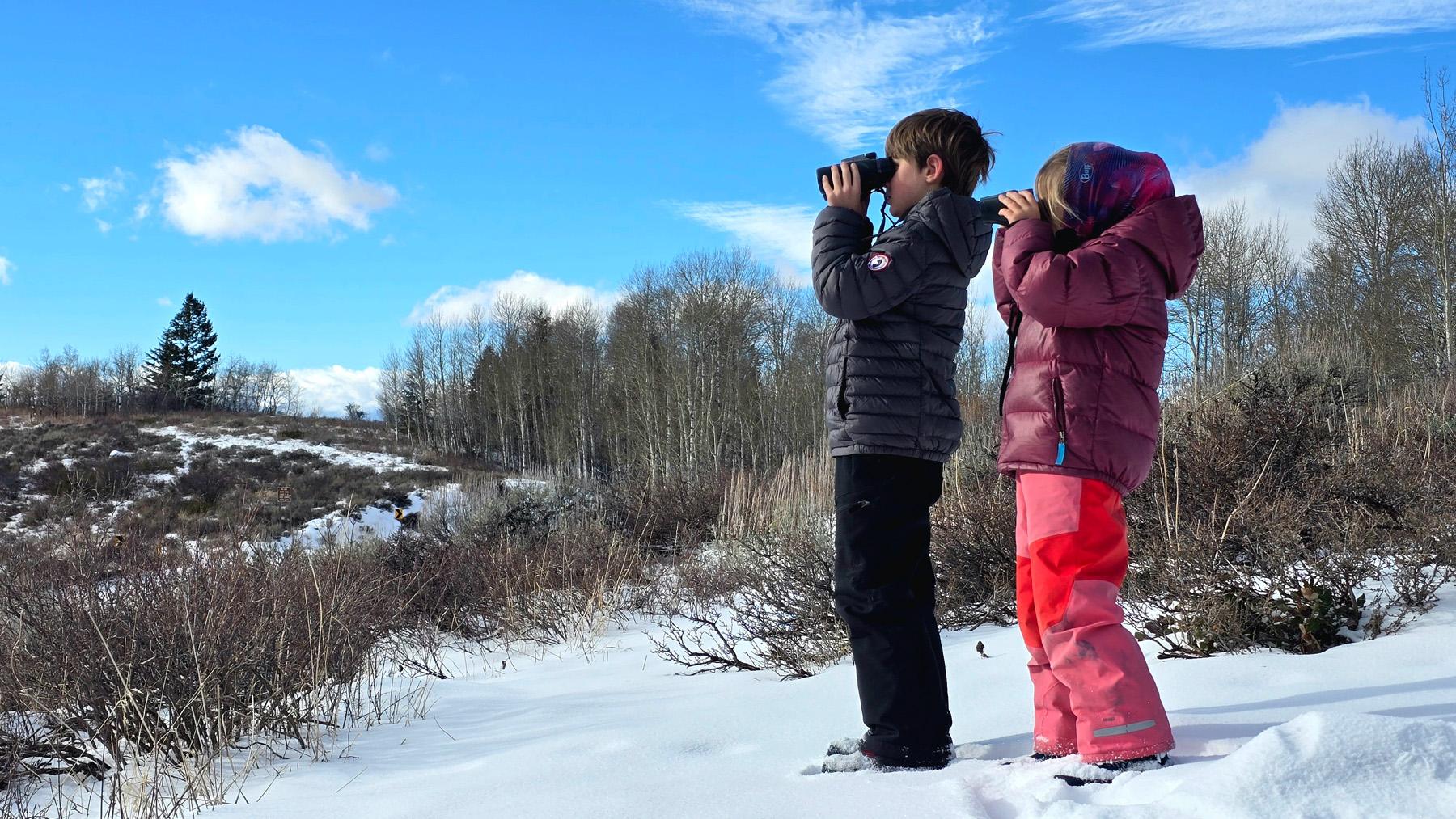
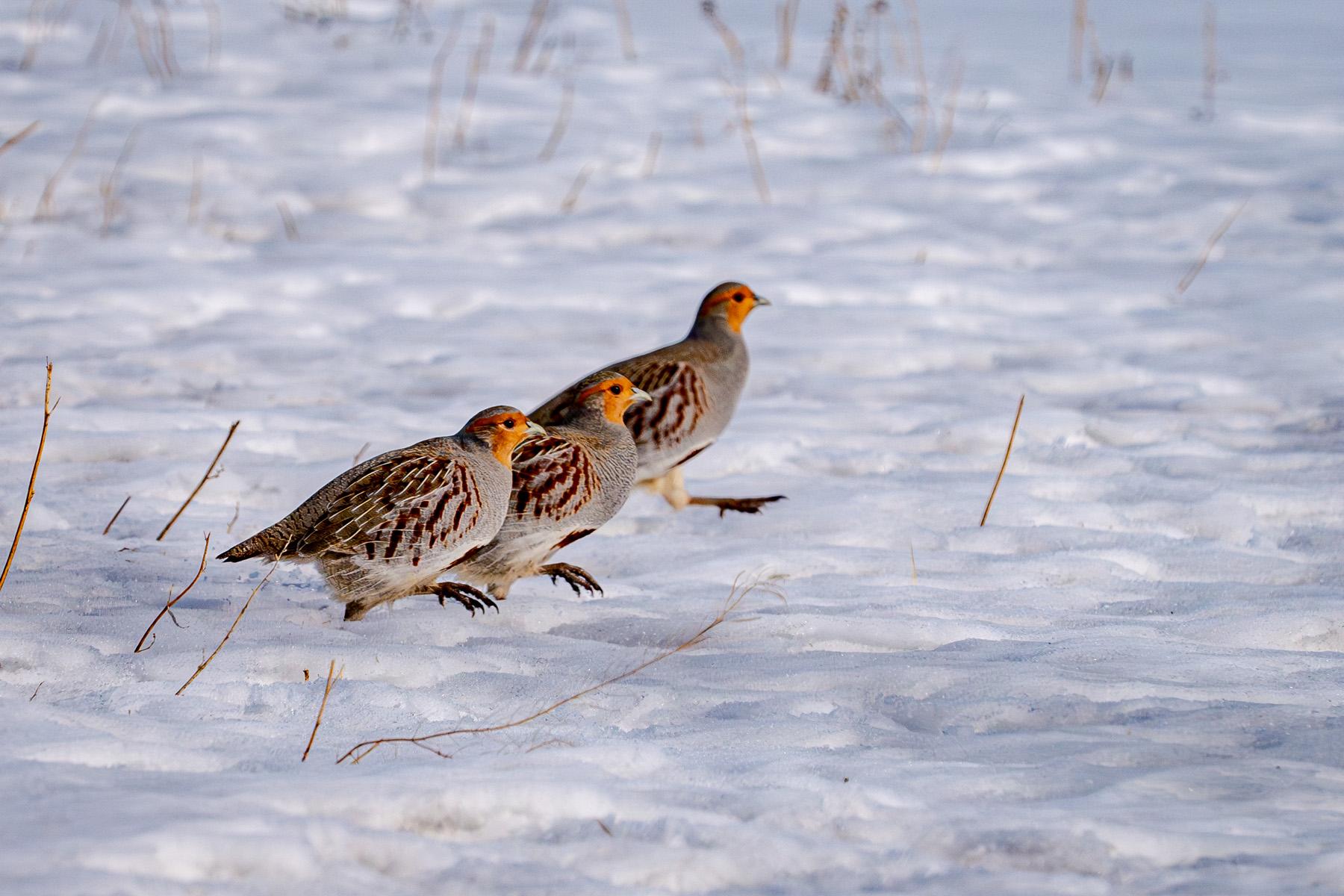
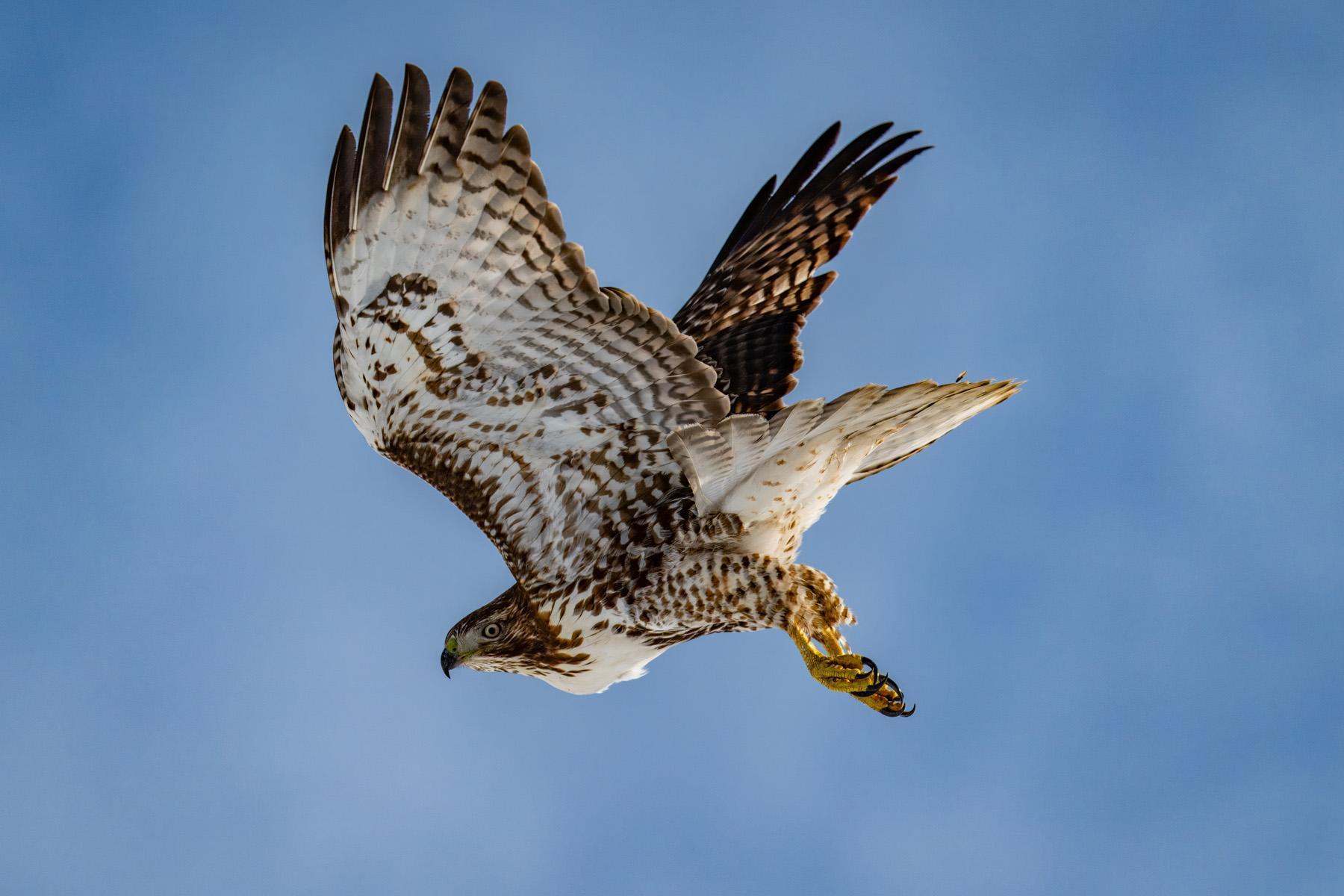
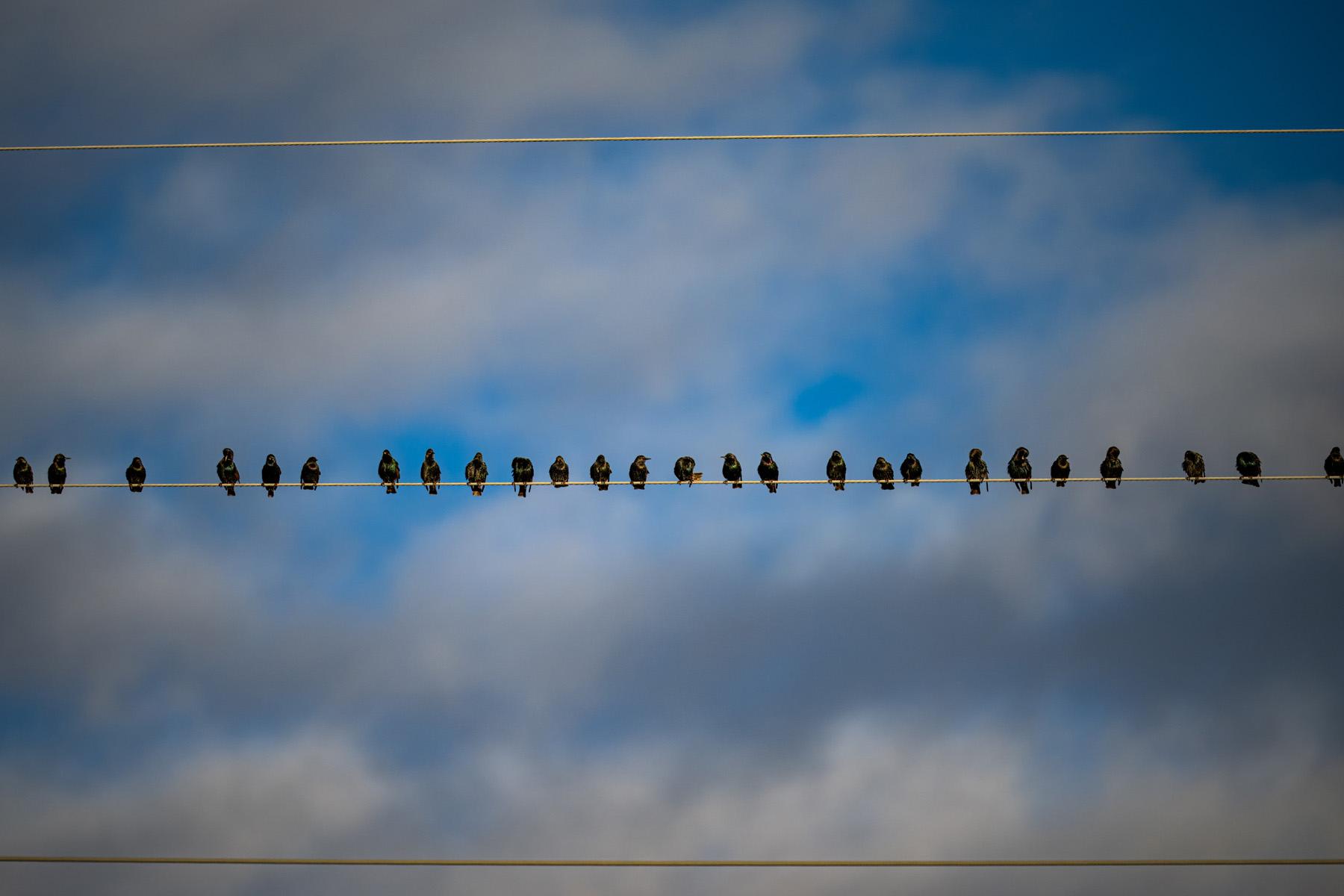
Kristy Smith, a stewardship associate with Teton Regional Land Trust, appreciates how the CBC both gets her outside during the snowy season and keeps her plugged into the community.
“It’s a great way to connect with nature during winter,” she says. “Compared to ski touring or other winter activities, moving a bit slower means more time to take in your surroundings. I am always amazed by the wildlife activity I see, even in the dead of winter.”
Susan remembers years all the bird counters would gather for breakfast afterward, or meet for coffee before heading out. Friendships blossomed around their shared interest.
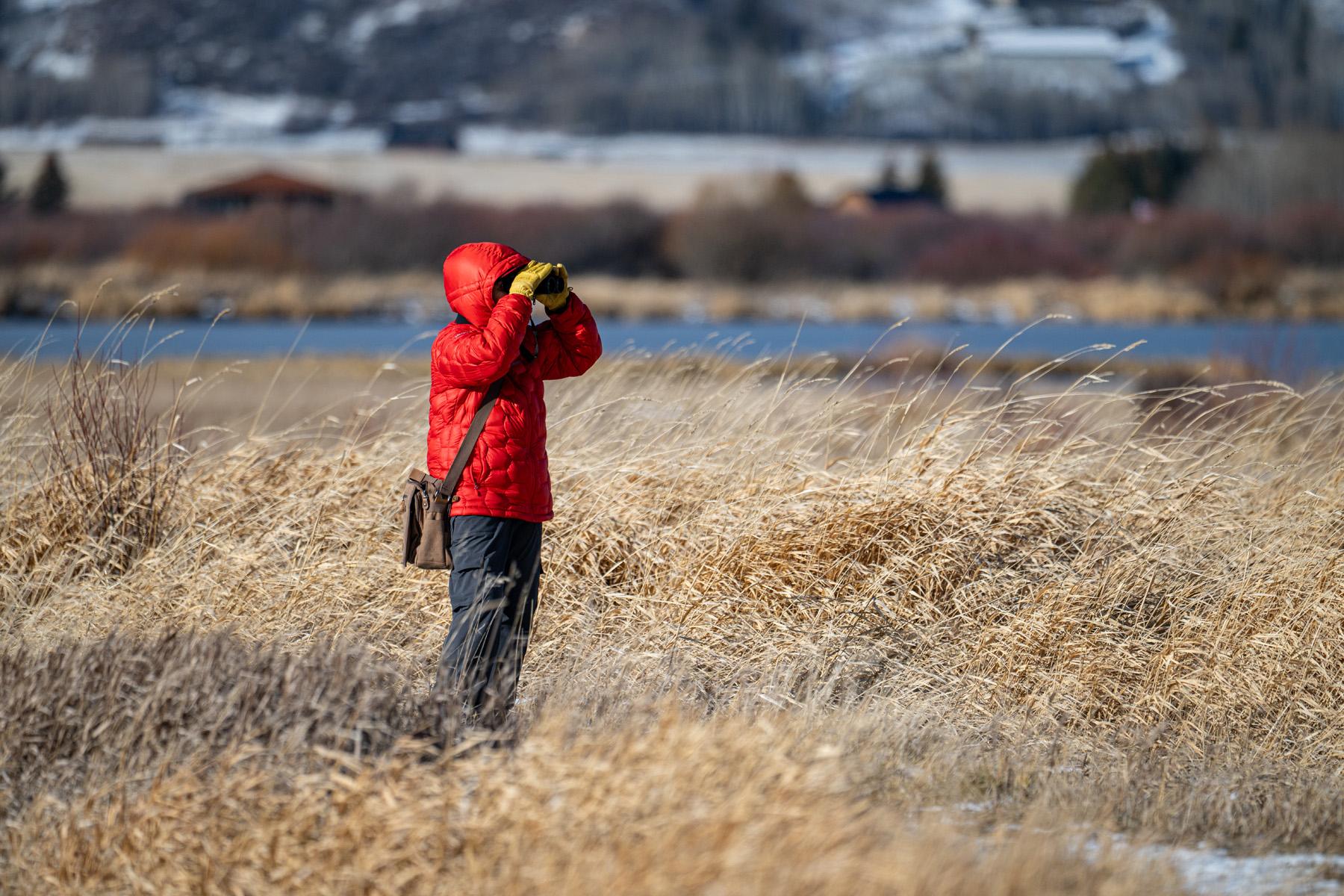
To learn about the love of the CBC, I accompanied photographer Linda Swope and her volunteer team—Lina Marquis, Carol Lichti, and Nicole Cyr—to Victor’s Fox Creek on December 20 last winter for my inaugural Christmas Bird Count. It was an unusual winter, to say the least. There was more ground visible than snow and the sun was shining while the wind howled. I bundled up my four-year-old son, Nate, and strapped my ten-month-old baby girl, Annie, to my chest and headed out to search.
Nate clutched binoculars and scanned alongside Linda, thrilled with the task of spotting a bird in the sky. While his loud enthusiasm likely scared one or two winged creatures away, to his delight, he did spot a bald eagle flying overhead. For days after, we looked at pictures in a field guide, and Nate asked question after question about birds in our area. I thought of Mary Chris and her early days searching alongside her dad. Just like Colin and Mary Chris’ children, a spark of excitement has been deepened in both my child and me.
“A new generation is filing away memories from the Christmas Bird Count,” Mary Chris says. “It is a joy and a privilege to pass this tradition on to my children.”
For Mary Chris, this holiday walkabout is as much about the tradition of exploring a place as it is about the birds.
“When I asked my dad what he loves about the CBC, he said it is the walking, and walking the same route year after year,” she says. “Each year adds a layer of memory and richness to that particular place on earth. I think that is what I love best about it, too.”